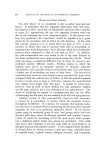
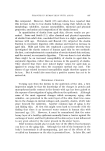
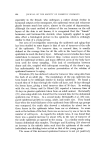
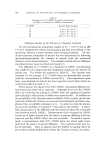
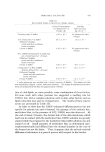
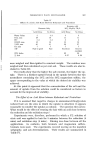
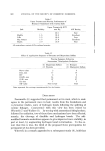
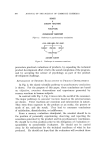
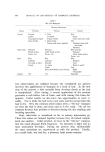
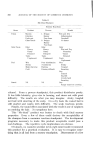
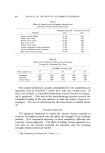
902 JOURNAL OF THE SOCIETY OF COSMETIC CHEMISTS Table I Effect of Pigment on the Breaking Strength and Extrusion Pressure of Cosmetic Leads Breaking Strength Extrusion Pressure Pigment (era) (psi) Black (carbon black) Black (iron oxide) Brown (iron oxide) Red (iron oxide) Yellow (iron oxide) Green (chromium oxide anhydrous) Green (chromium oxide hydrated) Blue (ferric ferro cyanide) 22.50 1100 13.00 350 10.80 300 9.00 175 10.00 250 9.00 175 10.00 200 14.00 300 Table II Effect of the Addition of Wax on the Extrusion Pressure of a Standard Wax Base Extrusion Pressure (psi) Wax Added (%) 0 5 10 15 20 Carnauba 900 1100 1150 1200 1225 Ceresine 900 950 1025 1100 1150 Cocoa butter 900 850 700 625 550 The control of bloom is usually accomplished by the substitution of matehals, such as Eutectol©, * which have only one crystal form. If this is not feasible, a controlled-temperature process known as temper- ing is employed. This step in the manufacturing process involves the controlled cooling of the wax mixture so that the stable fi form is en- couraged. The use of surfactants has also been shown to inhibit bloom (4). PIGMENT EFFECTS The pigments employed to attain the various shades required in eyebrow and lipliner pencils can also affect the strength of the resulting product. It is frequently necessary to have completely different wax bases for various pigments. The effect of adding various pigments to a wax base on the pressure required for extrusion and the breaking strength of lead is shown in Table I. * A&S Corporation, 10 Summit Rd., Verona, N.J.

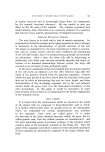
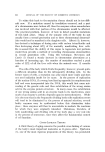
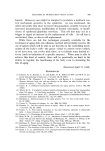
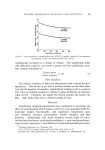
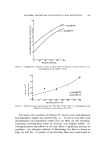
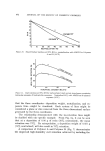
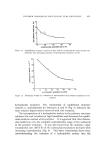
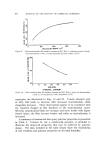
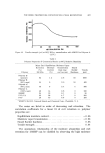
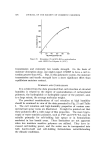
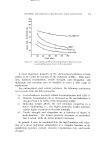
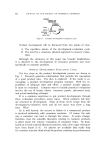
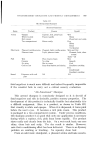
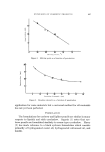
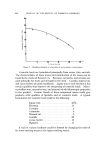
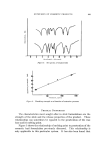
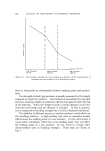
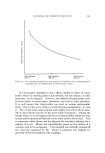
EXTRUSION OF COSMETIC PRODUCTS 903 THIXOTROPIC SYSTEMS At this time there are not sufficient data available to form conclusions on the extrusion of true thixotropic mixtures. These data are being partially obtained by the study of extrusion pressures of various formula- tions. The study of the addition of three waxes to a basic formulation is shown in Table II. The data in Table II were taken on a standard wax base with the ad- dition of 30 wt % of carbon black. The relationship of extrusion pres- sure to breaking strength is shown in Fig. 9. The extrusion pressure should be dependent on the concentrations of the lower and higher melting wax additives. A thixotropic system would not be completely dependent on the individual waxes but more on the ideal concentration of the two materials to give the optimum thixo- tropic effect. A hypothetical curve for this system is shown in Fig. 10. A nonthixotropic system would act as shown in Fig. 11. CONCLUSION The potential for extruded cosmetic products lies in the hands of the formulator. Stick toiletries, such as preshave sticks and deodorant sticks, could easily lend themselves to extrusion. The advantages for extrusion over molding are many. The product would have more strength problems such as air and flaking could be reduced and, finally, the production cost could be reduced by 30 to 50%. Cake mas- cara has been extruded from a standard production formulation with good success. There is also a possibility that pressed powder could be extruded in rectangular form and cut to the required length for godets. Depending on the type of information obtained from these thixotropic studies, lipstick and stick eyeshadow could possibly be extruded. The investigation of wax systems and new raw materials of a wax na- ture can lead to the development of formulations that might better be extruded than molded or pressed. The production cost saving in extru- sion manufacturing warrants further studies by the cosmetic chemist. (Received December 12, 1967) REFERENCES (1) Sagarin, E., Cosmetics: Science and Technology, Interscience Publishers Inc., New York, N.Y., 1957. (2) Harry, R. G., The Principles and Practice of Modern Cosmetics, Chemical Publishing• New York, N. ¾., 1962. (3) Bennett, H., Industrial Waxes, Chemical Publishing, New York, X. Y., 1963, (4) Atlas Chemical Industries, Inc., Bulletin No. LG-GO, Wilmington, Del.
Purchased for the exclusive use of nofirst nolast (unknown)
From: SCC Media Library & Resource Center (library.scconline.org)