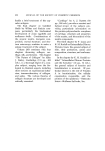
CHANGES IN HUMAN SKIN WITH AGING that the ester linkages which are present within the three strands of the triple helical molecule of collagen may shift to other strands within the same molecule. These linkages, he says, can also form between two different molecules of collagen and, as the body ages and this process continues, the collagen becomes more and more rigid. Verzar (7) has described in detail how this process may occur in collagen. In addition to this molecule, however, Bjorksten extends his theory to include other cellular proteins and nucleic acids. Arranged as they are in long, linear strands, he feels that DNA and RNA are perfect targets for cross linking by agents in the cell which are capable of such action. He lists the dibasic acids formed in the tricarboxylic acid cycle, quinones, aldehydes, silicon, and various metals as possible cross-linking agents. One can imagine the consequences if two strands of DNA became linked in such a way that cellular replication or guided protein synthesis could not take place. The manufacture of faulty enzymes has already been suggested above in the explanation of mutation theories such useless, giant molecules might well have a clogging effect on the cell's machinery if not used, but instead are allowed to accumulate. FREE-RADICAL THEORY A fourth theory which is directly connected to the cross-linkage proposal is the free-radical theory of aging. It states that the degen- erative changes which occur in old age are due to the accumulation of free radicals in the body which may also act as cross-linking agents. Harman (8) believes that two of the more common free radicals involved are the hydroxyl radical (OH) and the hydroperoxide radical (H0.o), which can be formed by the interaction between oxidative enzymes and oxygen, by the enzymatic degradation of hydrogen peroxide, or by radiation. Norins (9) has also observed the production of free radicals in the skin following exposure to ultraviolet light. To investigate his own theory, Harman included in the diet of a special breed of short-lived mice such compounds as 2-mercaptoethylamine and cysteine, which would react rapidly with free radicals. He then studied the life spans of these mice as compared to those receiving a normal diet. He found that the half-survival time of the animals on the special diet was ex- tended to 10 months, as compared to the $ months of the control animals. Consideration of Theories The preceding review of four of the most popular theories of aging indicates that there is no want for opinions on this topic. There does

834 JOURNAL OF THE SOCIETY OF COSMETIC CHEMISTS seem to be, however, an unfortunate tendency to compact the phenom- enon of aging and attempt to have it fit one of these four theories to the exclusion of all others. From our viewpoint, it would seem that the theories mentioned here are actually very closely related. As has been shown, a mistake in the genetic material, the most basic yet most important controlling mechanism in the cell, might lead to inactive molecules which would be perfect candidates for creating a log jain in the cell. In addition, the wear and tear on an organism may be due to increased defects and inefficiency in cell function as such metabolic clogs and cross-linked compounds are formed. Metabolic by-products such as free radicals add to the impairment of the cellular operation. Thus, the problem of aging may be thought of as a steadily increasing cell disfunction at the molecular level, terminating in cell death. AGE-RELATED SKIN CHANGES After discussion of why externally manifest changes with age may occur, the next consideration should properly be the changes themselves. Some of the most readily apparent consequences of aging in the body are found in the area with which we are all so intimately concerned--the skin. In the following sections, then, the qualitative and quantitative age-related changes in the biochemistry and histology of the body's cutaneous covering will be examined. Derreal Changes: Collagen Most of the investigations to date into skin aging have centered on the dermis. Unfortunately, even as late as the first part of this decade, aging changes in the skin were being confused, and often equated, with changes brought about by exposure to ultraviolet light. Actually, it has been shown that specific differences exist between young and old skin, young and ultraviolet-exposed skin, and old and ultraviolet- exposed skin. Lorincz (10) has therefore suggested that the skin changes which were formerly classified as "senile elastosis" are actually a result of chronic ultraviolet exposure and should more properly be termed "solar elastosis." The epidermal and dermal layers of the skin represent, respectively, 5% and 95% by weight. The dermis contains 11% lipid, 1% carbo- hydrate, 7• nonfibrous protein, 79% collagen, and 2• elastin. Ob- viously, to quantitate any changes in normal or elastotic skin, the com- ponents believed to have changed must be separated from the skin. Sams and Smith (11) have described a representative procedure in which
Purchased for the exclusive use of nofirst nolast (unknown)
From: SCC Media Library & Resource Center (library.scconline.org)