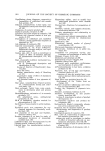
862 JOURNAL OF THE SOCIETY OF COSMETIC CHEMISTS (1) (2) (3) (4) (5) (6) (7) (8) (9) (10) REFERENCES Gershon, S. D., et al., J•ermanent Waving, in Sagarin, E., Cosmetics: Science and Tech- nology, Interscience Publishers, New York, N.Y., 1957, pp. 593-4, 599. Alexander, P., and Hudson, R. F., Wool: Its Chemistry and 1Physics, Reinhold Pub- lishing Corp., New York, N.Y., 1954, pp. 62-3. Reiss, C. R., and Lichtin, J. L., U.S. 1Patent3,266,994 (August 16, 1966). Weiser, H. B., Colloid Chemistry, John Wiley & Sons, Inc., New York, N.Y., 1949, pp. 299-300,305. Klotz, I. M., and Franzen, J. S., Hydrogen bonds between model peptide groups in solution, J. Am. Chem. Soc., 84, 3461-6 (1962). Farnworth, A. J., The hydrogen bonding mechanism for the permanent setting of wool fibers, Textile Res. J., 27,632-40 (1957). Whewell, C. S., The chemistry of hair, J. Soc. Cosmetic Chemists, 12,207-23 (1961). Walker, G. T., Permanent waving theory, Drug Cosmetic Ind., 90, 692 (1962). Whewell, C. S., The chemistry of hair, J. Soc. Cosmetic Chemists, 15,423-36 (1964). Bogaty, H., Molecular forces in permanent waving, Ibid., 11,333-42 (1960).

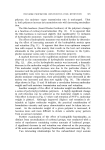
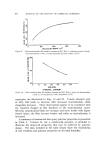
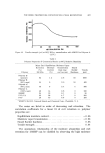
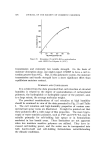
J. Soc. Cosmetic Chemists, 19, 863-880 (Dec. 9, 1968) Polymer Properties Retention at High Influencing Curl Humidity ALBERT L. MICCHELLI, B.A., and F. THEODORE KOEHLER, B.S.* Presented December 6, 1967, New York City Synopsis--Various test procedures to determine the high-humidity properties of hair spray resins are described. The polymers included in this investigation are: carboxylated polyvinyl acetate, polyvinylpyrrolidone, polyvinylpyrrolidone/vinyl acetate copolymer, dimethyl hydantoin-formaldehyde resin, and several experimental resins. The data pre- sented illustrate the relationship of curl retention at 90% RH with: equilibrium•rnoisture content, hydrophilic/hydrophobic functionality, molecular weight, moisture vapor trans- mission, film hardness, tensile strength, and elongation. The effect of neutralization with 2-amino-2-methyl-l,3-propanediol (AMPD) on these properties is discussed for some car- boxylated polymers. The various procedures brought together from several technologies are adaptable to testing of hair spray formulations. INTRODUCTION It is the purpose of this paper to show how the choice of polymer and the variation in polymer properties are related to curl retention. The test procedures to be discussed are: high-humidity curl retention, moisture transmission (liquid), moisture transmission (vapor), equilib- rium moisture content, film hardness, tensile strength, and elongation. It must still be determined to what extent these test results correlate with the properties of hair spray preparations desired by the consuming public. Further work in this laboratory will seek to provide the answer to the existence of such relationships. * National Starch and Chemical Corp., 1700 West Front St., Plainfield, N.J. 07063. 863
Purchased for the exclusive use of nofirst nolast (unknown)
From: SCC Media Library & Resource Center (library.scconline.org)