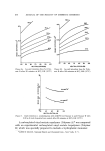
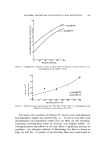
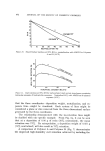
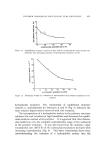
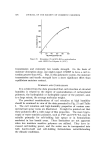
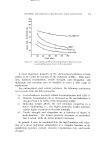
830 JOURNAL OF THE SOCIETY OF COSMETIC CHEMISTS WEAR-AND-TEAR THEORY The first theory to be considered is the so-called wear-and-tear theory. It postulates that the organism depreciates more and more, the longer it is alive, much like an automobile, and that after a number of years (i.e., approaching old age) the organism becomes worn out due to the continual use of its component parts. If this theory were true, the organism's life expectancy would be regulated to a great extent by the metabolic rate at which its cells function. In line with this concept, Johnson et al. (1) found that rats kept at 10øC, a tem- perature at which they had to increase their rate of metabolism to maintain their body temperature, had a life span which was considerably reduced when compared to that of rats kept at 28øC. In addition, the cold-acclimatized rats were found to die of the same diseases as the warm-acclimatized ones, however much sooner they did die. Work with rats using a completely different type of stress (2), however, has produced entirely different results. Feeding studies in which the animals were given an adequate amount of vitamins, minerals, and proteins, but a greatly reduced carbohydrate diet, have also shown a higher rate of metabolism per gram of body tissue. The rats on this controlled diet, however, were found to have extended life spans when compared with the animals fed ad libitum, so that the underfed animals lived in several cases as long as 1400 days, whereas the nonrestricted rats seldom lived longer than 965 days. It should be noted here, however, that in both of these studies the only parameter studied was life span, which is not a true indication of the aging process. The stress of sacrificing an animal by exsanguination also has the effect of shortening the life span, but has nothing to do with the aging process. Another version of this wear-and-tear theory is that senescence is caused by a summation of stresses which the organism receives throughout its lifetime. It is known, for example, that ionizing radia- tion does have a dramatic effect in shortening the life span of the exposed organism, as well as in producing aging-like effects. In his investi- gation using an irradiated group of mice, and groups which had been stressed with large doses of nitrogen mustard and typhoid vaccine, Curtis (3) found no shortening of the life span in the latter groups, but a definitely higher death rate among the irradiated. This could only mean that radiation is not the same kind of stress-producer as nitrogen mustard and typhoid vaccine. To investigate further the effect of chronic doses of certain stressors, Curtis gave large, nonlethal doses of typhoid toxin, typhoid toxoid, nitrogen mustard, and turpentine

CHANGES IN HUMAN SKIN WITH AGING 831 at regular intervals and in increasingly larger doses (to compensate for the animals' increased tolerance). He was unable to note any effect on the life span of the animals. The evidence presented here would indicate, then, that there is no conclusive evidence of a causative link between stress and the phenomenon of biological senescence. SOMATIC MUTATION THEORY The next theory to be dealt with is that of somatic mutations. Its proponents feel that the changes in the aging organism are due to changes or mutations in the chromosomes, or genetic material, of the cell. The longer an organism lives, the more mutations it is liable to accumu- late (due to various causes) and the more inefficient the functioning of the cell will become, since it is assumed that practically all mutations are deleterious. After a time, the body cells will be functioning so inefficiently that either some internal metabolic disorder will result, or, because of an impaired immunologic defense system, the body will succumb to an invasion of some pathogenic agent. In the above explanation it has been implied that the genetic material of the cell exerts an influence over the cell's behavior long after the union of the gameres derived from the parental organisms. Indeed, within the past decade it has been shown that the function of the genes does not lie solely in determining hair and eye color, height, and other characteristics of the developing organism, but in the very intimate control which the genes exert over the biochemical machinery of the cell's metabolism. At this point, it would be instructive to make brief mention of this control as a background for the further explanation of the mutation theory. Gene Control It is known that the chromosomes which are present in the nuclei of all animal cells are composed of deoxyribonucleic acid or DNA. It is further believed that there are specific areas on the chromosome which are responsible for certain manifestations and activities in the organism these areas are called genes. It is under the direction of the basic chemical structure within the gene, the so- called genetic code, that the cellular proteins are manufactured and the most important group of proteins, perhaps, is the enzymes which catalyze most of the metabolic reactions in the living cell. Thus the genes of the organism exert direct control over the metabolic machinery of that organism by directing the synthesis of the major cellular cata- lysts.
Purchased for the exclusive use of nofirst nolast (unknown)
From: SCC Media Library & Resource Center (library.scconline.org)