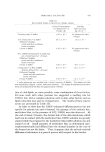
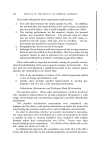
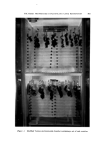
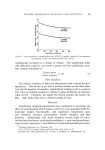
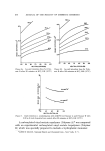
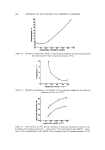
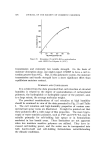
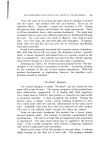
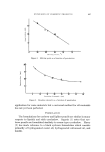
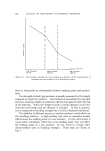
POLYMER PROPERTIES INFLUENCING CURL RETENTION 869 Figure $. z 0.09 GMS DE POSITED 0.05 GMS DEPOSITED 0 20 40 60 80 I00 NEUTRALIZATION,(%) Curl retention vs. neutralization with AMPD (2-amino-2-methyl-l,3-propanediol) for Polymer B after 30 minutes at 90% RH (22øC) continuously recorded as a change in voltage. The equilibrium milli- volt deflection could be converted to grams and the equilibrium mois- ture content calculated as' Grams water Grams polymer x ]oo (2) Film Hardness The relative hardness of films was determined with a Sward Rocker* apparatus. This device is set into a rocking motion on the film under test and the number o[ complete, standardized rocking cycles is counted. The value or number assigned is relative to glass which has an arbitrary value of 100. Therefore, the higher the Sward number the harder the film. Soft, tacky films have a Sward reading of zero. RESULTS Statistically designed experiments were conducted to determine the effect of neutralization with 2-amino-2-methyl-l,3-propanediol (AMPD), molecular weight, functionality, and copolymer composition upon curl retention, moisture permeability, tensile strength, and film hardness. Additionally, this study included various types of resins: carboxylated polymers, polyvinylpyrrolidone, t a polyvinylpyrrolidone/ vinyl acetate copolymer, t and dimethyl hydantoinformaldehyde resin. $ * Gardner Laboratory Inc., Bethesda, Md. ? PVP, PVP/VA, General Aniline and Film Corp., New York, N.Y. $ Dantoin 734, Glyco Chemicals, Div. of Chas. L. Huisking Co., Williamsport, Pa.

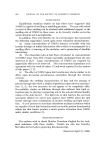
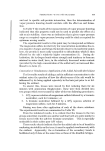
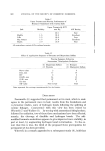
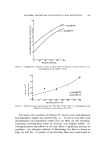
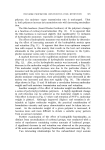
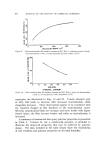
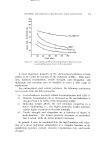
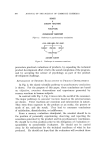
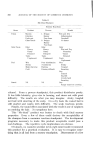
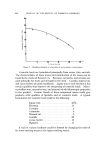
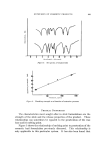
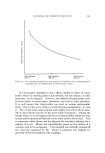
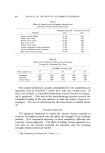
870 JOURNAL OF THE SOCIETY OF COSMETIC CHEMISTS 75.0 72.0 53.0 69.0 • 6 0 •o 6.0 • ß • 3 o• •o • • •o oo ,o •oo NEUTRALIZATI• (%) NEUTRALIZATION Figure Ga. Iso-curl retention lines for Poly- Figure Gb. Iso-•rl reten•on lines for Poly- mer B after 30 minutes at 90% RH (22øC) mer B after 180 minutes at 90% RH (22øC) Figure 7. i- z i.i.i i- ._1 •c z c C•'•..,i•...•.• pOLYMER"B" "A" •'o & • ,6o NEUTRAL)ZAT, ON, (%) Curl retention rs. neutralization with AMPD for Polymer A and Polymer B with 0.09 g of resin deposited per swatch after 30 minutes at 90% RH (22øC) A carboxylated vinyl acetate copolymer (Polymer A)* was compared with an experimental carboxylated vinyl acetate terpolymer (Polymer B) which was specially prepared to include a hydrophobic monomer. * RESYN 28-1310, National Starch and Chemical Corp., New York, N.Y.
Purchased for the exclusive use of nofirst nolast (unknown)
From: SCC Media Library & Resource Center (library.scconline.org)