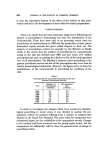
C:)64 JOURNAL OF THE SOCIETY OF COSMETIC CHEMISTS in turn has stimulated interest in the effect of the vehicle on skin pene- tration and led to the development of more effective topical preparations. CORTICOSTEROIDS There is no doubt that the most important single factor influencing the pattern of prescribing in dermatology has been the introduction of the corticosteroids. These have been used to an increasing extent since the introduction of hydrocortisone in 1953 and the production of more potent fluorinated topical steroids has given added impetus to their use. The analysis of prescriptions carded out annually by the Ministry of Health (Table I) has shown that the number of prescriptions for corticosteroids acting on the skin has doubled since 1961 and now totals 10.7 million prescriptions per year, accounting for a little over 5% of the total ingredient cost of all prescriptions. The Ministry's analysis covers prescribing in the general practitioner service and not all the prescriptions may have been for strictly dermatological indications. However, the figures serve to show the predominance of the corticosteroids in prescribing for conditions of the skin. Table I Prescriptions for corticosteroids acting on the skin {General Practitioner Service). Year 1961 1962 1963 1964 1965 1966 1967 Number of prescriptions (millions) 5.1 5.6 6.5 7.6 9,1 9.8 10.7 Net ingredient cost i millions 2.3 2.6 3.2 3.8 4.5 5.0 5.4 In order to investigate the changes which have occurred in dermato- logical prescribing in recent years, it was decided to analyse the pre- scriptions written for patients suffering from a number of common skin diseases at the Royal Free Hospital. The years taken for comparison were determined largely by the availability of the appropriate records. Changes in the medical staff have occurred over the period under review, but the comparisons are sufficiently valid to show the general trend of change in prescribing habits.

THE CHANGING PATTERN OF TOPICAL DERMATOLOGICAL THERAPY 665 ECZEMA Table II shows the analysis of prescriptions for patients suffering from eczema in 1951, 1957 and 1967. The most notable change is, of course, the increasing use of corticosteroids which were included in over 50}/o of the prescriptions in 1967. A welcome feature to the pharmacist is the declining use of dyestuffs in dermatology. Dispensing for dermatology clinics twenty years ago was a colourful activity with crystal violet dominating the scene. The figures also indicate a declining use of coal tar in prescriptions for eczema whilst it has continued to hold a useful role in the treatment of psoriasis. Table II Analysis of prescriptions for eczema Percentage of prescriptions Medicament , ,, 1951 1957 1967 Salicylic acid 7 0 6 Tar 40 22 3 Emulsifying ointment 0 20 10 Phenol 7 3 0 Crolamiton 0 0 10 Tannin 7 9 0 Mercury salts 14 22 0 Dyes 20 3 0 Zinc salts 20 33 6 Potassium permanganate 7 0 3 Ichthammol 14 9 3 Lead 14 0 0 Corticosteroids 0 6 53 Antibacterial agents 0 9 3 Antibiotics 0 0 6 With the exception of zinc, which is still commonly used as the oxide or carbonate, metallic salts are used to a lesser degree in topical dermatology. Mercury was formerly commonly used as the chloride, oxide and oleate but is now seldom prescribed except as ammoniated mercury chloride. Lead acetate which was frequently prescribed in lead lotion is no longer a feature of dermatological prescribing. The action of these highly toxic substances was always doubtful and they have been replaced by safer and more effective treatments. The use of ichthammol is also declining. This material is of uncertain composition and as a consequence, it not infrequently gives rise to diffi- culties in formulation, as for example when combined with zinc cream.
Purchased for the exclusive use of nofirst nolast (unknown)
From: SCC Media Library & Resource Center (library.scconline.org)