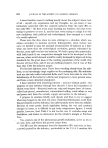
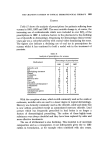
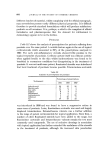
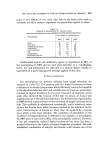
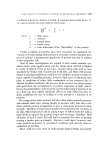
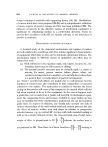
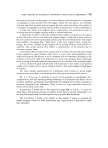
{3(•3(• JOURNAL OF THE SOCIETY OF COSMETIC CHEMISTS Different batches of material, whilst complying with the official monograph, may nevertheless possess vastly different physical properties. It is difficult therefore to provide standard formulations which will produce satisfactory products on all occasions. It is, perhaps, a relief to the compilers of official formularies and pharmacopoeias that the demand for ichthammol in dermatology appears to be on the decline. PSORIASIS Table III shows the analysis of prescriptions for patients suffering from psoriasis over the same period. A notable feature again is the use of topical corticosteroids xvhich amounted to 50% of the prescriptions analysed in 1967. The early anti-inflammatory steroids showed little promise in the topical treatment of psoriasis. Cortisone acetate itself was without activity when applied locally to the skin whilst hydrocortisone was found to be beneficial in eczematous conditions but disappointing in the treatment of psoriasis. It was not until more potent, fluorinated steroids were introduced that local treatment of psoriasis became possible. Triamcinolone acetonide Table III Analysis of prescriptions for psoriasis Medicament Salicylic acid Mercury salts Zinc salts Sulphur [chthammol Corticosteroids Dithranol Tar Percentage of prescriptions 1951 1957 26 33 17 11 12 5 8 5 8 0 0 0 4 20 20 27 1967 2O 3 3 0 0 5O 6 22 was introduced in 1958 and was found to have a suppressive action in some cases of psoriasis. Later, fluocinolone acetonide was used and largely displaced triamcinolone. Betamethasone valerate was a further addition to the range of potent corticosteroids for topical application. Since then, a number of other fluorinated steroids have been added to the range, but fluocinolone acetonide and betamethasone valerate remain the two most commonly used compounds. The use of occlusive dressings in association with topical application has further extended the usefulness of the steroids in the treatment of psoriasis, although the increased skin penetration

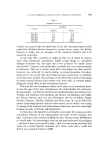
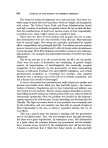
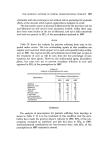
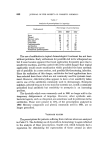
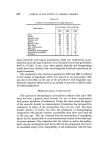
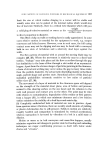
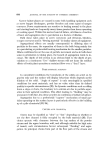
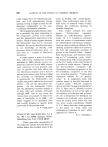
THE CHANGING PATTERN OF TOPICAL DERMATOLOGICAL THERAPY 667 obtainable with this technique is not without risk in producing the systemic effects of the steroids which topical application is designed to avoid. The intractable nature of psoriasis is illustrated by the fact that coal tar and dithranol are still used in local treatment. Indeed, whilst there may have been some decline in the use of dithranol, coal tar is still extensively used and was present in 22% of the prescriptions analysed in 1967. ACNE Table IV shows the analysis for patients suffering from acne in the period under review. The two outstanding agents in this condition are sulphur and resorcinol which appear to be used as frequently today as they were in 1951. The topical steroids and antibiotics have little part to play in the treatment of acne as will be seen from the low percentage of pre- scriptions for these agents. However, the antibacterial agent, hexachloro- phane, has come into use to prevent secondary infection in acne and appeared in 20% of the prescriptions in 1967. Table IV Analysis of prescriptions for acne ! Medicament Percentage of prescriptions ß 1••1 1 7 1967 Sulphur 66 I 54 Salicylic acid i 17 I 6 Resorcin 17 26 Zinc salts 66 26 Phenol • 33 0 Mercury salts I 170 0 Lead salts 0 Corticosteroids 00 12 Hexachlorophane 20 Antibiotics 0 3 IMPETIGO The analysis of prescriptions for patients suffering from impetigo is shown in Table V. It ,.'s in the treatment of this condition that the anti- biotics have made the greatest impact. Already in 1957, 60% of the pre- scriptions contained an antibiotic and this had risen to 75% in 1967. Antibiotic/steroid combinations are less favoured since only 25}/0 of the prescriptions in 1967 contained asteroid.
Purchased for the exclusive use of nofirst nolast (unknown)
From: SCC Media Library & Resource Center (library.scconline.org)