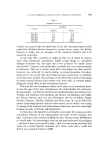
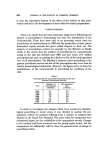
674 JOURNAL OF THE SOCIETY OF COSMETIC CHEMISTS medicament in the management of psoriasis. But it is mainly used in inpatient departments and therefore its use is not reflected in the figures which are derived largely from a large outpatient department. Lastly, I would comment on Table V which shows that 25% of prescriptions for impetigo contain corticosteroids. Impetigo, of course, is a bacterial infection of the epidermis and corticosteroids have absolutely no place in its management. I know perfectly well that the dermatologists on the staff of the Royal Free Hospital know this even better than I do and I would think that those figures to some extent include patients with eczema who became secondarily infected, whose skin became impetigonised, and who were treated with partly steroid combinations to combat the eczema and the antibiotic to deal with the impetigo.

J. Soc. Cosmetic Chemists 9.0 675-692 (1969) ¸ 1969 Society of Cosmetic Chemists of Great Britain The particle size analysis of pigments (and opaque particles) with the Q,uantimet M. J. SMITH* Presented at the symposium on "Powders", organised by the Pharmaceutical Society of Ireland and the Society of Cosmetic Chemists of Great Britain, at Dublin, on 16th April 1969. $]•nop$is--The examination of pigment dispersions while they are distributed throughout a plastic medium is complicated by the presence of the matrix this places the particles beyond the reach of most size analysis techniques. A method is described where the individual particles are examined directly using a microscope. The tedium and subjectivity of the technique are overcome by means of suitable instrumentation, in this case the Quantimet, which is an image analysing computer. The mode of operation and application of this in- strument are discussed, together with the errors which are attributable to the method. These are small in relation to the errors of sampling and it is the high counting speed of the technique which has enabled the significance of these latter errors to be reduced. INTRODUCTION As time progresses it is becoming ever more necessary to understand the properties and behaviour of particulate systems in general. This is mandatory if we are to improve the quality and efficiency of industrial products and processes. One such example of this occurs within the plastics industry, where considerable energies are devoted toward the effective mass colouring of the final product. This involves, amongst other problems, the efficient use of colourant materiMs, and the prevention of mechanical and electrical failure due to the presence of large particles. These objectives can be secured by preventing the formation of pigment agglomerates, re- *Imperial Chemical Industries Ltd. (Plastics Division), Welwyn Garden City, Herts. 675
Purchased for the exclusive use of nofirst nolast (unknown)
From: SCC Media Library & Resource Center (library.scconline.org)