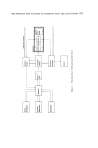
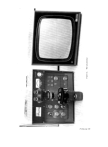
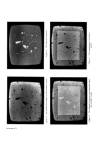
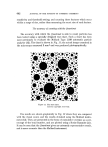
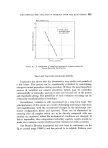
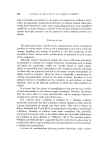
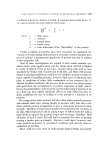
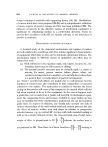
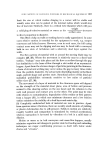
676 JOURNAL OF THE SOCIETY OF COSMETIC CHEMISTS moving them by dispersive mixing once they have been formed, or probably both. The effectiveness of such a mixing process must be measurable, and this is achieved by means of particle size analysis. Thus, the state of pigment dispersion before and after the dispersing process is compared via the respective particle size distributions. Both the accuracy and facility of such a comparison therefore depend upon the method used to measure particle size. There are, of course, many different methods available by which both the diameter and frequency of particles may be measured. These cover a wide range and have been adequately reviewed and described in the past (1-3). However, very little attention has been paid to the problems asso- ciated with assessing dispersions of one solid (opaque) within another (transparent or partly transparent). The principal source of difficulty results from the presence of the solid binder, which prevents free access to the particles within it. Furthermore, the possibility of removing this matrix without influencing the state of dispersion is extremely remote. As a result, little effort has in the past been directed towards the evaluation of pigment dispersion in plastics, apart from unaided visual assessment, and occasional examination using the optical microscope. However, such methods of examination have the advantage of directly measuring the dimensions of the particle unlike, for example, sedimentation, which results in an equivalent particle size in terms of a sphere falling at the same rate. The problems associated with a direct visual determination of size and frequency are those of subjectivity and tedium they have been widely investigated and reported (4). It is acknowledged that errors are related to the size of the sample examined, or the number of particles counted. This error is inversely proportional to the number of particles counted and to the tedium of the method. For an analysis to be representative it is necessary to count upwards of 1 000 particles, and for a sample with a wide size range it may be necessary to count more than this (5, 6). In the light of these severe practical problems it is apparent that a more satisfactory assessment of size and number can be made if the process is automatic. Several instruments have been designed with this end in view and have been commercially available. However, with the exception of the Quantimet, they have not as yet found wide acceptance. TttE Quantliner (7) The Quantimet was originally designed for metallurgical purposes, but has a wide range of potential applications (8) including that reported here.

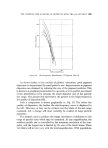
THE PARTICLE SIZE ANALYSIS OF PIGMENTS WITH THE QUANTIMET 677 li I ,,
Purchased for the exclusive use of nofirst nolast (unknown)
From: SCC Media Library & Resource Center (library.scconline.org)