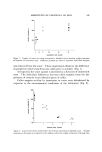
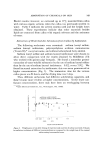
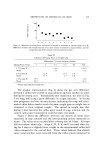
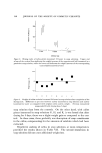
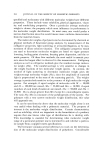
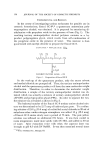
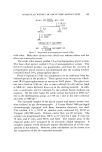
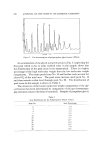
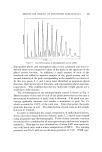
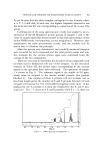
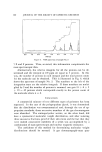
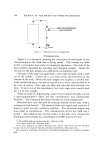
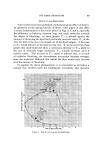
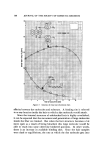
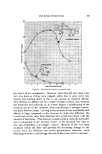
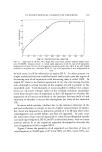
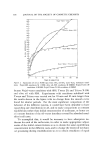
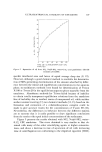
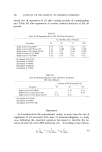
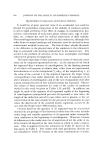
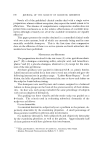
148 JOURNAL OF THE SOCIETY OF COSMETIC CHEMISTS lOO 5 MIN. 1 HOUR 5 DAYS DRYING TIME Figure 5. Drying cycle of callus pieces immersed 21 hours in soap solutions. Upper end of one of the vertical lines indicates the weight increase of the experimental half immersed in a particular soap solution, while the lower end indicates the weight increase of the corresponding control half immersed in water 'J']0 ' -10- l l ß ß i i ß l C D E F G H I K Figure 6. Weight of callus moieties immersed 24 hours in soap solution after completion of the drying cycle. Difference in per cent between moiety immersed in soap solution and moiety immersed in water as compared with original callus moiety weight. (Various commercial soaps coded C to K drying time, 5 days) soap solution than from the controls. On the other hand, with callus pieces immersed in soap solutions G, H, and K, it was found that after drying for 5 days, there was a slight weight gain as compared to the con- trol. In these cases, there probably was absorption of soap constituents in the callus, compensating for the amounts of solubles which had been extracted. Repetitive soaking of callus in soap solutions at room temperature provided the results shown in Table VII. The second immersion in soap solution did not cause additional weight loss.

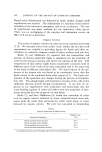
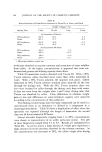
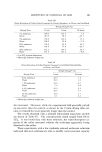
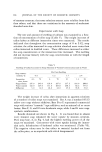
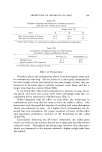
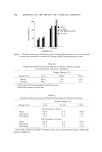
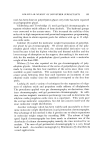
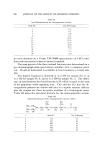
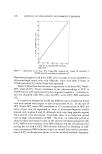
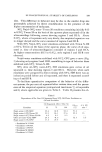
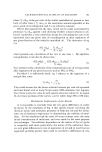
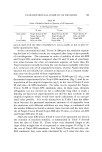
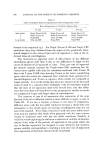
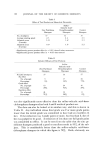
ABSORPTION OF CHEMICALS ON SKIN Table VII Repetitive Sorption and Desorption of Callus Immersed in 20% Solutions of Soaps E, D, and K 149 Weight Loss• (%) Soap E D K After 1st immersion of 21 hours After 2nd immersion of 4 hours 12.2 10.5 7.9 11.1 10.4 3.1 After 5 days' drying. All values based on original weight of particular callus piece. Table VIII Comparison of Weight Increases of Callus Moieties Immersed in Water and Hexylene GlycoN Treatment Swelling (%) Dehydration (%) Distilled water 97.0 34.9 Hexylene glycol (40% aqueous) 120.8 70.3 Immersion for I hour, drying for 30 min. Effect o/ Humectants Hexylene glycol and polyethylene glycol were investigated alone and in combination with soap. Of two halves of a callus piece immersed for the same length of time (and dried for the same length ot• time), the one immersed in hexylene glycol solution retained water faster and [cr a longer time than the control (Table VIII). It was t•ound that callus halves immersed in a mixture ot• soap, hexyl- ene glycol, and water also retain water faster and longer than the cor- responding halves immersed in distilled water (Fig. 7). When compared with the effect of soap alone, the humectant in combination with soap did not seem to have an additive effect. The humectant even decreased the amount o[ swelling and water absorption which was enhanced by soap. At a higher level ot• humectant, we ob- served less total absorption, but longer retention of water in the callus and apparently permanent retention of the humectant in the callus (Table IX). Immediately following the 20 hours' immersion, the callus piece which was soaked in the mixture showed less weight gain than the control soaked in water. Throughout the drying stage, however, the callus piece which was immersed in the mixture showed a higher weight gain than the control.
Purchased for the exclusive use of nofirst nolast (unknown)
From: SCC Media Library & Resource Center (library.scconline.org)