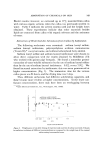
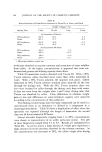
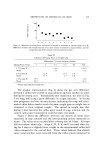
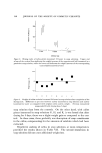
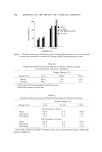
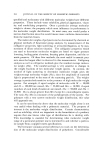
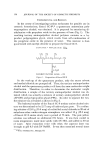
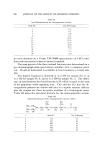
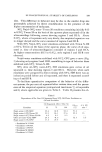
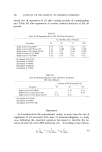
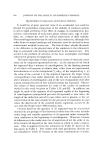
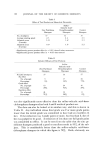
144 JOURNAL OF THE SOCIETY OF COSMETIC CHEMISTS Table II Water Retention of Callus Halves Immersed in Tween 80, or Water, and Dried Weight Change," (%) Drying Time 5 min 80 rain 1 day 5 days 1st Immersion (22 hours) 30% surfactant 230.0 58.4 Water 212.2 37.9 50% surfactant 114.2 42.8 Water 155.0 46.0 2nd Immersion (48 hours) 30% surfactant 326.0 Water 302.0 50% surfactant 128.0 Water 209.0 6.4 --16.3 --2.6 --6.1 2.3 --8.6 --4.5 --4.5 a Minus sign indicates weight loss. surfactant absorbed in stratum corneum and extraction of water solubles from callus. At the higher concentrations, it appeared that some sur- factants had greater solubilizing capacity than others. Table II summarizes results obtained with Tween 80. With a 30% Tween solution, callus absorbed more water than callus immersed in water. With a 50% Tween solution, the opposite took place. Callus immersed in 30% Tween solution retained more material all the way through the drying cycle. With the 50% Tween solution, there was less water retained by callus through the drying cycle than with water. It does not seem from the weights after 1 and 5 days' drying time, that Tween was absorbed by callus. Thus, differences in ultimate weight gain or loss and differences in water-retention capacity were observed according to the concentration of this surfactant. This finding is interesting, since the same compound can be used in a concentrated form as an ointment, or diluted as a component in a cleansing formulation. Table II shows a duplication of effect when the operation was repeated although the length of immersion the second time was 48 hours instead of 22 hours. Cocoyl sarcosine dispersions ranging from 1 to 20% concentrations were chosen as representative of an acidic surfactant system. The pH of these dispersions ranged from 3.1 to 3.8. Results are summarized in Table III. As can be noted, a high amount of weight gain represents a high amount of cocoyl safcosine absorbed by the stratum corneum. As the concentration was increased to 20%, the callus weight after drying

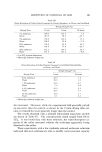
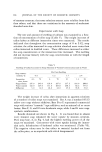
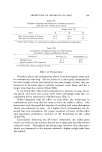
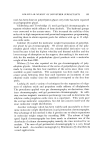
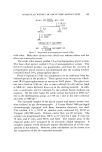
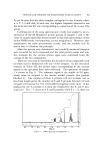
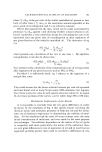
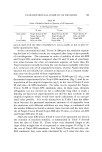
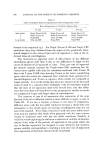
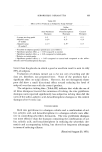
ABSORPTION OF CHEMICALS ON SKIN I45 Table III Water Retention of Callus Halves Immersed in Cocoyl Sarcosine? or Water, and Air-Dried Weight Change b (%) Drying Time 15 min 1 hour 24 hours 1% surfactant 194.5 159.5 7.3 Water 213.0 98.3 -- 27.1 3% surfactant 153.0 133.5 17.1 Water 108.2 93.8 --7.4 10% surfactant 133.0 95.0 35.7 Water 163.0 79.8 --23.7 20% surfactant 161.5 124.5 33.5 Water 197.0 163.5 -- 8.8 1 to 20% aqueous dispersions. Minus sign indicates weight loss. Table IV Water Retention of Callus Moieties Immersed in RO (CH2CH20),•SOaNa, or Water, and Dried Weight Change• (%) Drying Time 1 hour 24 hours 0.6% surfactant 42.9 1.4 Water 15.3 1.3 1.8% surfactant 10.0 -- 0.7 Water 7.6 2.8 6.0% surfactant 47.3 2.9 Water 32.3 1.9 12.0% surfactant 12.4 1.7 Water 3.1 2.1 Minus sign indicates weight loss. also increased. Moreover, while the experimental half generally picked up less water than the control, as shown in the 15-min drying time col- umn, it retained the water generally longer than the control. The results obtained with a sulfated ethoxylated long-chain alcohol are shown in Table IV. The concentrations tested ranged from 0.6 to 12%. It was found that, with these solutions, the water-absorption ca- pacity of the callus increased without the surfactant apparently being absorbed in the callus. These experiments with a few randomly selected surfactant solutions indicated that such solutions are able to modify water-retention capacity
Purchased for the exclusive use of nofirst nolast (unknown)
From: SCC Media Library & Resource Center (library.scconline.org)