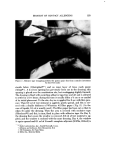
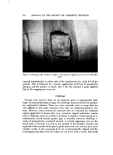
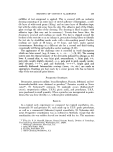
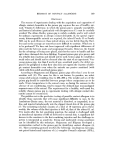
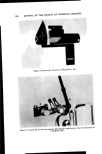
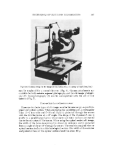
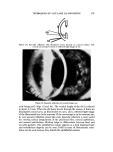
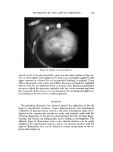
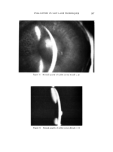
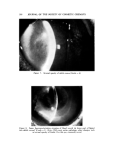
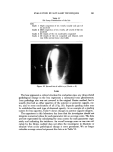
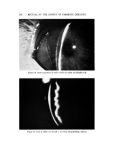
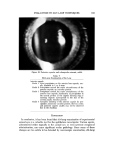
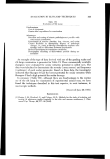
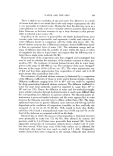
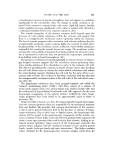
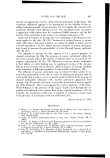
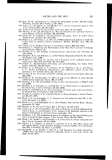
154 JOURNAL OF THE SOCIETY OF COSMETIC CHEMISTS ß .. •:•.:. .... . .. . ....... - -, - .•.• .e . ::•' ß :.•i •:• ........ • ...... 5 i." , •-:" ..:5 :,.: ":• -'"• ..... '•-•• :: ?2 •f •. •...'":•--"•".•..:'•.• '.--:..?'% •'.•::-.-i • = •: } -•'-•:' ..... .*•...:•.•.o, ........ .::.•:: •-• ?:•."::E: .... -•.• q.'•::::""::•'•.• ,"•-• •i•Si..•.'Sg •'•...: ....... • •: 5..:5•{• •' :: .:. 'i:•i "• ' '•' ' • :::':.': "• Z5•3• '• '•?•'.•:: • •. '. '"• -•:.'•. •:::::• •:':'.'.:"• :• ,• •:,s-: :5•: :•"• •: '•'::•.•57.. '3? *'•'• ' •7'• t-•• .,... ' . . . -. Figure 2. Dressing with window in place, test ointment applied and covered with filter paper injected intradermally on either side of the sensitization site (total 0.2 ml per animal). This is followed by a further application of 0.2 ml of prospective allergen, and the window is closed. Day 7, the test material is again applied. Day 9, all wrappings are removed. Challenge Toxicity tests must be done on all materials prior to experimental chal- lenge. In nonsensitized guinea pigs, the challenge material should not produce any substantial irritation. There are some materials such as soaps that are very difficult to test under occlusion since they are substantial primary irri- tants. However, most commercial materials that are intended for sustained topical application to human skin (e.g., cosmetics, topical antibiotics) can be used in challenge under an occlusive dressing. A negative control group of si- multaneously tested toxicity guinea pigs is included wherever challenge is made of prospectively sensitized animals. A normal appearing area on the dorsal back is selected it is best to test caudad of the shoulder muscles and cephclad of the muscles of the pelvic girdle since tests over muscles give more variable results. A site measuring 2 x 2 cm is atraumatical]y clipped and the overhanging long hairs from the edges are cut axvay with a scissor. One-tentl•

BIOASSAY OF CONTACT ALLERGENS 155 milliliter of test compound is applied. This is covered with an occlusive dressing consisting of an outer layer of stretch adhesive (Elastoplast), a mid- die layer of wide-mesh gauze (K]ing) and an inner layer of Blenderm tape, but with the sticky side away from the skin. The adhesive part of the Elasto- plast overlaps the sides of the dressing. The dressing is fixed in place with adhesive tape (this may not be necessary). Twenty-four hours later, the dressing is removed and readings are made. The hair is clipped around the borders of the test site so as to enlarge it, precaution being taken to identify the test site by straddling marks made with a skin-marking pencil. Further readings are made at 48 hours, at 72 hours, and later, under special circumstances. Retestings at a different site for a second and third testing occasionally will bring out borderline earlier readings (5, 10). The appearance of the challenge sites is recorded as word descriptions xvhich are later scored (e.g., 0, trace, ñ, +, -4-+ . . . ) (9, 10). The scoring system rates the clinical intensity of the dermatitis induced by allergen as fol- lows: 0, normal skin ñ, very faint pink, nonconfluent +, faint pink ++, pale pink, usually slighfiy elevated +++, pale pink to pink, usually moder- ately elevated ++++, pink and thickened +++++, bright pink and markedly thickened. Intermediate scorings (trace, +ñ, etc.) are made as appropriate. Readings are best made by a senior person who has no knowl- edge of the test animals' prior history. Prospective Sensitizers Benzocaine, neomycin sulfate, hexachlorophene, Furacin, bithionol, and tri- bromosalicylanilide were obtained as powders.* Procaine crystals as Nova- caine©*, 5% Xy]ocaine©* ointment, 5% mafenide cream (Sulfamy]on©? cream), streptomycin sulfate, U.S.P.õ, picric acidll , and petrolatum, U.S.P., were purchased in small quantity. When a powder was incorporated in petro- latum, this was done directly, i.e., without prior solubilization. ]•ESULTS In a typical early experiment we compared two topical anesthetics, viz., benzocaine 5% and procaine 5%, each made up in U.S.P. grade petrolatum, as well as a commercial (lidocaine) topical anaesthetic, 5% Xylocaine oint- ment. Prospective sensitization was as outlined in Methods, except that the sensitization site xvas neither shaved nor treated with dry ice. The maximum * From Dr. F. N. Marzulli, Director, Dermal Toxicity Branch, Division of Toxicology, Food and Drug Administration, Washington, D.C. 20204. ? Winthrop Laboratories, New York, N.Y. Astra, Worchester, Mass. õ Eli Lilly, Pearl River, N.Y. If Allied Chemical, Morristown, N.J.
Purchased for the exclusive use of nofirst nolast (unknown)
From: SCC Media Library & Resource Center (library.scconline.org)