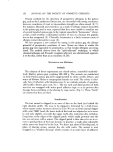
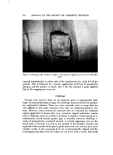
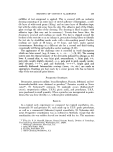
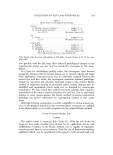
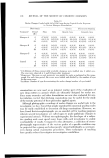
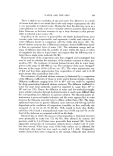
156 JOUBNAL OF THE SOCIETY OF COSMETIC CHEMISTS Table I Comparative Trials: Benzocaine 5% vs. Procaine 5% Sensitization T-22 Challenge 1% Intraderma] 5% Topical 78 Benzocaine 5% 0 a tr 79 I 0 tr 80 0 0 81 0 0 82 0 + ñ 83 0 + ñ t.c .... 0 0 t.e. 0 0 84 Procaine 5% 13.0 mm q-q-+ ñ 85 ] 4.0 mm 86 9.0 mm 87 16.5 mm 88 12.5 ram 89 13.0 ram t.e .... 0 0 t.c .... 0 0 "1% suspension. reactions to intradermal and topical challenge tests made on Day 22 are shown in Table I. Clearly, procaine is the more efficient sensitizer 5% Xylo- caine did not sensitize any animals. In later experiments, the sensitization rate with 5% benzocaine was increased to 100% by shaving and freezing the sen- sit zation site. Under the latter circumstances, in different experiments, simuI- taneous prospective testing with 5% Xylocaine ointment, with 5% bithionol in peh'olatum (no ultraviolet light activation), with 5% Furacin in petrolatum, and with 5% tribromosalicy]ani]ide in petrolatum gave no sensitization. This accords with clinical and experimental results in man (5, 6). In another experiment, we tested the allergen •city of three different con- centrations of picric acid in petrolatum. The sensitization method was as out- lined in Methods. For challenge open patch tests were made on Day 16 with one drop of 1, %, and •A•% picric acid dissolved in dibutyl phthalate (10). The maximum readings and the arithmetic sum of the "pluses" of each group of testings are tabulated in Table II. As is generally, but not universally, true, the higher concentration of sensitizer elicited the stronger reaction and in- duced the higher incidence of sensitization. In another experiment, we prospectively sensitized groups of guinea pigs with 5% mafenide cream (Sulfamylon cream), 5% streptomycin sulfate sus- pended in petrolatum, and 5% neomycin sulfate suspended in petrolatum. In the respective groups (plus toxicity control groups) challenge was made with 5% mafenide cream, 5% streptomycin sulfate ointment, and 5% neomycin sul- fate ointment. Five per cent malehide cream and 5% streptomycin sulfate

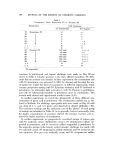
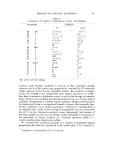
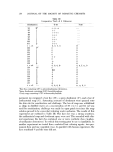
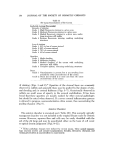
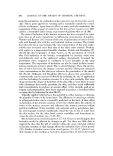
BIOASSAY OF CONTACT ALLERGENS 157 Table II Scnsitization with Different Concentrations of Picric Acid Ointment Sensitization Challenge a 58 1% 59 I (ñ +) (tr) 60 (++++ ñ) (++++) 6• (+++) (++) 62 (d--i-++) (-1-- ñ) 63 (+++) (++) 21 13 64 0.2% 65 I 0 0 66 -t-+++ ((++)) 67 68 ((tr)) 0 69 •6-V,. 9 70 0.04% +++ (+) 71 J 0 0 7•. (+ ñ) ((ñ)) 73 tr 0 74 0 0 75 I ++ + ñ 6-1/•. 3 ,•24h, (48 h), ((72 h)) readings. o'.'ntment each strongly sensitized % animals in their particular groups whereas only % of the guinea pigs prospectively sensitized to 5% neomycin surfate ointment in fact became sensitized. Further, the reactions to strepto- mycin and mafenide were considerably more intense and slower to resolve than those to neomycin. Sulfamylon cream is used in the therapy of extensive burns however, its sensitizing potential precludes its use as a routine topical antibiotic. Streptomycin is a potent contact sensitizer, allergic contact eczema to streptomycin being an occupational hazard of nurses who frequently han- dle the medication (as in certain sanitariums). Neomycin is incorporated as an antibiotic into a wide variety of topical preparations, but at a concentra- tion of 1% or less. Neomycin sensitivity occurs infrequently, but because of the large numbers at risk, cases of allergic contact dermatitis to neomycin are not uncommon in clinical medicine (8). Certainly neomycin sulfate is a weaker sensitizer than streptomycin sulfate. We evaluated the sensitizing potential of a number of unlabelled topical preparations that had been purchased in the market place.* In a typical ex- * Supplied as coded material by Dr. F. N. Marzulli,
Purchased for the exclusive use of nofirst nolast (unknown)
From: SCC Media Library & Resource Center (library.scconline.org)