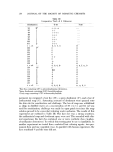
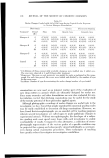
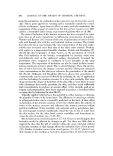
158 JOURNAL OF THE SOCIETY OF COSMETIC CHEMISTS Table III Comparative Trials of 3 Unknowns Sensitization T-16 T-28 94 95 96 97 98 99 100 101 t. c. x4 102 103 104 105 106 107 108 109 t. c. x4 110 111 112 113 114 115 116 117 t.e. x4 ß o +++ ñ ++ +q-q-+ ++ 0, 0, 0, tr 0 0 0 0 f. tr 0 -- o o, o, o, o o (td o o o o tr 0 0, 0, 0, 0 "Hair dye containing 2.8% p-phenylenediamine derivatives. •Spray deodorant containing 0.03% hexachlorophene. CGreen soap containing 0.75% tribromosalicylanilide. 0 0 0 tr 0 0 0 0 0 0, 0, f. tr, 0 0 0 0 0 0 0 0 0 tr, tr, 0, 0 periment, we compared a hair dye (H), a spray deodorant (F), and a bar of antibacterial soap (G). Saturating amounts of deodorant were sprayed onto the skin site for sensitization and challenge. The bar of soap was solubilized as chips in distilled water at a concentration of 1% (w/v) and 0.1 ml was used for sensitization challenge was made by open patch test since the soap solution proved to be somewhat irritating under occlusion. The results of this experiment are outlined in Table III. The hair dye was a strong sensitizer, the antibacterial soap and deodorant spray were not. This accorded with clin- ical experience the hair dye contained one or more synthetic dyes (p-phen- ylenediamine derivatives) for which skin testing prior to use is mandatory. In another experiment we tested three marketed hair coloring agents: two per- manent dyes and one vegetable rinse. In parallel with human experience, the dyes sensitized % and the rinse did not.

BIOASSAY OF CONTACT ALLERGENS 159 DISCUSSION The success of experiments dealing with the acquisition and expression of allergic contact dermatitis in the guinea pig requires the use of healthy ani- mals. Vitamin C deficiency, to which the guinea pig is uniquely susceptible, and bacterial infections (particularly with Streptococcus C ) must be carefully avoided. The albino Hartley guinea pig is widely available and is well suited for ordinary experiments in allergic contact dermatitis. If, for special experi- ments, histocompatible animals are required, the inbred Family II or Family XIII can be used. However, these inbred strains are less fertile than the Hart- leys and on the average are somewhat more difficult to sensitize. Which sex is to be preferred? We have not been impressed with significant differences of skin reactivity between males and nonpregnant females. However, the female has the advantage of being more placid, and thereby easier to handle and less apt to have damaged skin from fighting. Pregnant guinea pigs give poorer and less reliable skin reactions and should not be used. Guinea pigs do establish a social order and should not be rehoused after the start of an experiment. Verv young guinea pigs, less than 2 weeks of age, sensitized poorly the defect ap- pears to be peripheral h• that their skin does not express the reaction of aller- gic contact dermatitis even when the animals are passive sensitized (with viable cells from adult sensitized guinea pigs ). According to Magnusson and Kligman, guinea pigs older than I year do not sensitize well (6). The cause for this is not known. In practice, we select young adult animals weighing close to 400-500 g. The weight and sex of the guinea pig should be controlled between groups where comparisons are to be made. Warm temperatures in the animal room, as during the summer in the absence of air conditioning, tend to impair the delayed-type immunological responsiveness of the animal. The requirement for a healthy, well-cared for, suitably chosen guinea pig in experiments dealing with allergic contact der- matiris cannot be overstressed. The problem set in the predictive testing of possible contact allergens is to identify those materials that will cause significant difficulty in man. In the Landsteiner-Draize assay, the test material is dissolved, or suspended, in sa- line, and injected intradermally into the clipped dorsal skin of the guinea pig (7). The sensitizing schedule consists of a total of 10 injections given thrice weekly the volume of the first injection is 0.05 ml, that of the others 0.1 ml. Two weeks after the last sensitizing injection, the animal is challenged with an intraderma! injection of 0.05 ml delivered to normal skin. A significant dif- ference in the reactions to the first sensitizing injection and the challenge in- jection is interpreted as sensitivity. Strong and moderately strong sensitizers can be identified by this technique. Magnusson and Kligman developed a maximization method in the guinea pig for identifying contact allergens (6, 11 ). Their sensitizing protocol involves the following: simultaneous but sepa- rate paired intradermal injections of (a) complete Freund's adjuvant (CFA),
Purchased for the exclusive use of nofirst nolast (unknown)
From: SCC Media Library & Resource Center (library.scconline.org)