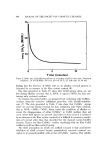
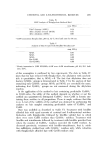
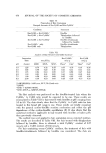
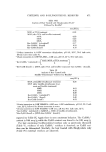
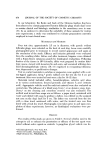
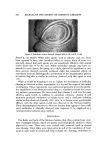
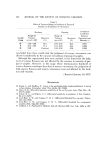
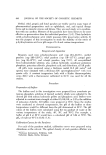
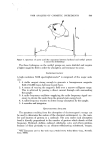
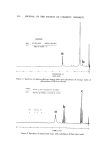
478 JOURNAL OF THE SOCIETY OF COSMETIC CHEMISTS Figure 3. Histologic section through plugged follicle (H. and E. X 40) firreed in our studies. While other agents, such as salicylic acid, etc., have been reported to have some beneficial effect on various forms of acne, it is generally agreed that such agents are not consistently effective. Our animal model shows this to be the case. While individual animals may have re- sponded to such agents, the group, as a whole, showed no significant or uni- form activity. Benzoyl peroxide produced slight but consistent effects on comedome removal. Histologically, acceleration of the keratinization process in hairless dog skin is similar to reactions observed with this agent in man (17). While it would be tempting to try to explain the mechanism of follicular clearing as observed in these experiments, it is beyond the scope of this initial investigation. Thcse experiments were performed primarily to test the predic- tive capabilities of the Mexican hairless dog as a nonclinical model for screen- ing antiacne preparations. We have noted that vitamin A acid was the most effective agent tested. In addition to comedone extrusion, vitamin A acid treatment produced exfoliation of keratin layers and a moderate irritation similar to that observed clinically (16). Also, as in human acne, questionable efficacy with the other agents tested was observed in the Mexican hairless. These dermatological reactions in Mexican hairless dogs appear to have suffi- cient similarities to clinically observed acne responses to be employed as a valid preclinical antiache assay method. CONCLUSIONS The flanks and back of the Mexican hairless dog often contain large num- bers of plugged follicles which are grossly and histologically similar to those observed in man. These sites were treated with materials used in clinical ache therapy. Color slides were taken prior to and at the conclusion of treat- ment in each study to record and help evalt•ate site cleaning, comedone re-

TESTING ANTIACNE AGENTS IN DOGS 479 moval and/or irritation. In addition, biopsies were taken h'om selected sites to evaluate comedone extrusion and irritation-induced changes. Preparations containing salicylic acid with or without hexachlorophene and several soap products produced no significant improvement of the comedone condition. No consistent irritation was observed. Treatment with 10% benzoyl peroxide re- sulted in slight improvement accompanied by some irritation. Vitamin A acid (retinoic acid) at 0.1% in an ethanol/propylene glycol vehicle caused marked comedone extrusion and irritation. Since similar results have been reported in clinical studies, the Mexican hairless dog appears to be a predictive model for assaying both efficacy and potential irritation of agents proposed for acne therapy. ( Received January 16, 1973) REFERENCES (9) (10) (11) (13) (14) (15) (16) 07) (1) Brown, V. K., Laboratory animals for dermatological research, J. Inst. Lab. Techs., 17, 122 (1966). (2) Orkin, M., Animal models (spontaneous) for human disease, Arch Dermatol., 95, 524 (1967). (3) Symposium: Choice of animal models for the study of disease process in man, Fed. Proc., 28, 160 (1969). (4) Jones, E. L., and Krizek, H., A technic for testing acnegenic potency in rabbits, ap- plied to the potent acnegen 2,3,7,8-tetrachlorodibenzo-P-dioxin, J. Invest. Dermatol., 39, 511 (1962). (5) Kligman, A.M., and Katz, A. G., Pathogenesis of acne vulgaris I. Comedogenic properties of human sebum in external ear canal of the rabbit, Arch. Dermatol., 98, 53 (1968). (6) Kligman, A.M., Wheatley, V. R., and Mills, O. H., Comedogenicity of human sebum, Ibid., 102, 267 (1970). (7) Kanaar, P., Follicular-keratogenic properties of fatty acids in the external ear canal of the rabbit, Dermatologica, 142, 14 (1971). (8) Van Scott, E. J. Transintegumental Screening o[ Drugs, in Montagna, W., Stoughton. R. B., and Van Scott, E. J., Advances in Biologit o[ Skin, Vol. XII, Pharmacologit and the Skin, Appleton-Century-Crofts, New York, 1972, pp. 523-33. Yankell, S. L., Schwartzman, R. M., and Resnick, B., Care and breeding of the Mexi- can hairless dog. Lab Anita. Care, 20, 940 (1970). Lever, W. F., Histor•atholog.tt o[ the Skin, Lippincott, Philadelphia, 1954. Schwartzman, R. M., and Orkin, M. A Comparative StudIt o[ Skin Diseases o[ Dog and Man, Thomas, Springfield, Illinois, 1962. Fulton, J. E., University of Miami, Miami, Fla., personal communication, 1972. Schwartzman, R. M., University of Pennsylvania School of Veterinary Medicine, personal communication. 1973. Piewig, G., Fulton, J. E., and Kligman, A.M., Pomade acne, Arch. Dermatol., 101, 580 (1970). Arundell, F. D., Acne vulgaris, Pediat. Clin. N. Amer., 18, 853 (1971). Kligman, A.M., Fulton, J. E., and Plewig, G., Topical vitamin A acid in acne vul- garis, Arch. Dermatol., 99, 469 (1969). Vasarinsh, P., Benzoyl peroxide-sulfur ]•tion, Ibid., 98• 183 (1968).
Purchased for the exclusive use of nofirst nolast (unknown)
From: SCC Media Library & Resource Center (library.scconline.org)