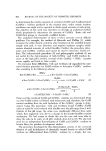
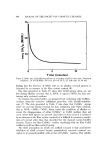
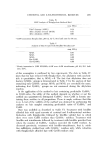
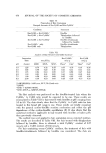
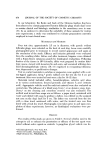
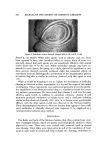
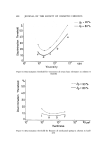
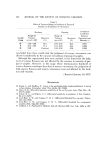
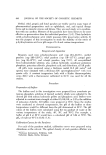
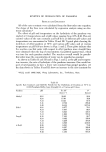
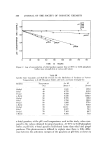
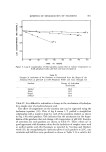
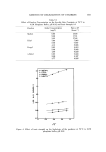
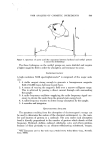
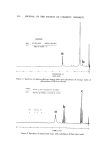
468 JOURNAL OF THE SOCIETY OF COSMETIC CHEMISTS 75 / , I / I i o 5 lO Time (minutes) Figure 2. MNP• titer of bisulfite-treated hair as a function of pH 10 rinse time. Treatment conditions: 1.0 M NH4HSO•-3M urea, pH 6.6, 32øC, 3:1 bath ratio for 30 min finding that the decrease of MNP• titer in an alkaline reversal process is balanced by an increase in 'the fiber cystinc content (6). The data presented in Table IV show that CySH groups alone are not lost during alkaline reversal that is, MNP• is equal to MNP,. for hair con- taining only eysteinyl residues. To examine this point further, we prepared hair containing only CySSO3- residues using the oxidative sulfitolysis procedure with bisulfite-tetrathio- hate (7). The data presented in Table V also show that CySSO3- groups alone are not lost during reversal for hair containing only these residues that is, MNPt = MNP2 = MNP,•. Since, under the conditions of alkaline re- versal, the disappearance of either CySSOa- or CySH residues does not occur unless both spedes are present (and when it does occur it is balanced by an increase in the fiber cystinc content), it is difficult to envision a mecha- nism of reversal other than that described for the classical eystine-bisulfite reaction. That is, one fiber CySSO:•- residue combining with one fiber CySH residue to yield one fiber cystinyl group. The third assumption on which our method is based is that acrylonitrile alkylation of alkali reversed keratin quantitatively converts cysteinyl me- captan to fi-cyanoethylsulfide without loss of CySSOa- residues. The validity

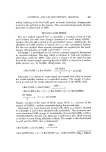
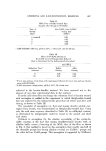
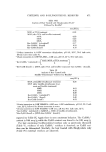
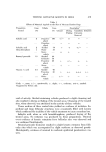
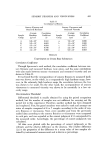
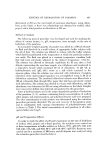
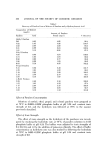
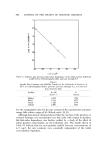
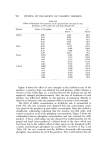
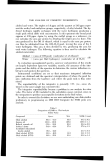
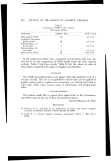
CYSTEINYL AND S-SULFOCYSTEINYL RESIDUES 469 Table IV MNP Analysis of Thioglycolate-Reduccd Hair '• Total cleavage (MNP•) After alkaline reversal (MNP,o) After alkylation (MNP.•) meq SH/g 0.• (- 0.,33 0.00 ().SON ammonium thioglyeolate, pH 9.9., $2øC, 50:1 bath ratio for 30 min. Table V Analysis of Hair Treated with Bisulfite-Tetrathionate" meq SH/g MNPx 0.87 MNP.o 0.87 MNPa 0.86 Ker-CySH 0.01 Ker-CySSO•- 0.86 30-min immersion in 1.0M NH•HSOo-4.0M urea-0.4M tetrathionate, pH 8.0, 50:1 bath ratio, 32øC. of this assumption is confirmed by two experiments. The data in Table IV show that for hair reduced with thioglycolate, the alkylation with aeryloni- h'ile is quantitative that is, MNPa = 0. The fact that alkylation does not destroy CySSOa- groups is demonstrated in Table V for the analysis of hair containing only CySSOa- groups. MNPo_ and MNPa are essentially the same, indicating that CySSO:•- groups are not consumed during the alkylation reaction. In the application of the method to hair containing predictable CySSO:•- to CySH ratios, the utility of this method depends on whether or not the method can quantitatively distinguish CySSOa- from CySH in keratin con- taining these residues in all proportions. There is ample evidence that this is so. A test of the validity of the method was obtained by performing the analyses on hair samples containing predictable ratios of CySSO.•- and CySH. Hair was modified as described in Table VI. Treatment with bisulfite afforded hair with equal amounts of cysteinyl and S-sulfocysteinyl residues. Reduction with thioglycolate followed by bisulfite yielded hair in which there were more CySH residues than CySSO.•- residues. Treatment xvith bisulfite and tetrathionate followed by treatment with bisulfite provided hair where the number of CySSOa- residues exceeded the CySH residues. As discussed previously, treatment with bisulfite-tetrathionate, fl•at is, oxida- rive sulfitolysis, yielded hair with CySSOa- residues only, while reduction with thioglycolate afforded hair with CySH residues only.
Purchased for the exclusive use of nofirst nolast (unknown)
From: SCC Media Library & Resource Center (library.scconline.org)