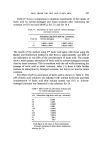
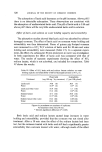
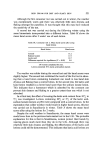
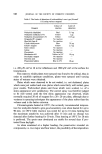
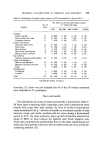
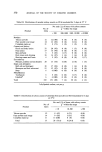
530 JOURNAL OF THE SOCIETY OF COSMETIC CHEMISTS The results showed that the control lotion had no effect on water holding or extensibility. Both the lactic acid lotion at pH 4 and the sodium lactate lotion increased water holding and extensibility. After rinsing for 30 min, the corneum treated with lactic acid lotion had retained an increased extensibility, and that treated with the sodium lactate lotion had not. As with the lactic acid solution, the increased water holding capacity caused by the lactic acid lotion was lost after rinsing. These results indicated that a relatively short treatment (90 s) with a lotion at pH 4 containing lactic acid resulted in an increased extensibility and that after a relatively prolonged rinsing in water (30 min) the extensi- bility was still higher than that of control pieces of corneum. Effectiveness of lactic acid hand lotions in consumer tests In the first consumer test, 143 women used each of three hand lotions for 2 weeks. The lotions were a control, a sodium lactate lotion and a lactic acid lotion. The effect of these lotions on corneum water holding and extensi- bility was shown in Table VII. Table VIII shows the mean hand scores after using the three lotions. Table Viii. Consumer test 1. Mean hand scores after using hand lotions Hand lotion Hand score Control 12.3 Sodium lactate 9.6 Lactic acid 9.0 Difference required for significance (P = 0.05) 1.2 143 women completed the test. Lotions contained 10 % lactic acid/sodium lactate. The mean hand score after using the control lotion was significantly higher, i.e. there was more hand skin dryness and flaking than after using the sodium lactate or lactic acid lotion. The lactic acid lotion resulted in a lower mean hand score than the sodium lactate lotion, but the difference between the two was not statistically significant. This test, therefore, showed that the presence in a hand lotion of a humectant, such as sodium lactate, which is not adsorbed by corneum, can result in less skin dryness and flaking. It did not demonstrate that a humectant which is adsorbed results in a better hand condition than one which is not.

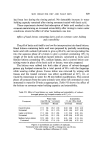
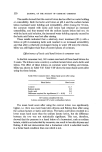
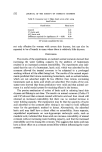
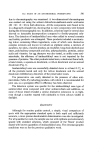
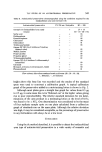
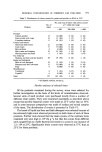
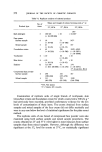
SKIN CREAM FOR DRY AND FLAKY SKIN 531 Although the first consumer test was carried out in winter, the weather was exceptionally warm and there was relatively little skin dryness and flaking amongst the panellists. It was thought that this may have reduced the sensitivity of the test. A second test was carried out during the following winter using the same humectants incorporated into a different lotion. Table IX shows the mean hand scores after 2 weeks' use of each lotion. Table IX. Consumer test 2. Mean hand scores after using hand lotions Hand lotion Hand score Control 13.2 Sodium lactate 11.9 Lactic acid 10.7 Difference required for significance (P = 0.05) 0.9 156 women completed the test. Lotion contained 10 % lactic acid/sodium lactate. The weather was colder during the second test and the hand scores were slightly higher. The second test confirmed the result of the first test in show- ing that a hand lotion containing humectant can result in less hand skin dryness and flaking than a control lotion. In the second test, the lactic acid hand lotion resulted in a lower hand score than the sodium lactate lotion. This indicates that a humectant which is adsorbed by the corneum can prevent skin dryness and flaking to a greater extent than one which is not adsorbed. In a third test, the effect of lowering the lactic acid content from 105/o to 5•o was investigated. Lotions containing 10•o or 5•o of the lactic acid- sodium lactate mixture at pH 4 were compared with a control lotion. In the expectation that colder weather would result in higher hand scores, this test was carried out in Scandinavia in winter. Table X shows the mean hand scores after using the lotions for 2 weeks. Despite the cold weather in Scandinavia, the mean hand scores were much lower than in the previous tests carried out in the U.K. The probable explanation for this is that in Scandinavia, women protect their hands by wearing gloves much more than they do in the U.K. Although there was relatively little skin dryness and flaking, the effectiveness of the lactic acid lotions could still be demonstrated. This indicates that lactic acid lotions are
Purchased for the exclusive use of nofirst nolast (unknown)
From: SCC Media Library & Resource Center (library.scconline.org)