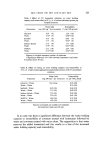
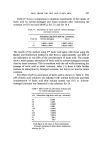
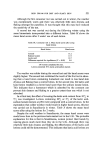
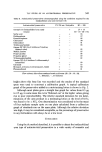
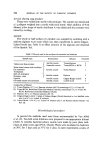
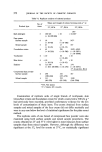
566 JOURNAL OF THE SOCIETY OF COSMETIC CHEMISTS Aerosol shaving soap products These were voided into sterile wide neck jars. The sample was mixed and a 1 g aliquot weighed into a sterile wide neck bottle. After addition of 9 ml diluent, a few drops of sterile Antifoam A was added and the contents were mixed by swirling. Lipstick The whole or half surface of a lipstick was sampled by swabbing with a calcium alginate wool swab which was then transferred to sterile Calgon- Lubrol broth (see Table I) to effect solution of the alginate and dispersal of the lipstick 'fat'. Table I. Diluents used in the analyses of cosmetics and toiletries Sample type Examination Diluent Footnote Talcum and face powders { Aerobic counts Anaerobic counts Water-based creams and emulsions Eye cosmetics ) Aerobic counts Toothpastes Bath oil, detergents Shampoo, soap Aerobic counts Lipstick Aerobic counts Oil-based creams and emulsions Aerobic counts Tween-Peptone 1 Tween-RCM or RCM 2 Tween-Peptone 1 Peptone 3 Calgon-Ringer-Lubrol 4 Lubrol broth 5 Composition of diluents (1) Tween-Peptone: 0.1 • w/v Peptone solution (pH 7.0) containing 0.1% v/v Tween 80. (2) Tween-RCM: Reinforced Clostridial Medium (Oxoid), containing 0.1% v/v Tween 80. RCM: Reinforced Clostridial Medium (Oxoid). (3) Peptone: 0.1% w/v Peptone solution, pH 7.0. (4) Calgon-Ringer-Lubrol: 1 tablet of Calgon-Ringer (Oxoid) dissolved in 6 ml distilled water plus 4 ml 4 % w/v Lubrol W solution. (5) Lubrol Broth: 4 ml 4% w/v Lubrol W solution plus 5 ml Nutrient Broth (Oxoid)--see Ref. (2). Microbiological procedures In general the methods used were those recommended by Van Abb6 et al. (2). Ten-fold serial dilutions were prepared in an appropriate diluent (Table I). Aerobic bacterial colony counts were made by pour plate tech- nique on plate count agar (PCA Oxoid). Plates were incubated in duplicate at 30øC for 3 days and at 37øC for 2 days. In later experiments counts of

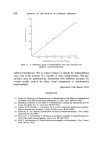
MICROBIAL CONTAMINATION OF COSMETICS AND TOILETRIES 567 bacteria were made at 25øC for 5 days instead of at 30øC for 3 days. Counts of yeasts and moulds were made on Sabouraud Dextrose Agar (SDA Oxoid) incubated for 5 days at 25øC. Counts of anaerobic sporeforming bacteria were made on Reinforced Clostrial Agar (RCA Oxoid) after pasteurization (30 min at 75øC) of dilutions made up in freshly steamed Reinforced Clostridial Medium (Oxoid). The plates were incubated for 3 days at 37øC in an atmosphere of 95• hydrogen plus 5}/0 CO2. Clostridia were identified by the methods described by Willis (13). Dilutions of lipstick and toothpaste samples were tested for the presence of presumptive coliforms by inoculation into MacConkey Bile Salt Broth (Oxoid) which was incubated at 37øC and examined after 1 and 2 days. After incubation the number of colonies was recorded for each plate. Arithmetic mean counts were derived for each item from those plates having from 30 to 300 colonies. In the case of samples with low counts the number of colonies recorded on the first dilution tested was used to derive the count. In some instances, the presence of an antimicrobial agent in the product was shown by a carryover effect where the count at high dilution was sometimes greater than the count at low dilution. Repeat analyses were always undertaken in such cases. MouM growth on compressed eye make-up The remainder of each sample after surface scraping was aseptically dissected into three portions, each of which was placed on a moistened sterile filter paper in a petri dish. The surface of the make-up was moistened with sterile water and the samples were incubated in a moist atmosphere for several weeks at 25øC sterile water was added as necessary to the samples. Statistical analysis When replicate samples were tested, the significance of the difference in mean count for samples from different sources (e.g. surface scrape or mixed sample) or for replicate plates incubated at different temperatures was tested using two methods. For those results where large numbers of 'sterile' items (i.e. 10 cfu g4) were obtained, Wilcoxson's Signed Ranks test was used (14). Where mainly definitive results were obtained, the mean difference of the log•0 counts from zero was tested using Student's t. Counts of 10 g-• were in all cases assigned the numerical value of 10 in calculations of the t value.
Purchased for the exclusive use of nofirst nolast (unknown)
From: SCC Media Library & Resource Center (library.scconline.org)