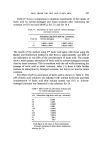
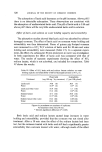
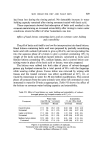
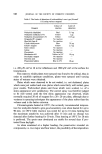
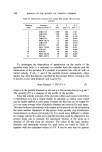
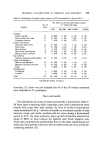
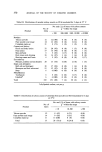
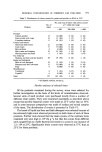
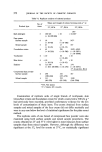
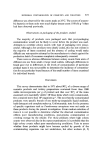
SKIN CREAM FOR DRY AND FLAKY SKIN 531 Although the first consumer test was carried out in winter, the weather was exceptionally warm and there was relatively little skin dryness and flaking amongst the panellists. It was thought that this may have reduced the sensitivity of the test. A second test was carried out during the following winter using the same humectants incorporated into a different lotion. Table IX shows the mean hand scores after 2 weeks' use of each lotion. Table IX. Consumer test 2. Mean hand scores after using hand lotions Hand lotion Hand score Control 13.2 Sodium lactate 11.9 Lactic acid 10.7 Difference required for significance (P = 0.05) 0.9 156 women completed the test. Lotion contained 10 % lactic acid/sodium lactate. The weather was colder during the second test and the hand scores were slightly higher. The second test confirmed the result of the first test in show- ing that a hand lotion containing humectant can result in less hand skin dryness and flaking than a control lotion. In the second test, the lactic acid hand lotion resulted in a lower hand score than the sodium lactate lotion. This indicates that a humectant which is adsorbed by the corneum can prevent skin dryness and flaking to a greater extent than one which is not adsorbed. In a third test, the effect of lowering the lactic acid content from 105/o to 5•o was investigated. Lotions containing 10•o or 5•o of the lactic acid- sodium lactate mixture at pH 4 were compared with a control lotion. In the expectation that colder weather would result in higher hand scores, this test was carried out in Scandinavia in winter. Table X shows the mean hand scores after using the lotions for 2 weeks. Despite the cold weather in Scandinavia, the mean hand scores were much lower than in the previous tests carried out in the U.K. The probable explanation for this is that in Scandinavia, women protect their hands by wearing gloves much more than they do in the U.K. Although there was relatively little skin dryness and flaking, the effectiveness of the lactic acid lotions could still be demonstrated. This indicates that lactic acid lotions are

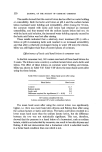
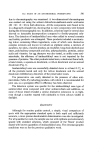
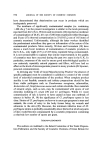
532 JOURNAL OF THE SOCIETY OF COSMETIC CHEMISTS Table X. Consumer test 3. Mean hand scores after using hand lotions Hand lotion Hand score Control 6.42 5 % lactic acid 5.36 10 Yo lactic acid 5.32 Difference required for significance (P = 0.05) 0.90 107 women completed the test. not only effective for women with severe skin dryness, but can also be expected to be of benefit in cases where there is relatively little dryness. DISCUSSION The results of the experiments on isolated animal corneum showed that increasing the water holding capacity by the addition of humectants resulted in an increased corneum extensibility. The experiments also indi- cated that the use of a humectant, lactic acid, which was adsorbed by the corneum allowed the treated corneum to be subjected to a prolonged washing without all the effect being lost. The results of the animal experi- ments predicted that lotions containing humectants, such as sodium lactate, which are not adsorbed might be less effective than lotions containing humectants such as lactic acid which are adsorbed. The results of the con- sumer tests showed that these predictions were valid and that animal cor- neum is a useful model system for studying effects in the human. The precise mechanism of action of lactic acid in reducing hand skin dryness and flaking is not clear. The results on animal corneum (Tables VI and VII) showed that corneum treated with lactic acid and then rinsed still retained an increased extensibility but there was no residual increase in water holding capacity. The explanation may be that the quantity of lactic acid adsorbed to the corneum after rinsing is too small to hold sufficient water for the gravimetric method to detect. Alternatively, the adsorbed lactic acid may itself have a direct effect on extensibility. Some separate, unpublished experiments on non-hygroscopic carboxylic acids, such as mandelic acid, indicated that these acids can increase extensibility of animal corneum without increasing water holding capacity, and that the increased extensibility survives rinsing the corneum. This suggests that lactic acid may have a direct effect on a corneum extensibility without influencing the water content.
Purchased for the exclusive use of nofirst nolast (unknown)
From: SCC Media Library & Resource Center (library.scconline.org)