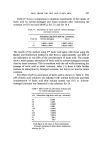
SKIN CREAM FOR DRY AND FLAKY SKIN 523 Consumer tests with lotions Three consumer tests were carried out, each comparing the effects of three lotions on housewives' hands. In each test, all three had the same oil phase and two of the lotions contained humectant in the aqueous phase and the third did not and served as a control. At least 100 women took part in each test. Each woman used each of the three lotions for a period of 2 weeks. There were equal numbers of women using the lotions in each of the six possible sequences. The amount of hand dryness and flaking was assessed at the start of the test and after two weeks' use of each lotion and the effects of the lotion were compared. In order to assess the effect of a lotion on skin dryness and flaking there must be some initial dryness and flaking. The hands of about double the number of women required were examined and those with the most hand skin dryness and flaking were selected. The tests were all carried out in winter to obtain the maximum amount of skin dryness. The method of assessing hand skin dryness and flaking has been reported previously by Gibson (13). It consists of a trained assessor scoring six areas of each hand according to the following scheme :--0 = no relevant visible damage 1 = slight dryness 2 = marked dryness 3 = slight flaking 4 = marked flaking/slight cracking 6 = severe cracking. The areas of the hand assessed are: back of hand, thumb web, other webs, back of fingers, palm, and front of fingers. There is no clear distinction between any of the grades of dryness and flaking, but with practice, assessors can become consistent in their scoring. The 12 areas on each panellist are summed to give total hand score. To obtain a proper statistical balance for the experiment, the women who were to take part in the test were arranged in decreasing order of hand score. They were then allocated to one of the six possible sequences of hand lotion usage by taking the first six on the list and allocating them at random to one of the six sequences. This process was repeated down the list. In this way the mean and range of hand scores in each sequence was approximately the same. In each test the same person assessed the hands and did not know which lotion the panellists had been using. Also the panellists themselves received coded products and did not know which lotions contained the humectants. Using the six possible sequences of hand lotion usage allows the statis- tical analysis of the results to take account of any variations in the overall mean hand score with time. Such variations may occur as the result of

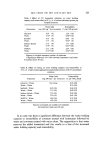
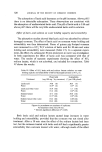
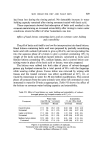
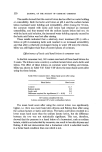
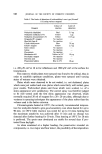
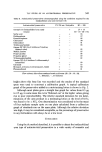
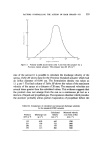
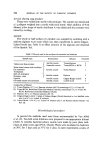
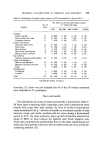
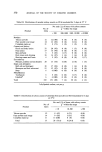
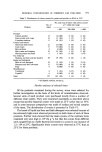
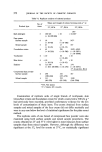
524 JOURNAL OF THE SOCIETY OF COSMETIC CHEMISTS changes in the weather. In order to ascertain whether there are significant differences between hand lotions, the statistical analysis must take account of differences between subjects in their mean hand scores and also the differences between the two weekly hand scoring sessions. In an analysis of variance, each of the six sequences of hand lotion usage was analysed as a randomized block experiment with some missing observations, subjects corresponding to blocks and scoring sessions to treatments. The treatment means which are given by this analysis are the scoring session means cor- rected for differences between subjects. They contain information on differences between lotions as well as between sessions. These results were then analysed as a generalized latin square experiment, sequences corre- sponding to rows, sessions to columns and lotions to treatments. The treatment means which are given by this analysis are the overall mean hand scores for each lotion corrected for differences between subjects and for differences between scoring sessions. RESULTS Effect of normal humectants on isolated corneum In the first series of experiments, the effect of a number of humectants on the water holding capacity and extensibility of solvent-damaged guinea pig footpad corneum was investigated. Table I shows the effect of immersing the corneum for 30 min in 5•o aqueous solutions of glycerol, sorbitol, sodium lactate and the sodium salt of 5-pyrollidone-2-carboxylic acid (NaPCA). Glycerol and sorbitol are commonly used humectants in skin creams. NaPCA (14) and lactate (5) are important constituents of the natural hygroscopic material in intact corneum. In each experiment, the effects of the humectant solution were compared with those of water on a number of replicate pairs of corneum pieces. The table indicates where there were statistically significant differences between the effects of humectant and water, as assessed by analysis of variance. All the humectants increased the extensibility of corneum under these conditions. With the exception of sorbitol, they also significantly increased the water holding capacity. Table H shows the effect, in a different series of experiments, of immers- ing the treated corneum in water. Solvent-damaged corneum was immersed in 5•o solutions of the humectants for 30 min, followed by immersion in water for 30 min. Control pieces of corneum were immersed in water for two successive periods of 30 min.
Purchased for the exclusive use of nofirst nolast (unknown)
From: SCC Media Library & Resource Center (library.scconline.org)