520 JOURNAL OF THE SOCIETY OF COSMETIC CHEMISTS insults in the environment. Because much of the body surface is continu- ously stretching and flexing the stratum corneum must be flexible and extensible in order to conform without cracking to changes in body posture. The extensibility of corneum depends upon its water content (1, 2) and upon its temperature (3, 4). When the skin surface is exposed to cold or dry conditions, there must be a gradient of decreasing water content and tem- perature from the base of the corneum to the surface. This means that the corneum surface tends to be less extensible than the deeper layers so that surface cracks and flaking occur more frequently than deep cracks or chapping. One objective of skin cream and lotions is, therefore, to maintain a high corneum water content and extensibility so that skin cracking and flaking is less likely to occur. Several authors (2, 5-7) have shown that the water content of corneum depends upon the presence within the corneum of hygroscopic substances which can hold water in atmospheres of normal humidity. These hygro- scopic substances are contained within the corneum cells by the cell walls which are permeable to water but not to electrolytes and they cannot be extracted unless the cell wall is damaged (2). The water held by the hygro- scopic materials maintains the extensibility of the corneum (2). The cell wall can be damaged by physical disruption, by extracting its lipids with solvents or by prolonged treatment with detergents which also extract lipids (8). The loss of hygroscopic substances resulting from this damage reduces the water content and extensibility of corneum (2). The knowledge of the way in which corneum normally holds water and maintains its extensibility enables one to postulate that extensibility of damaged corneum could be increased by adding hygroscopic substances and a number of skin preparations contain humectants such as glycerol and various mixtures simulating the natural hygroscopic substances. However, in intact corneum the natural hygroscopic substances are kept in by the cell walls. When hygroscopic materials are added to solvent- or detergent- damaged corneum they may penetrate into the corneum cells but are un- likely to be retained and will be washed out when the skin is exposed to water. Their effect on extensibility is therefore likely to be only temporary. The objective of the work reported in this paper was to find a hygro- scopic material which could increase the extensibility of solvent-damaged corneum and which would be retained by the corneum so that the increased extensibility would survive immersing the corneum in water. Solvent- rather than detergent-damaged corneum was selected because the damage is

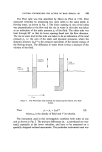
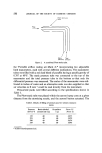
SKIN CREAM FOR DRY AND FLAKY SKIN 521 greater and more reproducible. A further objective was to incorporate this material into hand lotion and compare the effect on dry and flaky skin with that of lotions containing no humectant or lotions containing humectants which were not retained by the corneum. EXPERIMENTAL Studies on isolated corneum--stratum corneum Corneum was obtained from the rear footpads of guinea pigs. It was separated by incubating the whole footpad in 0.1 mol tris buffer, pH 7.2, containing 2 mol urea and 0.5•o trypsin (BDH) for 18 h at 37øC (2). After this the soft underlying tissues could be scraped away and the resulting corneum was washed for 2 h in distilled water with only one change of water. It was solvent-damaged by immersion in diethyl ether at ambient temperature for 18 h, followed by immersion in distilled water at ambient temperature for 6 h, This procedure removed lipids and hygroscopic sub- stances and reduced the water content and extensibility in humid atmo- spheres (2). This corneum was then used in experiments designed to increase water content and extensibility towards the levels for intact corneum. Measurement of water content in humid atmospheres The technique for measuring water content or water holding capacity has been described previously (2). Briefly, it consisted of equilibrating pieces of corneum at 81•o r.h. and ambient temperature over saturated potassium bromide solution (9) to constant weight. The pieces of corneum were then transferred to a dry atmosphere over molecular sieve (type 4A) and re- equilibrated before weighing. Both equilibria take about 6 days to attain. The water holding capacity was expressed as mg water held 100 mg -x dry weight of corneum at 81•o r.h. Measurement of extensibility in humid atmospheres The technique for measuring extensibility has also been described pre- viously (2). From each piece of footpad corneum a strip measuring 0.6 x 1.5 cm was cut with a stainless steel punch. Extensibility was measured on an Instron Tensile Tester. The strip of corneum was clamped between two pairs of jaws and was stretched at a constant rate of extension. The load
Purchased for the exclusive use of nofirst nolast (unknown)
From: SCC Media Library & Resource Center (library.scconline.org)