MICROBIAL CONTAMINATION OF COSMETICS AND TOILETRIES 565 In general, 1 g samples were taken for each product, but in some in- stances 10 g or 0.1 g samples were examined. The sampling procedures used were as follows. Talcum powder An adequate quantity of the powder was shaken into a sterile petri dish, mixed and a representative sample was weighed into a tared bottle. Loose and compressed face powder After aseptically removing the seal, a sample of powder was scraped from the entire surface of the product into a sterile petri dish. For mixed samples the complete contents of the container were ground using a sterile pestle and mortar. Complete make-up Bottled products were mixed by inversion 20 times through an arc of 1 ft and a representative sample was removed using a wide-bore sterile pipette. For tubed products a large sample was extruded into a sterile bottle, mixed thoroughly and a sample for analysis was taken with a sterile spatula. Face and hand creams, cake mascara and eye shadow Products were sampled by taking a surface scrape as detailed above for face powder. Liquid products (shampoo, bath oils, eye shadow) The samples were mixed by inversion and an aliquot was removed by pipette. Toothpaste and other tubed products Samples were removed aseptically by extrusion through the nozzle. A second sample of each product was obtained by aseptically removing the crimped end of the tube and extruding a suitable sample. Soap cakes These were scraped with a sterile scalpel to remove wafer thin shavings from the entire surface. The shavings were mixed and a representative sample was taken for analysis.

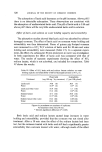
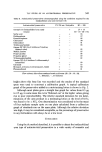
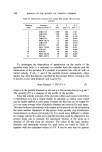
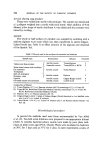
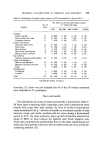
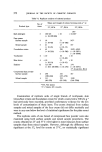
566 JOURNAL OF THE SOCIETY OF COSMETIC CHEMISTS Aerosol shaving soap products These were voided into sterile wide neck jars. The sample was mixed and a 1 g aliquot weighed into a sterile wide neck bottle. After addition of 9 ml diluent, a few drops of sterile Antifoam A was added and the contents were mixed by swirling. Lipstick The whole or half surface of a lipstick was sampled by swabbing with a calcium alginate wool swab which was then transferred to sterile Calgon- Lubrol broth (see Table I) to effect solution of the alginate and dispersal of the lipstick 'fat'. Table I. Diluents used in the analyses of cosmetics and toiletries Sample type Examination Diluent Footnote Talcum and face powders { Aerobic counts Anaerobic counts Water-based creams and emulsions Eye cosmetics ) Aerobic counts Toothpastes Bath oil, detergents Shampoo, soap Aerobic counts Lipstick Aerobic counts Oil-based creams and emulsions Aerobic counts Tween-Peptone 1 Tween-RCM or RCM 2 Tween-Peptone 1 Peptone 3 Calgon-Ringer-Lubrol 4 Lubrol broth 5 Composition of diluents (1) Tween-Peptone: 0.1 • w/v Peptone solution (pH 7.0) containing 0.1% v/v Tween 80. (2) Tween-RCM: Reinforced Clostridial Medium (Oxoid), containing 0.1% v/v Tween 80. RCM: Reinforced Clostridial Medium (Oxoid). (3) Peptone: 0.1% w/v Peptone solution, pH 7.0. (4) Calgon-Ringer-Lubrol: 1 tablet of Calgon-Ringer (Oxoid) dissolved in 6 ml distilled water plus 4 ml 4 % w/v Lubrol W solution. (5) Lubrol Broth: 4 ml 4% w/v Lubrol W solution plus 5 ml Nutrient Broth (Oxoid)--see Ref. (2). Microbiological procedures In general the methods used were those recommended by Van Abb6 et al. (2). Ten-fold serial dilutions were prepared in an appropriate diluent (Table I). Aerobic bacterial colony counts were made by pour plate tech- nique on plate count agar (PCA Oxoid). Plates were incubated in duplicate at 30øC for 3 days and at 37øC for 2 days. In later experiments counts of
Purchased for the exclusive use of nofirst nolast (unknown)
From: SCC Media Library & Resource Center (library.scconline.org)