EVALUATION OF SODIUM PYRIDINETHIONE 15 REFERENCES (1) Shaw, oe., Bernstein, J., Losee, Kathryn and Lott, W. A. Analogs of aspergillic acid. IV. Substituted 2-bromopyridine-N-oxides and their conversion to cyclic thiohydroxamic acids. J. Amer. Chem. $oc. 72 4362 (1950). (2) Cox, A. J. Pyridine N-Oxides and their uses. Mfg Chem. 28 463 (1957). (3) Brauer, E. W., Opdyke, D. L. and Burnett, C. M. The Antiseborrhoeic qualities of zinc pyrithione in a cream vehicle. I. A preliminary report. J. Invest. Dermatol. 47 174 (1966). (4) Opdyke, D. L., Burnett, C. M. and Brauer, E. W. The Antiseborrheeic qualities of zinc pyrithione in a cream vehicle. II. Safety evaluation. Fd Cosmet. ToxicoL 5 321 (1967). (5) Davson, H. and Danielli, J. F. The permeability of natural membranes 40-49 (1943) (Macmillan, New York). (6) Pinkus, H. J. Invest. Dermatol. 16 383 (1951). (7) Parekh, C., Min, B. H. and Golberg, L. Experimental studies of sodium pyridinethione. 1. Percutaneous absorption in laboratory animals. Fd Cosmet. Toxicol. 8 147 (1970). (8) Buckley, J.P. Int. J. Appl. Radiat. Isotop. 22 41 (1971). (9) Howleft, H. C.S., Sugden, J. K. and Van Abbe, N.J. Separation and identification of some pyridine derivatives. J. Chromatogr. 90 368 (1974). (10) Cronin, E. and Stoughton, R. B. Percutaneous Absorption. Regional variations and the effect of hydration and epidermal stripping. Brit. J. Dermatol. 74 265 {1962). (11) Min, B. H., Parekh, C., Golberg, L. and McChesney, E. W. Experimental studies of sodium pyridinethione. II. Urinary excretion following topical application to rats and monkeys. Fd. Cosmet. Toxicol. 8 161 (1970). (12) Kabacoff, B. L., Fairchild, C. M. and Burnett, C. Pyridinethione glucoronide as a meta- bolite of sodium pyridinethione. Fd Cosmet. Toxicol. 9 519 (1971).

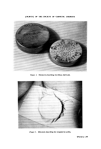
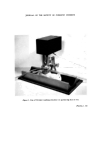
J. Soc. Cosmet. Chem. 26 17-28 (1975) ¸ 1975 Society of Cosmetic Chemists of Great Britain Evaluation of antiperspirant preparations under normal conditions of use M. W. STEED* Presented on 13th November 1973 in Nottingham, at the Sym- posium on 'Evaluation of Product Performance', organized by the Society of Cosmetic Chemists of Great Britain. Synopsis--A method of assessing the effectiveness of ANTIPERSPIRANT agents under normal or near normal conditions of use has been developed. SILICA GEL moisture absorbing tins strapped to the body side of the AXILLA are used for SWEAT collection, and the change in ratio of sweat produced between axillae for a subject, when only one axilla is treated, is taken as a measure of antiperspirant effect. The advantage of the ratio method is that it eliminates the need for controlled conditions. Using three ALUMINIUM CHLORHYDRATE preparations, significant individual and group sweat reductions have been recorded. It has also been observed that the individual response to these preparations varies consider- ably from one subject to another. INTRODUCTION The primary function of an antiperspirant preparation is to reduce the rate of perspiration flow in the axilla. Progress in developing effective antiperspirants is, however, limited by the lack of a reliable in vivo method of assessing their action under normal conditions of use. There has been much literature published on the measurement of perspiration flow, but many of the methods have practical drawbacks. Basically there are three * Reckitt & Colman Toiletry Division. 17
Purchased for the exclusive use of nofirst nolast (unknown)
From: SCC Media Library & Resource Center (library.scconline.org)