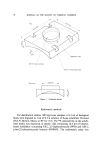
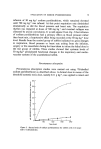
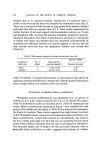
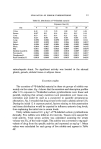
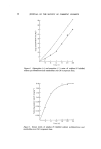
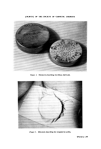
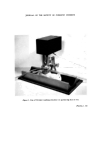
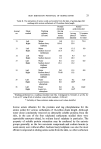
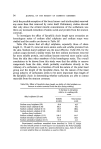
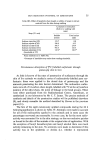
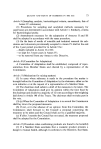
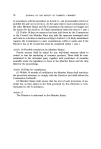
2O JOURNAL OF THE SOCIETY OF COSMETIC CHEMISTS containers and placed in position on the body side of the axilla, as close to the apex of the axilla as possible without causing discomfort. They were completely covered and held in position by three horizontal strips of plaster (Fig. 2). Three hours later the tins were removed, placed in their respective containers and re-weighed. The tins were dried in the afternoon in a vacuum oven at 80-90øC for about 2 h, when they returned virtually to their original weight each time. Application of test materials was carried out by indivdual panelists at home. One arm of each subject was arbitrarily designated as the 'treatment arm' and the other as the 'untreated or control arm'. The ratio of the weight of sweat obtained from the treated arm to that obtained from the untreated arm, as explained above, was taken as a measure of the efficacy of the treat- ment and this had the advantage that such diverse factors, as air tempera- ture, humidity and the activity of the subject, that affect the level of sweat- ing, are automatically compensated for. In addition, the ratio is independent of the time for which the absorbing tins are in place, so any discrepancies in collecting time do not affect the results. Mixed panels of approximately twelve subjects were used, and panel members were asked to shave the axillae a few days before the test. They were also requested to shave during the test when necessary. The panellists were asked to abstain from using an antiperspirant 2 weeks before the start of the test, and unperfumed soap was supplied for use during the test. The panellists were also supplied with a mild aerosol deodorant containing a very low level of cationic germicide, which they were allowed to use during control periods, if desired. The antiperspirant treatment was applied after washing in the morning and in the evening. No attempt was made to control the quantity of application of the test product by the panellists, as: (a) evaluation under normal conditions of usage was required (b) the surface area of one axilla to the next for different panellists varied very considerably (c) individual panellist accuracy in using aerosol products was very variable. The experiment was divided into three phases pre-treatment, during which neither arm received any treatment treatment, during which the pre- designated treatment arm received the specific treatment and finally a post- treatment phase, during which no treatment was given. The inclusion of a post-treatment phase, was to observe the carry over effect of any of the

JOURNAL OF THE SOCIETY OF COSMETIC CHEMISTS Figl•re 1. Moisture absorbing tin (Silica Gel Ltd). Figure 2. Moisture absorbing tin strapped to axilla. (Facing p. 20)
Purchased for the exclusive use of nofirst nolast (unknown)
From: SCC Media Library & Resource Center (library.scconline.org)