36 JOURNAL OF THE SOCIETY OF COSMETIC CHEMISTS

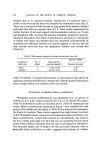
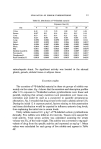
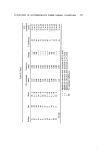
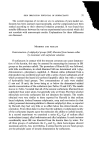
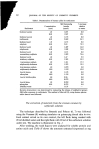
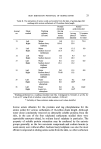
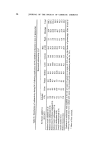
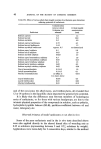
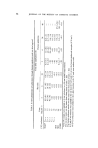
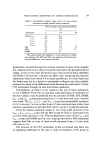
SKIN IRRITATION POTENTIAL OF SURFACTANTS 37 radioactivity which had actually penetrated the stratum corneum but still resided in the skin). Levels of radioactivity in the blood were also measured on samples obtained by cardiac puncture immediately before death of the animals and in no case was any discernible radioactivity found. In order to calculate the rates of percutaneous absorption separate animals received similar doses of each labelled surfactant as were applied cutaneously, by intraperitoneal injection. The proportion of the known intraperitoneal dose excreted in a given time in urine, faeces and exhaled CO2 was determined and used to calculate the amount of absorption through skin by dividing the excretion from the cutaneously treated animals by the excretion from the intraperitoneal treated animals, exactly as des- cribed by Howes in the previous paper (11). Assuming that the sum of urinary, faecal and exhaled CO2 radioactivity was related to penetrated surfactant, and knowing the similar values for the intraperitoneally administered experiments, the overall percentage of radio- activity applied which penetrated was calculated by dividing the former values by the latter. Thus, in Table Vit is seen that, for example, about 25•o of the lauryl triethoxylate applied to the skin penetrated during 24 h (20•o+81.9•o), whereas for sodium lauryl sulphate the amount was less than 0.4•o (0.3•o+84.9•o). These values were standardized by expressing them as permeability constants (10), that is, the amount of surfactant penetrating per unit area per minute per unit concentration applied. Thus, sodium laurate and lauryl triethoxylate penetrate at relatively very high rates. The more strongly anionic sodium lauroyl isethionate penetrates at about one-tenth of this rate, whereas sodium lauryl sulphate penetrates at a rate approaching two orders of magnitude less than soap. Thus, the pre- sence of strongly anionic head group in the surfactant molecules strongly impairs their ability to penetrate through the skin. Howes (11) has des- cribed the effect of different chain length upon penetrability of surfactants. Histamine release from mast cells by surfactants Histamine release from isolated mast cells h• vitro has been studied extensively. For example, Frisk-Holmberg (12) demonstrated that certain lipophilic drugs effected its release, and Bloom and Haegermark (13) showed that the surfactant decylamine was an effective mast cell lysin. Here we have studied isolated rat peritoneal mast cells in contact with a variety of model surfactants. The methods used closely resemble those reported by
Purchased for the exclusive use of nofirst nolast (unknown)
From: SCC Media Library & Resource Center (library.scconline.org)