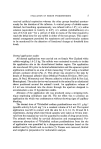
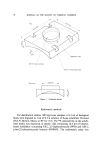
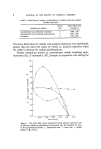
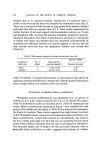
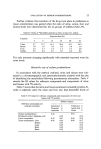
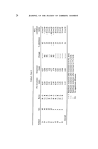
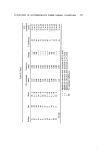
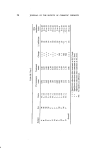
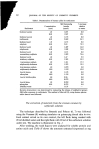
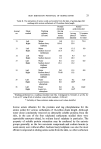
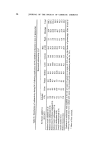
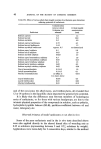
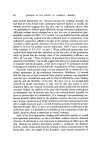
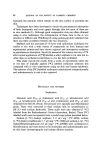
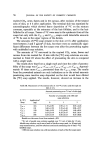
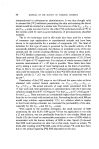
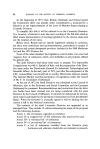
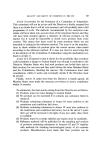
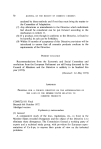
40 JOURNAL OF THE SOCIETY OF COSMETIC CHEMISTS Table VII. Effect of various alkyl chain length moieties of surfactants upon histamine releasing potential of surfactants Surfactant Concentration (raM) at which Critical micelie histamine was concentration released (mM) Sodium caprate Sodium laurate Sodium myristate Sodium caproyl isethionate Sodium lauroyl isethionate Sodium myristoyl isethionate Sodium capryl sulphate Sodium lauryl sulphate Sodium myristyl sulphate Sodium capryl monoethoxy sulphate Sodium lauryl monoethoxy sulphate Sodium capryl triethoxy sulphate Sodium lauryl triethoxy sulphate Sodium myristyl triethoxy sulphate Capryl monoethoxylate Lauryl monoethoxylate Myristyl monoethoxylate Capryl triethoxylate Lauryl triethoxylate Myristyl triethoxylate 1.0 1.3 O.4 10.0 0.5 6.0 0.75 6.5 0.15 1.2 approx. 0.5 not determined 0.5 9.0 0.03 1.0 0.025 2.5 0.5 1.0 0.05 0.15 0.2 1.5 0.05 0.2 0.02 0.06 0.2-0.5 1.0 0.2-0.5 0.1 no effect at 0.013 0.1, insol. above 0.075 0.8 0.03 0.03 0.03 0.18 and of the non-ionics the alkyl mono- and triethoxylates, all revealed that 12 or 14 carbons in the lipophilic chain imparted the greatest lytic potential. It is likely that the differences seen between members of homologous series of surfactants, or for those with various headgroups, are due to the intrinsic physical properties of the compounds in solution, such as polarity, hydrophilic-lyophilic balance (HLB), partition-coefficient between oil and water, detergency etc. Observed irritancy of model surfactants to rat skin in vivo Some of the pure surfactants used in the in vitro tests described above were also applied directly to the shaved dorsal skin of weanling rats as 0.25 M solutions (representing between 5 and 10•o solutions by weight). Applications were twice daily for 3 consecutive days, similar to the method

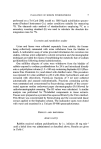
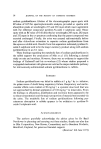
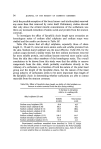
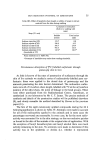
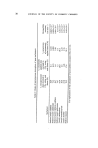
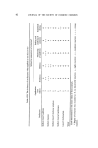
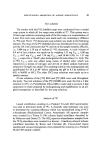
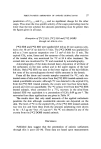
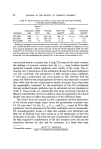
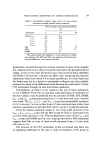
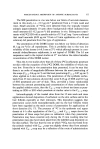
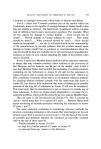
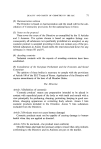
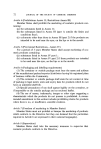
SKIN IRRITATION POTENTIAL OF SURFACTANTS 41 previously described (16). After 1 day and 3 days of application the degree or irritation was assessed macroscopically in terms of erythema and oedema, scaling and cracking of the stratum corneum and drying of the stratum corneum superficially. The results are shown in Table VIII. When the effects of each surfactant were compared, after only 1 day's application, sodium laurate was by far the most irritant compound by virtue of the intense erythema and oedema which resulted. Indeed, none of the other surfactants showed differences from the water treatment. After 3 days, how- ever, there was a much different picture. By this time sodium lauryl sulphate treatment was seen to have caused thickening of the epidermis with scaling and cracking of the stratum corneum. Sodium laurate also exhibited these changes but to a lesser degree and sodium lauryl triethoxy sulphate was the only other surfactant to cause erythema and oedema after 3 days, and then this was very slight. Both sodium lauroyl isethionate and (to a lesser degree) lauryl triethoxylate caused superficial dryness to the stratum corneum after 3 days, but there were no signs of accompanying inflammation (erythema and oedema). Overall, the irritancy of these surfactants could be ranked relative to water as follows: sodium lauryl sulphate • sodium laurate • sodium lauryl triethoxy sulphate sodium lauroyl isethionate • lauryl trieth- oxylate. With in vivo irritancy tests such as this, however, one must pay due regard to the significance of the various components of the overall irritation response. For example, moderate erythema may represent significantly greater irritation to the skin than a moderate drying of the stratum corneum. Also, the duration of application is important: changes such as cracking and thickening of the skin probably arise secondarily to inflammation, due to hyperproliferatio• of the epidermis. If applications had been for 1 day only, then sodium laurate would have been adjudged to be the most irritant of the surfactants studied, by virtue of the rapidly developing erythema, whereas when sufficient time was allowed for the complete irritation pheno- menon to develop (3 days or longer) then the more drastic effects of sodium lauryl sulphate were evident. DISCUSSION It has been suggested by Bettley (3) that irritancy to skin by surfactants is governed by their percutaneous penetrability and their toxicity to the
Purchased for the exclusive use of nofirst nolast (unknown)
From: SCC Media Library & Resource Center (library.scconline.org)