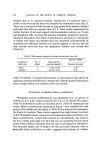
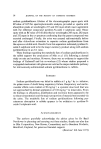
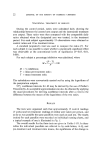
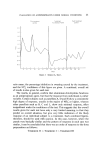
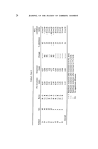
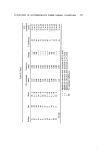
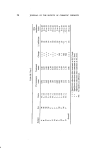
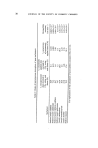
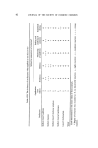
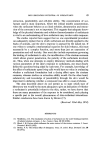
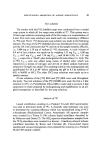
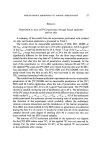
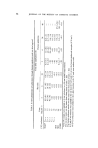
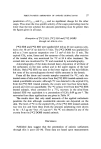
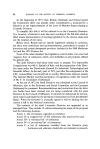
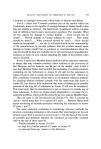
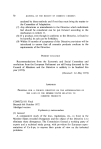
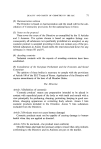
58 JOURNAL OF THE SOCIETY OF COSMETIC CHEMISTS Table IV. Recoveries from rats after a 15 min wash and rinse with [uC] SDS, [x•C] SDI and [x•C] DOBS solutions Area of skin Protective Application treated Rinsings Skin levels patch Penetration Surfactant (•tg) (cm •) (t•g) (t•g/cm •) (t•g) (t•g/cm a) [uC] SDS 3640 10 1929 4-90 202 4-37 36 •16 0.26 4-0.09 [uC] SD1 4900 10 4297 4-353 75 4-18 5 0.3 [•C] DOBS 250 7.5 135 4-27 11 4-4 2 0.1 Results are expressed as gg recovered and are the mean 4- SD from six animals. The applica- tion of SDS and SDI were 0.5 ml of an aqueous solution and the DOBS was applied as 0.2 ml of an aqueous suspension. The contact time was 15 min for all the surfactants which were then rinsed off. The •C levels in the skin and protective patch were determined 24 h after application and the penetration results are based on levels of uC excreted in urine, faeces and expired COa during the 24 h after application plus levels of •sC in the carcass of the animals at 24 h. with excised human or animal skin. Using [x4C] soaps in this study confirms the findings of previous workers that the Cx2:0 soap (sodium laurate) penetrates isolated human epidermis most readily of the soaps. The in- creasing rate of penetration of the surfactants during prolonged application was also confirmed. The penetration of SDI through human epidermis in vitro gave a penetration rate curve similar to that obtained with the soaps, but SDS showed a long lag time (6 h) before any penetration occurred after which time the rate of penetration rapidly increased. From these data the permeability constants* for the penetration of the [•4C] surfactants through isolated human epidermis may be calculated and are presented in Table V. These results are comparable with those previously reported by Blank (12) and Bettley (13) but in addition show that application of a mixed micelle soap does not affect the penetration of the individual soaps. The results from the excised rat skin experiments showed penetration of the shorter chain length soaps, where the permeability constants were 2.5-3.9 gcm min -1 for the C10: 0, C12:0 and C14: 0 soaps at 24 h after application, but the penetration of the other surfactants was not measurable. No autoradiographic studies on these skin samples were performed and little can be deduced from these results as to the distribution of the [laC] surfactants in the skin. The observed rate of penetration will depend upon the time required for equilibration of the skin samples in the cell and the interaction between the skin and the surfactant. It is likely that some gg cm -• m -• penetrating * Permeability constant = [tg/cm -• (concentration of applied solution)'

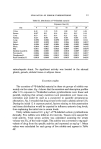
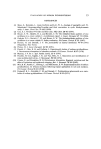
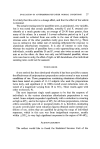
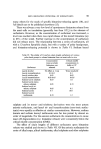
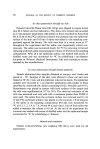
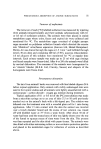
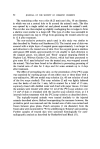
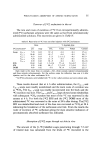
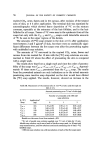
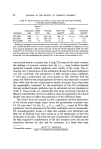
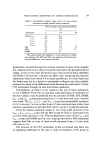
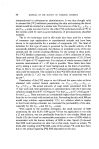
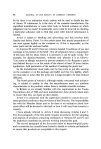
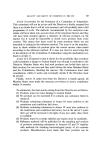
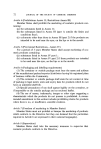
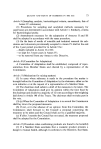
PERCUTANEOUS ABSORPTION OF ANIONIC SURFACTANTS Table V. Permeability constants (gcm min -•) of some anionic surfactants through isolated human epidermis Time of contact with surfactant solution (h) Surfactant 6 24 48 Soaps Cxo: o 5.4 18.6 -- Cx•: o 18.2 25.0 -- Cx4: o 1.6 9.4 -- Cx•: o 0.1 0.2 -- Cxs: o 0.1 0.1 -- SDI 0.7 0.9 1.3 SDS 0.1 1.8 35 DOBS 0.1 0.1 -- The sodium soaps were applied as a 6 mM solution in a model soap solution. The SDS and SDI were applied as 25 mM solutions and the DOBS as a 3 mu aqueous solution. 59 penetration occurred through the stratum corneum in most of the samples but, whereas in the in vivo state it would be removed in the peripheral blood supply, in the in vitro state the dermis has to be traversed. Scala, McOsker and Reller (14) showed a dermal lag effect with tetrapropylene benzene sulphonate which took about 4 h to reach equilibrium. It is thus likely that the dermis may act as a barrier to penetrated surfactant and this probably accounts for much of the differences found between the penetration of these [•C] surfactants through rat skin and human epidermis. Extrapolation of these in vitro results to the use of these surfactants in vivo is difficult. From the rat skin data some deposition of surfactant on the skin surface could be predicted but the amounts of SDS, SDI, DOBS, C•8: 0 and C•6: 0 soaps penetrating from a 15 min wash and rinse would be very small. The C•0: 0, Cx2:0 and C•: 0 soaps had permeability constants of -•- 3 g cm min 4 in vitro so that from a 15 min wash and rinse with a 6 mM solution a penetration of between 0.05 and 0.1 gg cm -2 would be predicted. From the human epidermis studies in vitro only small amounts of the C•0: 0, C•2: 0, C•: 0 soaps and the SDI would be likely to penetrate from a 15 min wash and rinse in vivo. The low penetration rates of the C•6: 0 and Cxs: 0 soaps and DOBS and the very long lag time before SDS penetrates suggests that little or none of these would penetrate from a 15 min wash and rinse in vivo. The turnover of the [•C] surfactants in the rat showed that there was no significant difference in the rate or route of excretion of •C given by
Purchased for the exclusive use of nofirst nolast (unknown)
From: SCC Media Library & Resource Center (library.scconline.org)