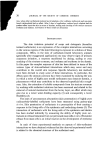
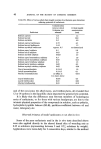
48 JOURNAL OF THE SOCIETY OF COSMETIC CHEMISTS especially the amounts which remain on the skin surface or penetrate the skin. Techniques have been developed to study the percutaneous absorption of both therapeutic and toxic agents through skin but most of these are in vitro methods (1). Although good comparative data are often obtained using in vitro techniques, the extrapolation of these data to the in vivo situation is difficult and Wahlberg (2) using guinea-pig skin indicated that there was little correlation between the two situations. Maibach and his associates (3-5) have used radiotracer techniques for studies in vivo with a wide variety of compounds on both humans and experimental animals and have shown regional and interspecies variations in percutaneous absorption. Sprott (6) measured the urinary recovery of 35S after topical application of [35S] labelled n-alkyl sulphate to rat skin but no other data on surfactant penetration in vivo has been published. This study reports the results from a series of experiments where the in vivo fate of topically applied [x4C] labelled surfactant solutions was compared with in vitro experiments using rat skin and human epidermis. The turnover of the [x4C] labelled surfactants administered intraperitoneally and subcutaneously to rats is also reported. MATERIALS AND METHODS Surfactants Decanoic acid (C101 0), dodecanoic acid (C19•: 0), tetradecanoic acid (Cla: 0), hexadecanoic acid (C16: 0) and octadecanoic acid (C18: 0) were obtained from B.D.H. (Poole, Dorset) and were specially pure Biochemical grade. These were converted to their sodium salts by neutralization to pH 9.5 with sodium hydroxide. These acids were also obtained [1-•aC] labelled from the Radiochemical Centre (Amersham, Bucks). These [•C] labelled acids were incorporated into a model soap system described below. Sodium [1-•C] dodecyl sulphate 5.11 [tCi mg -• (14C-SDS), sodium [1-1aC] dodecoyl isethionate 1.7 liCi mg -1 (laC-SDI)and sodiump-l-[1-1aC] dodecylbenzenesulphonate 8.5 ltCi mg -1 (•C-DOBS) were synthesized in this laboratory and were shown to be chemically and radiochemically pure by thin layer chromatography and isotope dilution analysis.

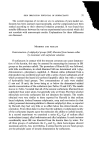
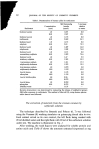
PERCUTANEOUS ABSORPTION OF ANIONIC SURFACTANTS 49 Test solutions The studies with the [•4C] labelled soaps were conducted from a model soap system in which all five soaps were soluble at 37 ø. This system was a 30 mM soap solution containing each of the five soaps at a concentration of 6 mM. Five such soap solutions were made each one containing a different [1-•4C] acid. The [1-•4C] decanoate soap solution was made in the following manner. The mass of the p•C] labelled acid was determined from its specific activity (14.3 mCi/mM) and total •C activity in the sample (usually 250 pCi), i.e. 3.004 mg or 3.39 mg of sodium [1-$4C) decanoate. A total volume of 4.0 ml of test solution was made up by weighing 5.33 mg Cx•.: 0, 6.00 mg Cx4: 0, 6.67 mg C•6:0 and 7.34 mg Cxs:0 and (4.66-3.39), i.e. 1.27 mg Cx0: 0, soaps into a 'Duall' glass homogenizer (Kontes Glass Co. Ltd). The [1-x•C] C•0:0 acid was added using excess of diethyl ether which was removed in a stream of nitrogen and 4.0 ml of dilute sodium hydroxide solution (172 mg/1) was added. The resulting solution was homogenized and equilibrated for 24 h at 40 ø before adjusting the pH to 9.5 by addition of 0.01 N NaOH or HC1. The other [x4C] soap solutions were made up in a similar manner. 25 mM solutions of the [•C] SDS and [•4C] SDI were used throughout the study. Two test solutions of the [x•C] DOBS were used, the first a 3 mM solution in 25• v/v Polyethylene Glycol 400 in water and a second a 3 mM suspension in water prepared by homogenizing and equilibration in an all- glass homogenizer as described for the soap solutions. Analysis of •4C Liquid scintillation counting in a Packard Tri-carb 4322 spectrometer was used to determine levels of x•C. A channels ratio technique was used to determine the counting efficiency which was standardized using [1-•C] - n-hexadecane (Radiochemical Centre, Amersham). All aqueous samples were counted in a Triton X-100: toluene liquid scintillator described by by Patterson and Green (7). The 50• aqueous ethanolamine samples from the •CO•. absorbers were counted in a dioxan: 2-methoxy-ethanol :toluene scintillator described by Bruno and Christian (8). Freeze-dried faecal samples and carcass homogenates were prepared for counting on a Packard Model 305 sample oxidizer.
Purchased for the exclusive use of nofirst nolast (unknown)
From: SCC Media Library & Resource Center (library.scconline.org)