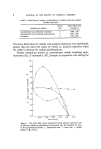
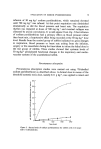
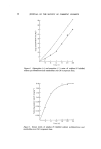
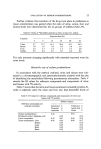
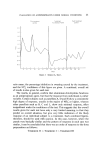
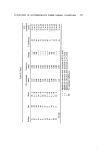
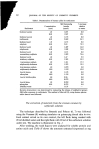
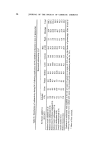
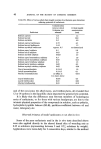
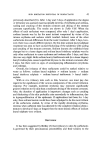
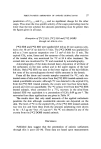
EVALUATION OF SODIUM PYRIDINETHIONE infusion of 50 mg kg -• sodium pyridinethione, which remained elevated until 700 mg kg -• was infused. At this point respiration rate diminished dramatically as did the blood pressure and heart rate. The respiration rhythm was impaired at doses of 500 mg kg -• and eventual collapse was climaxed by anoxic convulsions. It would appear from Fig. 2 that infusion of sodium pyridinethione had a primary effect on blood pressure rather than heart rate, a hypotensive effect being recorded at the 50 mg kg -• dose level. Results from the control group of rabbits indicated no gross changes in respiration, blood pressure or heart rate arising from the infusion, surgery or the anaesthetic during the time taken to infuse the lethal dose in the test group of rabbits. These studies showed that systemic levels of 50 mg kg -• precipitated functional changes in the respiratory and cardio- vascular systems of the anaesthetized rabbit. Percutaneous absorption Percutaneous absorption studies were carried out using 35S-labelled sodium pyridinethione as described above. A dermal dose in excess of the threshold systemic toxic dose, namely 0.11 g kg -•, was applied to intact and 35 • 30 x x I I I I 120 180 240 Time (rain) Figure 3. Serum levels of sodium pyridinethione for rabbits with (O) intact and (X) abraded skin.

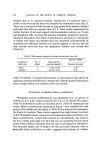
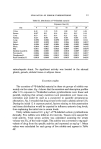
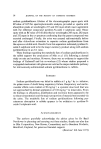
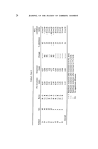
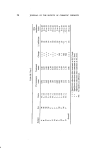
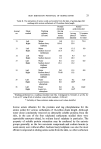
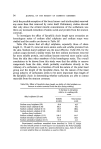
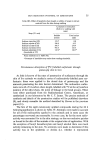
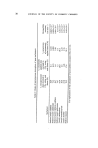
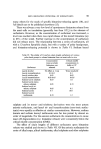
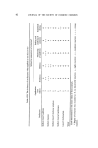
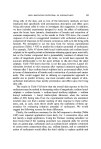
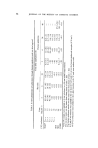
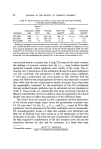
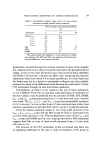
10 JOURNAL OF THE SOCIETY OF COSMETIC CHEMISTS abraded skin as an aqueous solution. During the 4 h exposure time, a profile of the blood serum levels was obtained by radiometric assay (Fig. 3). There was a twenty-five-fold increase in drug serum levels between abraded and intact skin after an exposure time of 2 h. These results emphasized the barrier function of skin and support well-documented evidence, e.g. Cronin and Stoughton (10), showing that abrasion facilitates penetration and per- cutaneous absorption. The extent of percutaneous absorption in the groups of rabbits with intact and abraded skin was quantified radiometrically by estimating the difference between the activity applied to the site and the total activity recovered from the application solution and excised skin (Table II). Table 1I. Percutaneous absorption through abraded and intact skin Quantity applied Condition of No. of Mean quantity % rabbit skin rabbits absorbed (mg kg -x) Quantity absorbed Intact 5 1.346 4-0.795 1.20 Abraded 4 18.363 4-4.012 16.42 Table H indicates a fourteen-fold increase in percutaneous absorption by applying sodium pyridinethione to broken skin, thereby greatly reducing the safety margin before toxic systemic levels are reached. Distribution of labelled sodium pyridinethione asS-labelled sodium pyridinethione was administered to six groups of rabbits as a 0.11 g kg 4 aqueous solution for 4, 8, 12, 16, 20 and 24 h respec- tively for distribution studies as described above. Table 1II summarizes the results. Mean concentrations expressed as mg kg 4 were estimated for each group of five rabbits and this figure in Table III was taken as the representa- tive figure for analysis. These results suggested that rapid urinary excretion of the asS-labelled parent compound and metabolites takes precedence over tissue concentration. A three-fold increase in concentrations was noted in the liver, kidney and lungs over 24 h but was not surprising because blood serum levels similarly increased with the rate of percutaneous absorption. The increased uptake rate of drug in the bile and small intestine, with no detectable levels in the faeces or colon, suggested the existence of a biliary
Purchased for the exclusive use of nofirst nolast (unknown)
From: SCC Media Library & Resource Center (library.scconline.org)