42 JOURNAL OF THE SOCIETY OF COSMETIC CHEMISTS + + •+++ +++ + + + + • + • o • • • •+ +

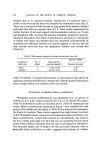
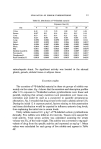
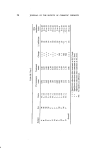
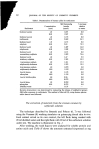
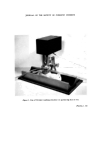
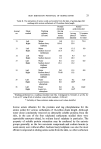
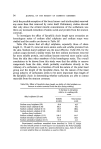
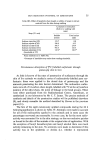
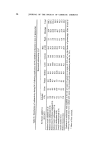
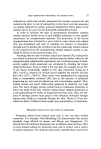
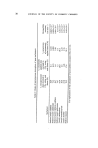
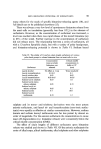
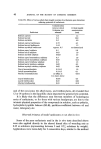
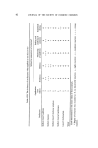
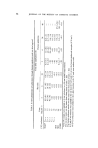
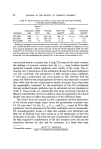
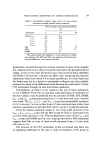
SKIN IRRITATION POTENTIAL OF SURFACTANTS 43 living cells of the skin, and so two of the laboratory methods we have employed deal specifically with percutaneous absorption and effect upon living cells (mast cells) in order to investigate this suggestion. In addition, we have included experiments designed to study the effect of surfactants upon the horny layer (namely, denaturation of keratin and extraction of corneum components), for, as the results in Table VIII show, the overall response of rat skin to exaggerated treatment with surfactant solutions is comprised of responses in the stratum corneum as well as in the living cells beneath. We attempted to use the data from the various experimental procedures (Tables I-VII) to predict the irritation potential of surfactants. For example, Table VI shows both lauryl triethoxylate and sodium lauryl sulphate to be equally potent as histamine-releasing agents upon mast cells, but as the former compound had a permeability constant of almost two orders of magnitude greater than the latter, we would have expected the nonionic triethoxylate to be far more irritant to the skin than the alkyl sulphate. Table VIII shows that this is not the case, however. Lauryl tri- ethoxylate invoked no skin response after repeated cutaneous application, whereas after 3 days sodium lauryl sulphate had a pronounced effect, both in terms of denaturation of keratin and in extraction of proteins and amino acids. This would suggest that in defining an experimental approach to enable one to predict irritancy, one must consider other aspects of skin- surfactant interactions than merely penetration and effect upon the living skin cells. The results in Table VIII show that the overall skin reponse to the five surfactants may be ranked in decreasing order of magnitude: sodium lauryl sulphate sodium laurate sodium lauryl triethoxy sulphate sodium lauroyl isethionate • lauryl triethoxylate. However, when the various tables (I-VII) listing data from the experimental methods are examined, nowhere may one find a similar ranking of skin response to these surfac- rants, and, as such, must throw doubt upon the usefulness of these ap- proaches for evaluating irritation potential of surfactants. We would suggest the following reasons for these differences. Firstly, the conditions necessary for the full response to develop (Table VIII) were repeated application twice daily, for 3 consecutive days, and not merely a single application. Using the Vermeer washing simulator we have found that if the washing procedure was repeated daily for several days on guinea-pigs, surfactants such as sodium lauryl sulphate continued to extract more components than, say, sodium laurate, and so cumulative action of surfactants would affect the skin's ability to replace quickly and
Purchased for the exclusive use of nofirst nolast (unknown)
From: SCC Media Library & Resource Center (library.scconline.org)