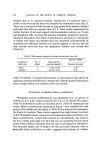
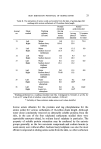
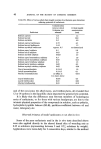
SKIN IRRITATION POTENTIAL OF SURFACTANTS 31 The overall response of rat skin in vivo to solutions of pure model sur- factants has been assessed macroscopically, and the compounds have been ranked according to their observed irritation potential. It was found that notable differences between the various experimental tests existed which did not correlate with macroscopic results. Explanations for these differences are discussed. METHODS AND RESULTS Determination of sulphydryl groups (SH) liberated from human callus by treatment with surfactant solutions If surfactants in contact with the stratum corneum can cause denatura- tion of the keratin, this may be assessed by measuring the increase in SH groups as the proteins unfold. The procedure of Harrold (5) was followed, with little modification, in which liberated SH was determined with 1-(4-p- chloromercuri- phenylazo)- naphthol- 2. Human callus (obtained from a chiropodist) was powdered and used with a series of pure surfactants all of which possessed the lauryl (12-carbon) lipophilic chain but with a variety of hydrophilic head groups. Two concentrations of each were studied (1 mta and 10 mta), the lower being at or below the determined critical micelle concentration of the surfactants (see Tables V! and VII). The results shown in Table ! revealed that all of the anionic surfactants liberated more sulphydryl than water alone, but generally only at 10 mta. The three alcohol ethoxylate non-ionic surfactants did not denature the keratin. The results obtained were very similar to those reported by Harrold in that sodium lauryl sulphate, dodecyl benzene sulphonate, soap and non-ionics (in that order) possessed decreasing abilities to liberate sulphydryl. Also, as reported by Harrold, they had very little or no effect below the critical micelle con- centration. From these data it is clear that the sulphate or sulphonate moiety of the surfactants imparts upon the molecules the ability to unfold keratin. In a second experiment we examined a series (C•o-C•0) of sodium alkyl carboxylates (soaps), alkyl isethionates and alkyl sulphates. In each instance considerably more SH was liberated from the keratin than by water. For all three groups of surfactants the C• and Cx4 chain homologues showed maximum activity, but, nevertheless, it seems that the anionic head groups are the principle cause of keratin denaturation by surfactants.

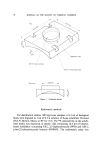
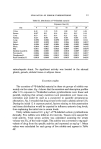
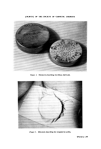
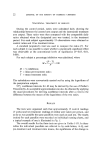
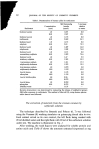
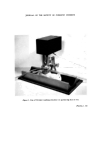
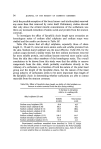
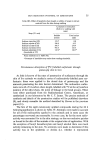
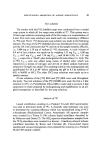
32 JOURNAL OF THE SOCIETY OF COSMETIC CHEMISTS Table I. Denaturation of human callus by surfactants Surfactant SH liberated/g % increase Concentration keratin relative (mM) (•tmol) to water Sodium laurate 1.0 1.071 0.0 10.0 1.567 38.1 Sodium lauroyl 1.0 1.135 0.0 isethionate 10.0 2.049 84.5 Sodium lauryl 1.0 1.135 0.0 sulphate 10.0 2.03 78.9 Sodium lauryl 1.0 1.407 24.0 sulphonate 10.0 1.998 76.0 Sodium lauryl 1.0 1.135 0.0 monoethoxy sulphate 10.0 1.982 74.6 Sodium lauryl 1.0 1.47 9.9 triethoxy sulphate 10.0 1.583 39.5 1-(p-benzene sodium 1.0 1.311 15.5 sulphonate)-dodecane 10.0 1.583 39.5 6-(p-benzene sodium 1.0 1.055 0.0 sulphonate)-dodecane 10.0 1.839 62.0 Lauryl mono- 1.0 1.135 0.0 ethoxylate 10.0 1.135 0.0 Lauryl triethoxylate 1.0 0.96 0.0 10.0 0.975 0.0 Lauryl hexa- 1.0 0.959 0.0 ethoxylate 10.0 0.975 0.0 Distilled water -- 1.135 -- Keratin denaturation was determined by measuring the release of sulphydryl groups (SH) after exposure to surfactants. The method of Hartold (5), using human plantar callus keratin was followed. The extraction of materials from the stratum corneum by surfactant solutions The technique described by Smeenk and Polano (6, 7) was followed using the Vermeer (8) washing simulator on guinea-pig dorsal skin in vivo. Each animal served as its own control, the left flank being washed with 20 ml distilled water and the right flank with 20 ml of the surfactant solution under test. The machine is illustrated in Fig. 1. After washing, the wash liquors were analysed for soluble protein and amino acids and Table H shows the amounts extracted (expressed as mg
Purchased for the exclusive use of nofirst nolast (unknown)
From: SCC Media Library & Resource Center (library.scconline.org)