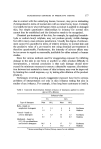
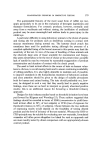
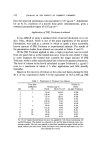
EXAGGERATED EXPOSURE IN PREDICTIVE TESTING 185 CONCLUSION Unreasonable criteria for assessing the potential hazards of topical administration do not necessarily help to protect the consumer. Thus, although animal feeding tests on a proposed food colour may well show that the maximum no-untoward-effect level is several hundred times greater than the expected human intake, even the most harmless materials applied to the skin with such exaggeration are likely to prove injurious. Frazer (1) claimed that the acceptable usage level of a substance--he was referring specifically to food additives, though others have applied his concept more widelymshould be regarded as one-hundredth of the level required to pro- duce significant modification of structure or function in not more than 50•o of a group of test animals. Further, at a dose-level equal to one-tenth of the ED50, no significant changes of any kind should occur. Such margins, however, could not be applied generally to substances coming in contact with the skin or mucous membranes. For example, none of the synthetic anionic surfactants would be acceptable if a shampoo had to be formulated with no more than one-hundredth of the detergent concentration giving threshold irritation in a closed patch test. Nevertheless, present-day sham- poos are used almost universally with minimal known adverse effect a different basis for judging acceptability is therefore needed and one of the possible approaches might be to seek a tenfold margin in relation to experimental findings to allow for individual differences in susceptibility. As already shown, no allowance for interspecies differences need usually be made in irritancy testing. A tenfold safety criterion on these lines may prove quite helpful for the safety evaluation of raw materials but it will seldom be a technically feasible criterion for use in testing formulated products. Direct comparison of a newly-formulated product in a threshold irritancy test with other formulations of similar type, whose effects during normal use are known, will be more appropriate. Such a comparison will certainly give practical guidance on probable safety-in-use. A study on human volunteers will clearly be the most reliable and ideally the study should take the form of a comparison with a known 'safe' and a known 'unsafe' material of similar type (i.e. with 'negative' and 'positive' controls). Comparison with a 'positive' control (e.g. a known irritant) might facilitate quantitative expression of the findings, if a human tolerance test is carried out. In circumstances where laboratory animal studies are judged to be required, it will be equally desirable to conduct these as threshold irritancy tests to forecast the onset of hazard to man in normal use.

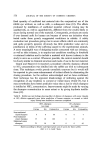
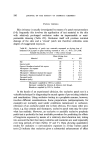
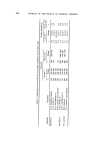
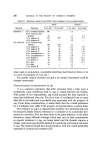
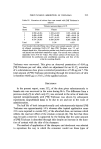
186 JOURNAL OF THE SOCIETY OF COSMETIC CHEMISTS Reasonably exaggerated exposure in cosmetic safety evaluation may theoretically be achieved by designing 'in use' tests. Human volunteers use the test material for a few weeks with more frequent applications than would normally be made and subject to repeated examination for adverse effects. Such a procedure may involve a risk that the investigator will be unable to control the amount and frequency of application effectively and that comparisons with suitable controls may be difficult to arrange. Unless the conditions of testing prove suitable for achieving threshold responses, interpretation may depend on negative findings which will limit the relia- bility of the study. 'In use' testing warrants serious consideration, however, as an alternative to the highly empirical, grossly exaggerated procedures currently favoured by some investigators. ACKNOWLEDGMENT The authors are indebted to Mr J. Brown for the data given in Table 11I. (Received: loth April 1974) REFERENCES (1) Frazer, A. C. Pharmacological Aspects of Chemicals in Food. Endeavour 12 43 (1953). (2) Phillips, L., Steinberg, M., Maibach, H. I. and Akers, W. A. A comparison of rabbit and human skin response to certain irritants. ToMcol. Appl. Pharmacol. 21 369 (1972). (3) Yankell, S. L. Animal studies as predicters of skin irritants. CTFA Cosmet. J. 4 8 (1973). (4) Malkinson, F. D. Studies on the percutaneous absorption of C '4 labelled steroids by use of the gas-flow cell. J. Invest. Dermatol. 31 19 (1958), (5) Spearman, R. I. C. The Integument 125 (1973) (Cambridge University Press, London). (6) Bartek, M. J., La Budde, J. A. and Maibach, H. I. Skin permeability in vivo: comparison in rat, rabbit, pig and man. J. Invest. Dermatol. 58 114 (1972). (7) Davies, R. E. Toxicological appraisal of cosmetics. Soap, Perrum. Cosmet. 40 887 (1967). (8) Finkelstein, P., Laden, K. and Miechowski, W. New methods for evaluating cosmetic irritancy. J. Invest. Dermatol. 40 11 (1963). (9) Freeman, M. V., Alvarez, E. and Draize, J. H. Cutaneous absorption of phenol from intact and damaged skin. Fed. Proc. 9 273 (1950). (10) Draize, J. H., Woodward, G. and Calvery, H. O. Methods for the study of irritation and toxicity of substances applied topically to the skin and mucous membranes. J. Pharmacol. Exp. Therap. 82 377 (1944). (11) Gaunt, I. F. and Harper, K. H. The potential irritancy to the rabbit eye of certain com- mercially available shampoos. J. Soc. Cosmet. Chem. 15 209 (1964). (12) Van Abb6, N.J. Eye irritation: studies relating to responses in man and laboratory animals. J. Soc. Cosmet. Chem. 24 685 (1973). (13) Kligman, A.M. and Wooding, W. M. A method for the measurement and evaluation of irritants on human skin. J. Invest. Dermatol. 49 78 (1967).
Purchased for the exclusive use of nofirst nolast (unknown)
From: SCC Media Library & Resource Center (library.scconline.org)