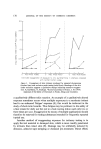
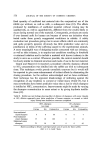
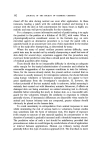
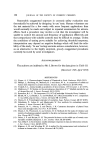
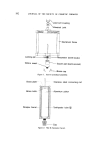
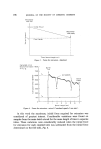
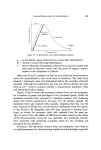
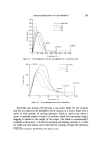
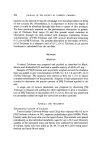
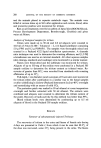
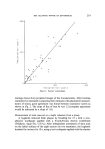
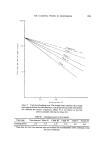
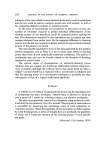
EXAGGERATED EXPOSURE IN PREDICTIVE TESTING 175 mammals, including the rabbit, rat and mouse this probably explains why applied substances do not easily penetrate human skin (6) and why, on the whole, it is no more susceptible to irritants than is the skin of these species. When irritancy tests are carried out on animal skin, it would therefore be irrational to allow a tenfold margin for interspecies differences. The possible irritancy of cosmetic materials in contact with tissues of the eye is usually studied by instillation into the conjunctival sac of the rabbit eye. On the basis of wide experience of such tests, Davies (7) suggested that the rabbit eye was decidedly more sensitive to irritants than the human eye. Thus no allowance for interspecies differences seems necessary for extrapolating rabbit eye test results in terms of hazard to man. A major factor involved in selecting the appropriate levels of exaggera- tion in irritancy testing is that a quantitative enhancement of responses may help to establish a meaningful safety margin, whereas a qualitative change in the type of response could well render the findings incapable of inter- pretation qualitatively atypical responses might well result from gross exaggeration of exposure levels in tests for skin and eye irritancy (Fig. 1). To ensure that testing procedures give the information required for safety assessment, a critical re-appraisal of current methods is needed. TEST METHODS In the study of systemic toxicity, suitably exaggerated dose-levels are administered to laboratory animals in the diet, by gavage or by injection. Exposure of the skin or mucous membrane to substantially exaggerated quantities of test material is seldom practical in the study of irritancy. Direct contact within a circumscribed area is essential an exaggerated quantity applied to a larger area will not necessarily intensify the response. Exposure to a raw material may often be exaggerated by applying con- centrated solutions, but this would not be feasible for complete formula- tions. Even with raw materials, unrealistic effects may occur, for example, owing to hypertonicity or grossly abnormal hydrogen ion concentration such exaggeration could well produce effects totally irrelevant to the hazards of ordinary use, by producing qualitative rather than quantitative differences in response. An alternative way of exaggerating topical exposure is to lengthen the time of contact compared with normal use or to make multiple applications. This is helpful if it influences the response quantitatively without provoking

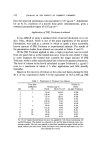
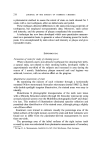
176 2'5 -- JOURNAL OF THE SOCIETY OF COSMETIC CHEMISTS 2.0 1.5 1.0 x 0.5 x-•X'" x -•• X 'm= -- - X 0 X50 XIO0 X300 0 X50 XIOOX300 0 X50 XlOOX300 Estimated exaggeration of exposure to zinc pyridinethione •n shampoo compared with normal human usage Figure 1. Comparison of skin irritancy produced by repeated shampooing (,broken lines) and occlusive patch testing (solid lines). Breakage of the skin under occlusion suggests a qualitative change indicating excessive exaggera- tion. X, Erythema O, breakage. *Scored according to Draize, J. H. (1959). Appraisal of the Safety of Chemicals in Foods, Drugs and Cosmetics. a qualitatively different skin reaction. An example of a qualitatively altered response sometimes occurs when multiple exposures to a moderate irritant lead to an enhanced 'fatigue' response (8) this would be irrelevant in the study of short-term hazards. Thus fatigue may be pertinent to the safety of a face cream for daily use but not to a hair-waving lotion used only two or three times per year. Exaggeration by means of multiple applications should therefore be reserved for testing substances intended for frequently repeated topical use. Another method of exaggerating exposure for irritancy testing is to apply the test material to damaged skin, which is more readily penetrated by irritants than intact skin (9). Damage may be artificially induced by abrasion, adhesive tape stripping or chemical pre-treatment. Direct effects
Purchased for the exclusive use of nofirst nolast (unknown)
From: SCC Media Library & Resource Center (library.scconline.org)