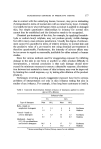
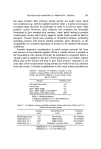
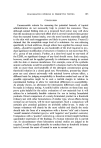
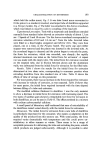
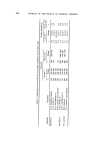
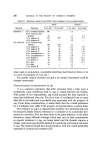
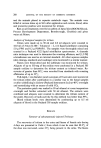
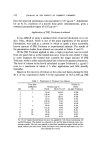
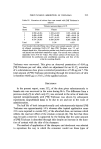
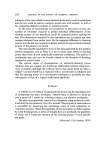
EXAGGERATED EXPOSURE IN PREDICTIVE TESTING 177 due to contact with the underlying tissues, however, may prove misleading if extrapolated in terms of normal skin with an intact horny layer. Certainly it is helpful to know what will happen when a product is applied to damaged skin, but simple quantitative relationships to irritancy for normal skin cannot thus be established and the distinction needs to be recognized. Chemical pre-treatment of the skin, for example, by applying formalde- hyde or sodium lauryl sulphate, may not produce grossly visible damage but will in many cases enhance penetration. Usually the degree of enhance- ment cannot be quantified in terms of relative irritancy to normal skin and the predictive value of a provocative test using chemical pre-treatment is therefore questionable. Furthermore, the intensity of adverse effects may be too severe to regard as reasonably justifiable for either animal or human studies. Since the various methods used for exaggerating exposure by inflicting damage to the skin in one form or another so often produce difficulty in interpretation, a rational conclusion is that such damage should never exceed the minimum necessary to ensure a detectable response discrimina- tion between test materials in terms of skin irritancy may even be improved by limiting the overall response, e.g. by testing after dilution of the product (Table I). Techniques involving grossly exaggerated exposure have led to serious problems of interpretation not only in skin irritancy testing but also in studies of eye irritancy. For example, it has long been customary to instil a Table I. Improved discrimination between irritancy of shampoos applied to rabbit skin at 10% dilution Irritancy* after 5 h 24h Type of shampoo Neat 10% Neat 10% Baby--based on amphoteric detergents 7 1.1 4 0 1.5 1 2 0 Normal--based on anionic detergents 7 1.5 15 1.5 8.5 I 14 0.5 Medicated--based ot• 0.5% Zn pyridinethione and anionic detergents 10.5 6 17 7.5 Erythema 6 I 15.5 7 Oedema Erythema Oedema Erythema Oedema * Scores according to Draize (Group means for six rabbits).

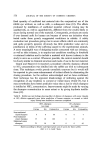
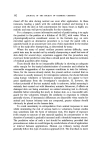
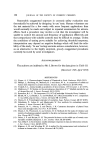
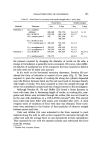
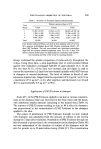
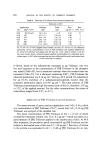
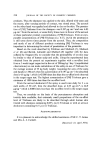
178 JOURNAL OF THE SOCIETY OF COSMETIC CHEMISTS fixed quantity of undiluted test material into the conjunctival sac of the rabbit eye without, as well as with, a subsequent rinse (10). The effects produced by instillation of undiluted material without rinsing may be qualitatively, as well as quantitatively, different from the results likely to occur during normal use of the material. Consequently, products are rarely if ever deemed unfit for human use because of severe eye irritation when tested under these grossly exaggerated conditions in rabbits. A safety evaluation test procedure giving rise to severe effects which are commonly and quite properly ignored, obviously has little predictive value and no justification in terms of the suffering caused to the experimental animals. A more meaningful way of designing studies concerned with eye irritancy, as well as skin irritancy, is to employ test conditions resulting in threshold or minimal irritation and to include a material with known irritancy in the study to serve as a control. Whenever possible, the control material should be closely similar in chemical structure and mode of use to the test material. Gaunt and Harper (11) reported a procedure whereby shampoo diluted to 10•o concentration was instilled into the rabbit eye with no subsequent rinse. This technique avoids grossly unrealistic exposure but it would still be expected to give some enhancement of irritant effects by eliminating the rinsing procedure. As the authors acknowledged and we have confirmed, their technique has the apparent disadvantage of militating against the recognition of any tendency to corneal or iridial injury (Table II), but it may nevertheless have better predictive value than a test in which shampoo is instilled at 100•o concentration. Improvements might be made by varying the shampoo concentration to some extent or by giving duplicate instilla- tions (12). Table II. Rabbit eye test findings showing effect of dilution of shampoos with water. Results at 10% dilution apparently gave better prediction of human response, no corneal or iridial injury having been notified as consumer complaints 100% shampoo 10% shampoo (no rinse) (no rinse) Cornea Iris Conjunctiva Cornea Iris Conjunctiva Non-medicated liquid shampoo 0 0 68 0 0 4 Non-medicated cream shampoo 35 10 108 0 0 12 Medicated cream shampoo 25 10 90 0 0 62 Scores according to Draize each figure gives sum of scores for three rabbits after 1, 2, 3, 4 and 7 days.
Purchased for the exclusive use of nofirst nolast (unknown)
From: SCC Media Library & Resource Center (library.scconline.org)