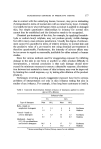
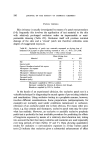
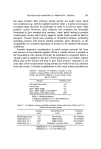
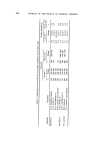
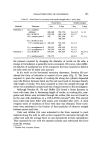
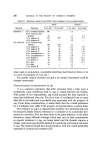
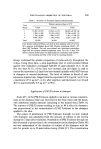
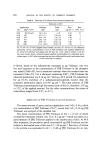
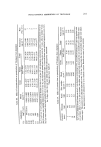
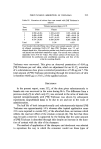
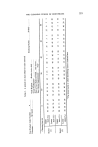
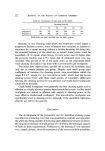
EXAGGERATED EXPOSURE IN PREDICTIVE TESTING 181 for many irritants. Skin irritancy testing carried out under 'open' patch test conditions (e.g. with the applied material under a loosely-woven gauze covering) might therefore be preferable in order to avoid too many 'false positive' results. However, since toiletries and cosmetics are invariably formulated to give minimal skin reaction, 'open' patch testing in practice would nearly always yield wholly negative results which would be hard to interpret. 'Closed' patch tests resulting in threshold irritation, preferably including controls with known irritant potential, allow decisions on the acceptability of a cosmetic ingredient or product to be reached with greater confidence. Another important consideration in patch testing concerns the form and amount of test material applied. When a volatile solvent is present in the formulation, this should obviously be permitted to evaporate before a 'closed' patch is applied to the skin if this precaution is not taken, irritant effects due to the solvent will tend to give 'false positive' responses in the sense that solvent evaporation during normal use would avoid any irritation from this source. A further complication is that some toiletry products are Table IV. Detection of moderate increases in skin irritation, using partially occlusive human patch test (Uttley, M. and Van Abb6, N.J. J. Soc. Cosmet. Chem. 24, 217 (1973)) Product Irritancy score Nil (blank lint patch) 6.6* Lotion base 6.6 Base + DHA (aged) 8.4 Base+DHA (aged) +fresh DHA** 9.3 Base (fresh)+ fresh DHA (10%) 10.9' DHA = Dihydroxyacetone. * Difference significant at 1% level (Wilcoxon). ** Adjusted to 10 •o concentration. Table V. Correlation between partially-occlusive human patch test (Uttley and Van Abb6) and consumer reports Irritancy Interpretation of Consumer score score reports Moisturizing cream 6.3' Cheek gloss no. 1 11.0+ Cheek gloss no. 2 12.6* Cheek gloss no. 3 18.1 Non-irritant No irritation Slight irritant No irritation Slight irritant No irritation Moderate •- severe irritant Irritation * Significant at 1% level (Wilcoxon). + Significant at 2% level (Wilcoxon).

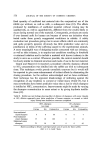
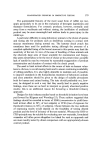
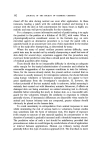
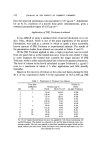
182 JOURNAL OF THE SOCIETY OF COSMETIC CHEMISTS rinsed off the skin during normal use soon after application. In these instances, loading a patch with the undiluted product and leaving it in contact with the skin at full concentration for many hours is highly un- realistic and may well prove intolerable for the volunteers. For a shampoo, a more informative method of patch testing is to apply the product to the patches at a dilution of 10-20•o with water. When a physiologically-active constituent occurs in the formula (e.g. an anti- microbial agent) an alternative procedure is to load the patch with a quantity based on an amount per unit area of skin equivalent to the residue left on the scalp after shampooing, as determined by assay. Where the assay of actual residues presents serious difficulty, open patch tests may be carried out by actually shampooing a small test area of skin daily for several days experience suggests that this procedure may even have better predictive value than a closed patch test based on estimates of residual quantities after rinsing. There should thus be no insuperable difficulty in showing an adequate safety margin for the topical administration of cosmetics and toiletries by reasonable exaggeration of the exposure conditions in tests for irritancy. Since, for the reasons already stated, the present authors contend that no allowance is usually necessary for interspecies variation, the choice between using human volunteers or laboratory animals does not appear to have great significance from the investigator's standpoint. If, however, the irritant potential of the test material really is unknown, initial screening is certainly best carried out with laboratory animals. Moreover, if effects on damaged skin are being examined, an animal screening test is obviously desirable before extending the study to human skin, as a reasonable safe- guard for the volunteers. Despite the similarity in responses to irritants generally shown, if interspecies differences are discernible when results for animal and human irritancy tests are compared, greater reliance should obviously be placed on the human data. To avoid uncertainty in extrapolation from animal responses to man whilst minimizing the risk of serious harm to volunteers, human studies may sometimes take the form of tolerance tests. The degree of exposure (with respect to amount of test material applied, its concentration or the duration of contact) is gradually increased until a threshold response occurs. The predictive value of such a test should be satisfactory provided that precautions are taken to avoid fatigue by careful choice of site of application or interval between applications. Human eye irritancy testing should generally follow this type of cautious approach (12). The drawback to more
Purchased for the exclusive use of nofirst nolast (unknown)
From: SCC Media Library & Resource Center (library.scconline.org)