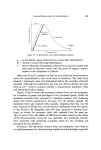
EXAGGERATED EXPOSURE IN PREDICTIVE TESTING 179 The questionable features of the more usual form of rabbit eye test, apply particularly to its use in the evaluation of detergent ingredients and shampoo formulations. For cosmetic products, however, normally used away from a washbasin and without rinsing, the instillation of undiluted product may be more meaningful and seldom leads to gross injury in the rabbit eye. A particular difficulty in using laboratory animals is the choice of species and testing site for products such as dentifrices coming in contact with mucous membranes during normal use. The hamster cheek pouch has sometimes been used for predictive testing although the presence of a cornified epithelial lining of the buccal mucosa in this species may limit the sensitivity of the test. In view of the ease of handling of these animals and the relatively large area of tissue available for examination and biopsy, this seems nevertheless to be the test of choice at the present time possible lack of sensitivity may be overcome by reasonable exaggeration of product concentration and duration of contact with the cheek pouch. The need to limit irritant effects in the course of tests on human volun- teers is obvious, to avoid causing harm and to ensure continuing availability of willing panellists. It is also highly desirable to maintain and, if possible, to improve standards in the humanitarian treatment of laboratory animals and close attention should be given to the design of suitable procedures both for human and animal testing. The tests should preferably not, how- ever, be designed in such a way that they mostly lead to purely negative findings, since these are as hard to interpret as grossly abnormal positive results this is an additional reason for favouring a threshold irritancy approach. Designs for skin irritancy studies based on threshold irritation have been put forward by Kligrnan and Wooding (13). These authors suggested that findings should be recorded in terms of ID50 (concentration to yield thres- hold irritant effect in 505/0 of test subjects) or IT50 (time of exposure for threshold irritation in 505/0 of subjects). Choice between the two methods of expressing results would depend on the feasibility of testing diluted product and the level of irritancy of the test material. Whereas the ID50 or IT50 principle may be suitable for evaluating new raw materials, formulated cosmetics will often prove altogether too bland for such an approach and are more readily tested by direct comparison with an appropriately-chosen control product.

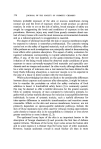
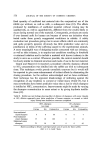
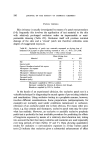
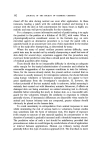
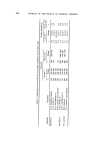
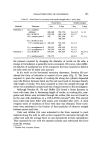
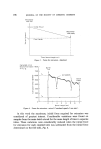
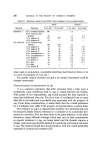
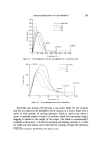
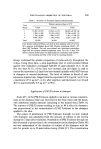
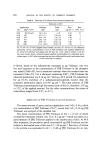
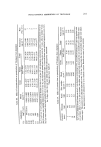
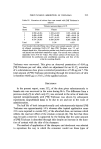
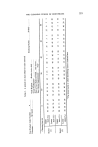
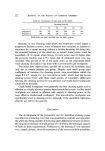
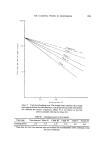
180 JOURNAL OF THE SOCIETY OF COSMETIC CHEMISTS PATCH TESTING Skin irritancy is usually investigated by means of a patch test procedure (!4) frequently this involves the application of test material to the skin with relatively prolonged occlusion under an impermeable or semi- permeable dressing (Table III). Occlusion itself will produce minimal damage of the skin and a 'closed' patch test therefore embodies some degree of exaggerated exposure. Table Ill. Occlusivity olr patch test materials expressed as drying time ooe hydrated CoCI2 paper on glass backing, exposed at 19.5 -4-1 ø, 49.5 4-1.5% RH, beneath the patches, for pink -- blue colour change Mean drying time Material (min) n• SD Nil 20 7 6.3 Gauze (only) 45 6 7.8 Gauze+ blenderre-backed lint square 65 6 8.4 Micropore+ lint square 80 6 6.3 Micropore (only) 155 7 6.3 Micropore+blenderm-backed lint square 200 7 33.0 Dermicel + blenderm-backed lint square 230 6 21.0 Dermicel (only) 390 7 8.4 Blenderm (only) 1145 7 43.0 Micropore: supplied by 3M Co, London. Dermicel: supplied by Johnson & Johnson Ltd, Slough. Blenderm: supplied by 3M Co, London. In the hands of an experienced clinician, the occlusive patch test is a valuable technique for diagnosing the causal agents of pre-existing irritation and sensitization. Using occlusive testing in a prophetic manner, however, involves different considerations. Some preparations (antiperspirants, for example) are normally used under conditions tantamount to occlusion relevance of an occlusive patch test is then obvious. For many other pro- ducts, e.g. face creams and shampoos, occlusive patch tests may be some- what less realistic. However, an occlusive or partially occlusive prophetic patch test is probably the best available procedure for predicting the effects of long-term exposure by means of a relatively short-duration test, taking into account the fact that many toiletties and cosmetics are used repeatedly over long periods of time (Tables IV and V). Data showing quantitative results for occlusive vs non-occlusive exposure in 21-day human patch tests (2) indicate that occlusion gives a substantial enhancement of effect
Purchased for the exclusive use of nofirst nolast (unknown)
From: SCC Media Library & Resource Center (library.scconline.org)