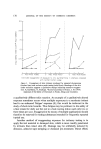
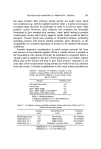
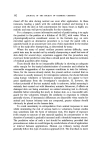
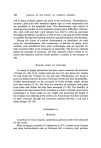
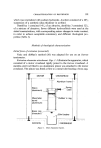
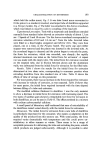
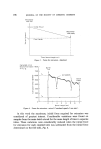
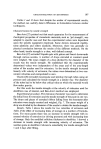
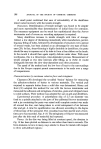
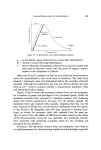
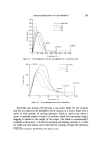
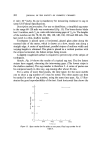
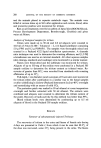
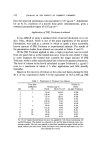
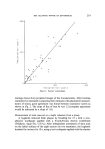
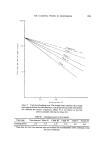
196 JOURNAL OF THE SOCIETY OF COSMETIC CHEMISTS Rheometer tube full -- -•t hru st • Rheometer tube empty Final thrust Time (barrel length cm) Figure 5. Force for extrusion--idealized. Corrected m•t•al force of extrusion 800 fl=ff-f e 7OO 600 500 400 :300 200 I00 Barrel full 0 I I I I I 0 2 3 4 5 Barrel length (cm) • A•r bubbles •"• / Barrel • / --• •'•- •j empty Figure 6. Force for extrusion--actual. Crosshead speed = 5 cm min -•. In this work the maximum, initial force required for extrusion was considered of greatest interest. Considerable variations were found on samples from the same batch stored for the same length of time in separate tubes. These variations were considerably reduced when the initial force for extrusion for each emptied tube was subtracted from the initial force determined on the full tube, Fig. 6.

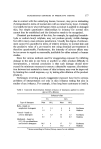
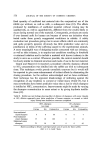
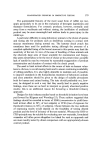
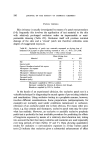
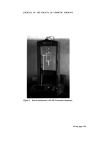
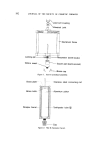
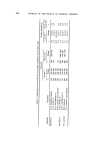
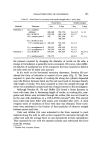
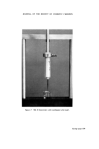
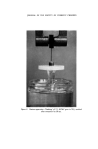
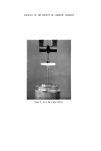
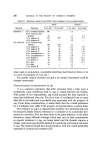
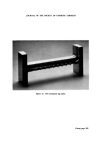
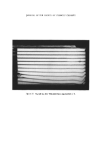
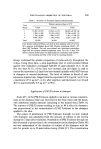
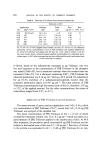
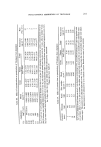
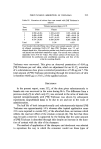
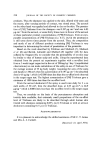
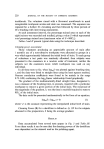
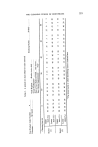
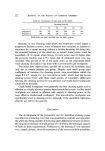
CHARACTERIZATION OF DENTIFRICES 197 Tables I and H show that despite the scatter of experimental results, the method can usefully detect differences in formulation between similar toothpastes. Characterization by tensile strength Ben-Arie (27) pointed out that much apparatus for the measurement of rheological properties of viscoelastic materials, such as 'gel strength', was adapted to specific uses and that the experimental values were dependent upon the specific equipment employed. Some devices measured rigidity, some plasticity and others elasticity. Moreover, there was generally no physical correlation between the results of the different methods. On the other hand, tensile strength is a clear, well-defined concept. Ben-Arie (27) extruded Napalm gels with piston and barrel downwards through various nozzles. A number of drops extruded at constant speed were weighed. The mean weight of a drop divided by the diameter of the nozzle was the tensile strength. He established that the experimentally determined values were independent of the areas and of the area-length ratios of the nozzles used for extrusion. As the tensile strength increased linearly with velocity of extrusion, the values were determined at two con- venient velocities and extrapolated to zero. Charm (28) extruded mayonnaise and ketchup through tubes using air pressure and calculated the tensile strength in a similar way. The diameter of the tubes had to be below that critical value at which the material would flow under gravity. For this work the tensile strength at the velocity of extrusion used for dentifrices was of interest, and Ben-Arie's method was employed. Experimentalprocedure. The extrusion rheometer was used to determine the initial force for extrusion and the tensile strength of the paste in one run. The drops and pieces of extruded ribbon falling from the rheometer after extrusion were simply counted and weighed, Fig. 7. The mean weight of a drop was divided by the diameter of the nozzle to obtain the tensile strength. Results. Table I shows the results for two velocities of extrusion and Table H the effect of increasing times of storage on a number of formula- tions. For most pastes there was an increase in tensile strength with in- creased velocity of extrusion (or driving pressure) and with increasing time of storage. Only the modified cellulose thickener in dentifrice 1 showed a decrease in tensile strength with increasing velocity of extrusion. The xanthan gums in dentifrice 2.showed a remarkably low tensile strength both I and 2 days after filling.
Purchased for the exclusive use of nofirst nolast (unknown)
From: SCC Media Library & Resource Center (library.scconline.org)