EXAGGERATED EXPOSURE IN PREDICTIVE TESTING 187 (14) Uttley, M. and Van Abb6, N. J. Primary irritation of the skin mouse ear test and human patch test procedures. J. Soc. Cosmet. Chem. 24 217 (1973). (15) Marzulli, F. N. and Maibach, H. I. Antimicrobials: experimental contact sensitization in man. J. Soc. Cosmet. Chem. 24 399 (1973). (16) Hardy, J. Allergy, hypersensitivity and cosmetics. J. Soc. Cosmet. Chem. 24 423 (1973). (17) Kligman, A.M. The identification of contact allergens by human assay. III. The maximiza- tion test: a procedure for screening and rating contact sensitizers. J. Invest. Dermatol. 47 393 (1966). (18) teLintum, J. C. A. and Nater, J.P. On the persistence of positive patch test reactions to balsam of Peru, turpentine and nickel. Brit. J. Dermatol. 89 629 (1973). (19) Maguire, H. C. Jr. The bioassay of contact allergens in the guinea-pig. J. Soc. Cosmet. Chem. 24 151 (1973).

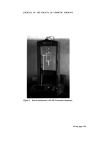
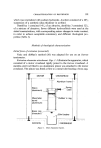
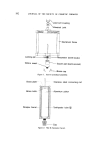
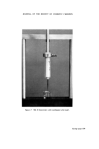
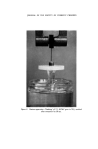
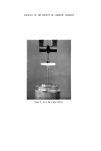
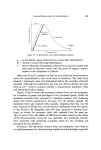
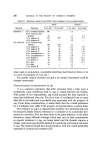
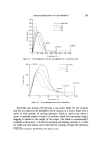
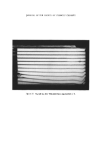
d. Soc. Cosmet. Chem. 26, 189-204 (1975) ¸ 1975 Society of Cosmetic Chemists of Great Britain Four methods for the characterization of dentifrices and other semisolids M. BLOCK* Presented on I2-I4th November 1973 at Nottingham at the Symposium on 'Evaluation of Product Performance' organized by the Society of Cosmetic Chemists of Great Britain. Synopsis--During the course of development work, the need arose for characterization and com- parison of batches of DENTIFRICES. Four methods used in other technologies are reported for their utility in the evaluation of these and other SEMISOLIDS. Force-time traces were recorded on a modified lnstron TENSIOMETER for a piston moving at constant speed down a full tube of toothpaste and again down the emptied one. The difference was the corrected initial FORCE for EXTRUSION. At the same time, a number of extruded drops were weighed. The mean weight of a drop was divided by the diameter of the orifice to obtain the TENSILE STRENGTH of the paste. A polyethylene disc resting on the surface of a jar of dentifrice was withdrawn at constant speed on an lnstron tensiometer. The force-time curve showed a characteristic maximum co- hesive force. The final value obtained on separation of paste and disc was a measure of STRINGINESS. A notched doctor blade was used to apply 10 parallel stripes of uniform width but increasing height upon a surface. Rotation through 90 ø permitted sag of the semisolid, giving a stripe number characteristic of RESISTANCE to SAG. INTRODUCTION Numerous semisolids are in household use to-day, ranging from medicinal ointments, skin creams and dentifrices in the bathroom, to sandwich spreads, mayonnaise, whipped cream and jellies in the kitchen, * Unilever Research Laboratory, 455 London, Isleworth, Middlesex. 189
Purchased for the exclusive use of nofirst nolast (unknown)
From: SCC Media Library & Resource Center (library.scconline.org)