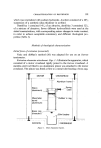
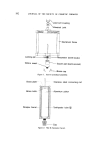
190 JOURNAL OF THE SOCIETY OF COSMETIC CHEMISTS and to putty, polishes, grease and paint in the workroom. Thermoplastics, ceramics, glass and other materials appear rigid at room temperature but are processed in the semisolid state. The measurement and control of theological properties of such materials presents great difficulties. Historic- ally, each craft and later each industry has tried to solve its particular rheological problems in isolation, so that to-day a vast amount of knowledge is available but dispersed among numerous specialized sectors of technology. During the course of product development on dentifrices, the need arose for characterization and comparison of batches of pastes. Four methods were transferred from other technologies and are reported for their potential utility in the evaluation of semisolids. The first two methods utilize the principle of extrusion, the next measures values related to co- hesion and adhesion and the fourth ascribes a number to the property of sag. EARLIER WORK ON EXTRUSION A variety of simple rheometers has been used to measure the extrusion of butter (1), fats (2-4), molten lead and wax (5), clay pastes (6), mastics (7) and foods (8). Prentice (9, 10) and later Wiedermann (11) found a good correlation between the ease of extrusion of fats and their spreadability. Further measurements on the extrusion of foods through simple devices have been made (12-16). The force for extrusion of ointments and pastes from tubes and bottles has also been measured (17-20). The ductility of petrolatum has been measured by extruding a column vertically downwards, permitting it to break under its own weight and measuring the length of the residual cone adhering to the orifice (21). Food texture has been assessed by back extrusion through the concentric annulus between a cup and a metal plunger (22-24). EXPERIMENTAL Materials A number of viscous liquids, suspensions, gels and pastes were prepared for this study. Most mucilages consisted of a dispersion in 70•o sorbitol syrup of gums and other hydrocolloids, such as Carbopol 940, a carboxy-vinyl polymer

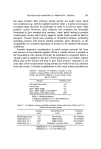
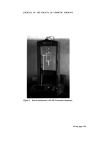
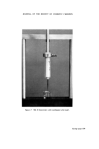
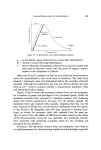
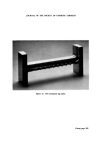
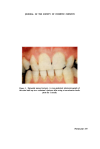
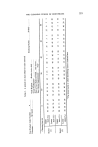
JOURNAL OF THE SOCIETY OF COSMETIC CHEMISTS Figure 1. lnstron tensiometer with Mk I extrusion rheometer. Facing page 190
Purchased for the exclusive use of nofirst nolast (unknown)
From: SCC Media Library & Resource Center (library.scconline.org)