206 JOURNAL OF THE SOCIETY OF COSMETIC CHEMISTS bacteria on the skin (4). It has the advantage over hexachlorophene of being of low toxicity (4). Nevertheless, it is important to know the degree to which it could be absorbed through skin from a variety of skin products. We have previously reported on the percutaneous absorption in guinea- pigs of Triclosan from soaps (5) and this present report examines its absorption through rat skin treated with shampoo containing various concentrations of [all] Triclosan and with aerosol deodorant containing 0.1 •o (w/v) [alii Triclosan. The possible absorption by the human of 0.05•o (w/v) Triclosan in a shampoo and of 0.1 •o (w/v) Triclosan in an aerosol deodorant is calculated from the rat data. METHODS Materials Tritiated Triclosan was prepared and purified as described by Black, Howes and Rutherford (5) and had a specific activity of 44.86 gCi mg -x. Samples of [all] Triclosan were accurately weighed out and the shampoo base was added to give concentrations of 0.05, 0.1, 0.5, 1.0 and 2.0•o (w/v) of [3H] Triclosan. The mixtures were stirred at 50øC for 1-2 h to ensure complete solubilization of the germicide. Aliquots of each preparation were counted to determine the precise amount of [all] Triclosan applied to the rats. A single can of aerosol deodorant was prepared by dissolving [all] Triclosan in ethanol and adding the other ingredients to give a concentra- tion of [aH] Triclosan in the product of 0.1 •o (w/v). The can was sealed and the propellant added through the valve from another cannister. ANIMALS AND TREATMENT Subcutaneous turnover of Triclosan Twelve female Colworth-Wistar rats (120 g) were injected with 0.5 ml of [aH] Triclosan solution in 50•o aqueous polyethylene glycol (BDH, Poole, Dorset) under the loose skin over the upper thorax. The animals were placed immediately in the individual metabolic cages for up to 96 h and 24-hourly samples of the separated urine and faeces were collected for determination of tritium. Some rats were killed at 24, 48, 72 and 96 h after being anaes- thetized and heart blood taken.

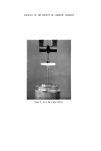
PERCUTANEOUS ABSORPTION OF TRICLOSAN 207 Shampoo application Thirty-two female Colworth-Wistar rats (110-130 g) were clipped and the exposed lumbar skin was pre-washed with a 20•o (v/v) solution of the shampoo base, rinsed and dried. Twenty-four hours later the animals were lightly anaesthetized with cyclopropane, oxygen and carbon dioxide gas mixture, and an area of 7.5 (or 15) cm 2 of skin was marked. 0.1 ml (or 0.2 ml) of the test shampoo was applied to the skin (7.5 or 15 cm 2 respec- tively) and spread over the marked area with a rounded glass rod. 0.1 ml (or 0.2 ml) of water was applied to the marked area and lathered with the glass rod for 1 min. The solution was left for a further 4, 9 or 19 rain (5, 10, or 20 min total) in contact with the skin before thoroughly rinsing the skin with distilled water. The rinsings were collected and monitored for tritium and the treated area of skin was dried by lightly dabbing with paper tissues. The treated area of skin was protected with a non-occlusive patch, which was composed of three layers of surgical gauze (3.0 x 3.5 cm for a 7.5 cm ø- area of skin) covered with 100 mesh stainless steel gauze and the whole wrapped around the trunk of the animal with perforated (5-10 holes/cm •) 'Sleek' tape (Smith & Nephew Ltd). The animals were placed in individual metabolic cages and excreta were collected separately in 24-hourly batches. At the end of the experiment the animals were anaesthetized, terminal heart blood taken and then sacrificed. The protective patch and treated area of skin, which was frozen until required, were monitored for tritium. Deodorant application Six female Colworth-Wistar rats (120 g) were prepared as described above. Twenty-four hours later the animals were anaesthetized and a protective card screen with a 7.5 cm 2 window was placed over the back. The aerosol can was aimed centrally over the window area and a 2-s spray applied with the can held approximately 15 cm away from the skin. The screen was removed, the treatment area marked with a felt-tipped pen and covered with a protective patch. The animals were then placed in separate metabolic cages and treated in the same way as the animals washed with shampoo. Topical application of Triclosan in ethanol A solution of [all] Triclosan in ethanol was applied to the skin of 12 female Colworth-Wistar 'rats (120 g). The treated area of skin was air-dried for about 20 s after which time the ethanol had apparently evaporated. The treated area of skin was covered with a protective non-occlusive patch
Purchased for the exclusive use of nofirst nolast (unknown)
From: SCC Media Library & Resource Center (library.scconline.org)