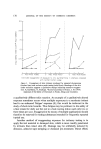
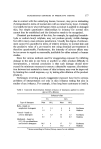
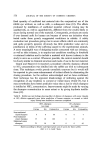
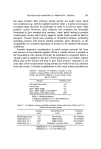
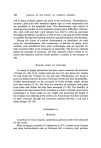
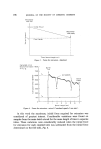
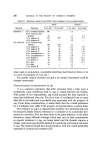
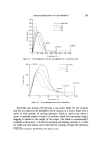
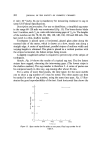
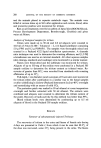
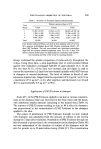
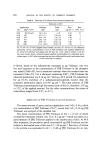
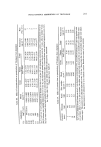
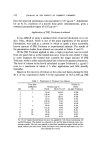
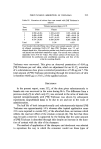
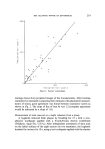
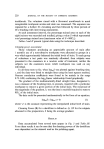
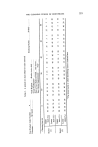
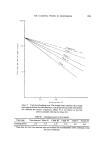
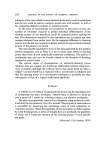
IOOO THE CLEANING POWER OF DENTIFRICES I I 50 IOO Brushing time (s) t:•gure 3. Total stain/brushing time• The straight lines represent the average least squares fit lines for stain reduction with the dentifrices tested. The broken line indicates the scorers' expectancy. (Paste IV is not shown as the line almost coincides with that for Paste II.) Table III. Cleaning powers B of six pastes Paste type Non-abrasive I Silica II Chalk III Chalk IV Chalk V Pumice VI Cleaning power 2.8 5.5 6.1 * 5.6' 8.0 6.0 223 * These data are from two separate tests and confirm the reproducibility of the technique using the same toothpaste.

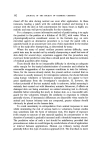
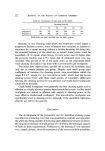
224 JOURNAL OF THE SOCIETY OF COSMETIC CHEMISTS influence of the unavoidable human elements in the trials could be minimized and the test could be used to compare scorers one with another, as well as for comparing different products in numerical terms. As the basis of measurement was parametric in this series of tests, the number of volunteers required to permit statistical differentiation of the cleaning powers of test dentifrices could be estimated before starting the test. The information required for this calculation was (a) typical test data variance deduced from earlier tests, (b) the marginal difference in cleaning powers that the test was required to detect, and (c) the approximate cleaning powers of the pastes to be tested. The reproducible quantitative form of the data generated by this method permits statements such as Paste A is two to three times better in cleaning power than Paste B with statistically-reinforced confidence. The quality of toothpastes may also now be directly related to the duration of brushing required to remove stain. The current status of investigations on abrasivity/cleaning power relations does not suggest any numerical relationship between these func- tions at present, although the evidence shows that stains build up when a subject's normal dentifrice is replaced with a non-abrasive toothpaste and that the cleaning power of a non-abrasive toothpaste is probably less than one-quarter of that of a typical chalk-based dentifrice. SUMMARY A reliable in vivo method of quantitatively measuring the cleaning power of toothpastes has been developed. Natural stain is allowed to build up over a period of 1 month by volunteers using a non-abrasive toothpaste. The stain is progressively removed by a hygienist using an electric tooth- brush and the test pastes for 10 or 20 s periods. The progress of stain removal is quantified by measuring the percentage areas of stain remaining on volunteers' incisors. When the logarithm of this parameter is plotted against the total brushing time, a series of straight lines are produced, the gradients of which are a numerical measure of the cleaning power of each specific test paste. (Received: 15th January 1974)
Purchased for the exclusive use of nofirst nolast (unknown)
From: SCC Media Library & Resource Center (library.scconline.org)