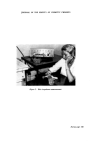
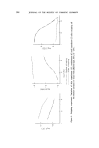
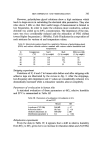
SKIN IMPEDANCE AND MOISTURIZATION 341 A statistical evaluation involved relaxation parameters from 14 sub- jects the measurements were taken in a single, intact skin site of the fore- arm at 66• relative humidity and 25øC. Dehydration experiments One forearm (five subjects) was introduced into the glove-box (86•o rh, 25øC) and left to equilibrate for 20 min. The relaxation parameters were measured, then the relative humidity was lowered to 66•o and new deter- minations made after another 20-min period. The symmetry of the body and the effect of cosmetic emulsions were investigated in a panel of nine subjects over 3 weeks, each subject undergoing one test a week. First week: both forearms were introduced into the glove-box at 86•o rh and 25øC and allowed to equilibrate for 20 min. Then Z (25 Hz) was obtained in sym- metrical areas on the distal face of the forearms, about halfway between wrist and elbow the relative humidity was decreased to 66•o and the impedance measured again in the same areas after 20 min. Second week: before introduction into the glove-box, the left forearm received five successive applications of a O/W emulsion followed by a rinse in water, then the measurements were made in the same manner as above. Third week: same as second week, but with W/O emulsion treatment. Hydration experiments The forearms were introduced into the glove-box at 66•o rh and 25øC and allowed to equilibrate for 20 min. Z (25 Hz) was measured in sym- metrical sites on the distal face of the forearm, about half-way between wrist and elbow. The relative humidity was increased to 86•o and Z (25 Hz) measured again in the test sites after 20 min (eight subjects). a-Relaxation parameters were determined at 66•o rh and 25øC (three subjects), then a 10•o aqueous sodium lactate solution was applied to the test sites, allowed to dry for 30 min and rinsed off before again determining the parameters. A similar experiment was carried out with four subjects, using liquid paraffin instead of sodium lactate solution. The oil was rubbed in gently with a swab of cotton-wool (five successive applications followed by a rinse with water). Effect of vehicle The effect of the vehicle was investigated in six subjects. After the initial Z (25 Hz) value at 66• rh and 25øC had been obtained in five skin areas on the forearms, the sites were treated as follows: first site with 2• aqueous

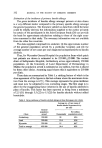
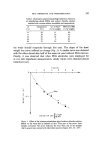
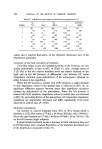
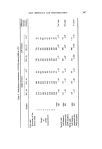
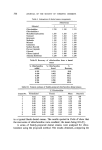
342 JOURNAL OF THE SOCIETY OF COSMETIC CHEMISTS solution of the sodium salt of Pyrrolidone carboxylic acid (PCNa), second site with 10• aqueous PCNa solution, third site with cosmetic preparation containing 2•o PCNa, fourth site with same cosmetic preparation without PCNa, the fifth site remained untreated. The treatments, suitably random- ized, were left in contact with the skin for 10 min and Z (25 Hz) was deter- mined 5 min later. Effect of repeated applications A long-term experiment involved determination of Z (25 Hz) at 66•o rh and 25øC in symmetrical areas near the wrist of both forearms (eleven sub- jects). During the following fortnight, a cosmetic cream containing 1•o human placental extract (ex-Institut Meyrieux, Lyon, France) was applied once daily in one of the test sites, on the left arm for half of the subjects and on the right arm for the other half, the other site being treated with the cream base without placental extract. Z (25 Hz) values were measured again at 66•o rh and 25øC on the day following the last application of cream. RESULTS An important aspect of the work was to develop electrodes which would not affect the state of hydration of the skin. On previous measurements, the use of wet electrodes containing, for example, sodium chloride solution, resulted in penetration of water from the electrodes into the stratum corneum. Impedance values fell rapidly with time after the electrodes had been placed into position, reaching a steady value in about 20 min. Edelberg (4) has shown that an electrolytic junction constituted by a mixture of polyethylene glycol (PEG) and 0.1 M NaC1 can simulate the normal range of atmospheric vapour pressures at the skin surface. Table I presents the matching concentrations for electrolytic junctions at various rh and tem- perature values. The compositions were determined by measuring the impedance (or weighing) of skin samples in the glove-box. The rate of loss or gain in impedance (or weight) of each sample enabled an equilibrium solution for the various conditions to be found by interpolation. The effect of the mixtures on insensible perspiration across a piece of excised rat skin was determined in the following manner. A dish containing Ringer solution was sealed off with a quite large skin sample (half of the back) and the rate of weight loss of the container was obtained over a period of 2« h, then a layer of PEG mixture was placed onto the skin surface so
Purchased for the exclusive use of nofirst nolast (unknown)
From: SCC Media Library & Resource Center (library.scconline.org)