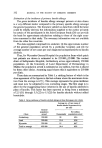
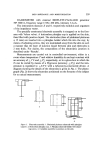
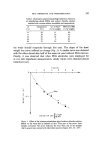
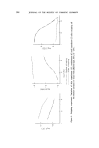
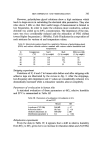
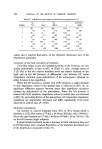
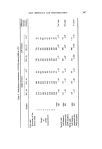
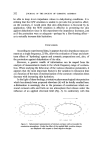
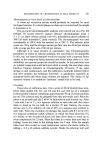
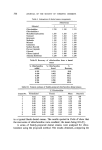
SKIN IMPEDANCE AND MOISTURIZATION 343 Table I. Electrolytic junction liquid (high resistivity). Mixtures of polyethylene glycol (PEG) and sodium chloride solution matched with various relative humidities and temperatures rh Temperature 0.1 M NaC1 PEG (mw 400) (%) (øC) (% by weight) (% by weight) 66 28 11 89 76 28 18 82 86 28 24 76 66 25 6 94 86 25 18 82 the water should evaporate through this coat. The shape of the time/ weight loss curve suffered no change (Fig. 3). A similar curve was obtained with the other dorsal skin half of the same rat used without PEG mixture. Finally, it was observed that when PEG electrodes were employed for in vivo skin impedance measurements, steady values were obtained almost instantaneously. Time (h) I 2 3 4 5 6 \ {•_ rig ht Dorsal rat skin left Figure 3. Effect of the mixture polyethylene glycol-sodium chloride solution (PEG) on the water-loss of excised rat skin. First part of the curve: both samples untreated. The arrow indicates the time when one of the samples (dark square) was covered with electrolytic junction liquid. 66% rh - 25øC.

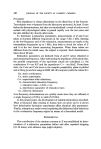
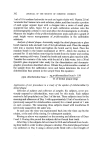
344 JOURNAL OF THE SOCIETY OF COSMETIC CHEMISTS I ß (•) Z •ol I (OLIW) • •Ol I (_4) 06Ol ./,..
Purchased for the exclusive use of nofirst nolast (unknown)
From: SCC Media Library & Resource Center (library.scconline.org)