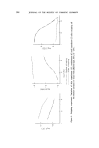
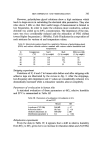
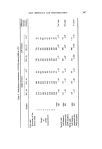
SKIN IMPEDANCE AND MOISTURIZATION 35] propose that liquid paraffin should also be credited with some kind of skin hydrating effect. It might be that the oil forms a waterproof or little per- meable film at the skin surface thus the moisturization would result from accumulation of water from the perspiratio insensibilis. One may call this an indirect hydration the assumption is supported by the behaviour of the dielectric decrement, which always decreases after liquid paraffin treatment, but not after sodium lactate treatment. When skin impedance is measured at a single frequency, 25 Hz, experi- mental data should be interpreted with great caution. From controlled atmosphere experiments, it can be concluded that moisturization of the skin leads to an impedance drop, since an increase in the water content of a structure as resistive as the stratum corneum will of course increase its conductivity. From the 'hydration' experiments, it can be seen that electrical skin characteristics may be altered not only by the additional water but also by the ingredients of a cosmetic preparation. Liquid paraffin obviously incorporates itself into the upper layers of the corneum and, as it is a highly resistive substance, the result cs an increase in Z (25 Hz) values although the true effect of the treatment is probably a moisturization of the stratum corneum. The W/O emulsion also causes a dramatic increase in skin impedance values. These facts tend to show that the formulations, which contain much resistive ingredients, are incorporated into the stratum corneum, thus contributing to an increase in skin impedance. To detect actual hydrating effects, one must turn, either to the determination of all the relaxation parameters (as in the oil experiment), or to the comparison between impedance behaviours in areas treated with a preparation including the assumedly active ingredient and areas treated with the same preparation without active (as in the placental extract cream experiment). In the latter experiment, Z (25 Hz) values are significantly less increased in the placental extract treated sites than in the placebo treated areas. The competition between the increase in Z (25 Hz) values due to incorporation and the decrease brought about by possible hydration is exemplified by this difference. The importance of the vehicle is highlighted by the very dissimilar effects on skin impedance values produced by the hydrating agent PCNa according to whether a same concentration is applied in the form of an aqueous solution--which has certainly less penetrating ability--or of a cosmetic preparation which is able to convey the ingredient into the corneum. The dehydration of untreated skin can be evaluated by the impedance increase (Table V). A suitable treatment against dehydration must therefore

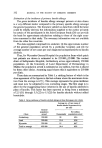
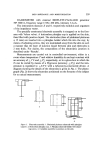
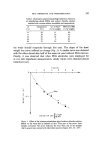
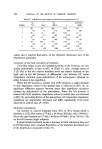
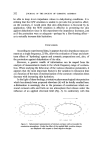
352 JOURNAL OF THE SOCIETY OF COSMETIC CHEMISTS be able to keep down impedance values in dehydrating conditions. It is striking that the O/W emulsion is unable to provide this protective effect on the contrary, it would seem that skin dehydration is favoured by its application. Only the W/O emulsion is effective in protecting the skin against dehydration since in this experiment the impedance decreases, just as if the protection were so adequate--perhaps by a film-forming effect- as to actually increase skin hydration. CONCLUSION According to experimental data, it appears that skin impedance measure- ments at a single frequency, 25 Hz, allow the evaluation of long- and short- term effects of 'hydrating' agents and cosmetic preparations and, also, of the protection against dehydration of the skin. However, a greater wealth of information can be reaped from the analysis of measurements made in the whole frequency-range of a-relaxa- tion. When studying the behaviour of the various relaxation parameters, it appears that the most important feature is the variation in relaxation time as a function of the state of moisturization of the corneum: relaxation times decrease with increasing skin hydration. In the light of these findings, a tentative phenomenological interpretation which has already been proposed elsewhere (6) will be briefly recalled here. a-Relaxation is seemingly due to the presence of counterions which sur- round corneum cells and form an ion atmosphere that relaxes under the influence of an applied electrical field (Fig. 5). In conformity with this AI res1' W•th (•pt•hed Figure 5. Schematical representation of stratum corneum cell surrounded by counterion atmosphere. Under the effect of the applied field, positive charges are displaced with respect to fixed negative charges.
Purchased for the exclusive use of nofirst nolast (unknown)
From: SCC Media Library & Resource Center (library.scconline.org)