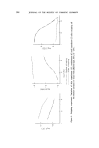
358 JOURNAL OF THE SOCIETY OF COSMETIC CHEMISTS iodine than for the other halogens, it was logical to replace the amino by an iodo group. EXPERIMENTAL All colorimetric measurements were made using a Unicam SP800 double beam recording spectrometer with 20 mm silica cells. The determination of 'extractable' chlorhexidine Reagents Alkaline sodium hypobromite solution. This solution is basically the same as that used by Holbrook (1) but prepared as follows. Dissolve 5 g of sodium hydroxide AR in 400 ml of distilled water in a 500 ml flask. Add, using a safety pipette, 2.5 ml of bromine AR in small portions. When all the bromine has dissolved adjust the volume to 500 ml with distilled water and shake well. Finally, to 50 ml of this bromine solu- tion add 25 ml of 3N sodium hydroxide and shake well. 10•o Cetrimide solution. Dissolve, with heating, 10 g of Cetrimide in distilled water and dilute to a final volume of 100 ml. Chlorhexidine standard solution. Accurately weigh approximately 3.8 g of chlorhexidine diacetate, previously assayed by titration (6) and dissolve in distilled water. Dilute to a final volume of 1 litre. Dilute 5 ml of this solution to 100 ml with distilled water. The concentration of chlorhexidine base in this solution is then given by: mg chlorhexidine = per ml wt chlorhexidine diacetate x •o diacetate by assay 2476 Procedure Preparation of calibration data. Transfer by burette 0, 2, 4, 6, 8 and 10 ml of the chlorhexidine standard solution into 100 ml amber volumetric flasks. Add approximately 50 ml of distilled water to each flask and then 5 ml of 1N sodium hydroxide solution, 10 ml of 10•o Cetrimide solution and mix well. Then add 5 ml of isopropanol, followed by 2.0 ml by pipette of alkaline sodium hypobromite solution, dilute the contents of the flask to volume with distilled water and shake well.

DETERMINATION OF CHLORHEXIDINE IN ORAL PRODUCTS 359 Allow the reaction to proceed for 20+2 min (note: if the ambient tem- perature tends to vary, the flasks should be placed in a thermostatted water bath at 25øC during this reaction time). The visible spectrum is then recorded, versus the reagent blank, and the corrected absorbance measured at 472 nm using a tangent baseline drawn from 600 to 330 nm. Plot the corrected absorbance against mg chlorhexidine present. Application to samples. Accurately weigh approximately 250 mg of dental cream into a centrifuge tube and add 10 ml of 10•o Cetrimide solution. Stir thoroughly with a glass rod to disperse the cream. Centrifuge the tube contents until clear and decant the supernatant into a 100 ml amber volumetric flask. Repeat the extraction with approximately 10 ml of dis- tilled water, and add the washings to the Cetrimide extract in the flask. Proceed as in the preparation of the calibration data from the appropriate stage. The chlorhexidine content can be determined from the calibration graph and thus • chlorhexidine = mg chlorhexidine determined x 100 wt of sample in mg Determination of'total' chlorhexidine The hydrolysis of the chlorhexidine was carried out using a reaction bomb and heater previously described (7) and now commercially available from Spectroscopic Accessory Co., London SE 18. Reagents (1) 4•o Aqueous sodium nitrite solution. (2) 5•o Aqueous ammonium sulphamate solution. (3) 0.1•o Aqueous •-naphthyl-ethylenediamine dihydrochloride solu- tion. p-Chloroanil#•e standard solution. Accurately weigh approximately 65 mg ofp-chloroaniline hydrochloride and dissolve in deionized water. Dilute to a final volume of 1 litre. Dilute 40 ml of this solution to 100 ml with deion- ized water. The concentration ofp-chloroaniline in this solution is given by: pg p-chloroaniline ml -• = wt ofp-chloroaniline hydrochloride (rag) x 0.311
Purchased for the exclusive use of nofirst nolast (unknown)
From: SCC Media Library & Resource Center (library.scconline.org)