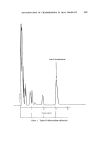
362 JOURNAL OF THE SOCIETY OF COSMETIC CHEMISTS 1 ml of 10 N sodium hydroxide to each and again shake well. Pipette 2.0 ml 'aromatic free' hexane into each solution, shake, and then transfer a portion of each upper organic layer with a dropper into a series of small glass stoppered test tubes. Inject 5.0 •1 of each calibration solution onto the chromatographic column in turn and allow the chromatograms to develop. Measure the heights of the p-chloroiodobenzene peaks and plot a graph of peak height versus nanogrammes of p-chloroaniline in the calibration solutions. Analysis of dental plaque. Accurately weigh the dried plaque into a glass bomb reaction tube and add 3 ml of 3• hydrochloric acid. Place the sample tube into a reaction bomb and tighten the bomb seal by hand. Place the reaction bomb in the heater maintained at 185øC. Allow the reaction to proceed for 15 min before removing the bomb from the heater and cooling under running cold water. Unseal the bomb and remove glass reaction tube. Transfer the contents of the tube, with the aid of a little water, into a 30 ml Quickfit glass stoppered tube ready for the diazotization and chromato- graphic procedures described above. Obtain the p-chloroaniline content of the sample from the calibration curve and hence determine the level of chlorhexidine base present in the sample from the equation: ppm chlorhexidine base = ngp-chloroaniline found x 1.98 wt of dental plaque (mg) Application of test procedures in a study of the uptake of chlorhexidine by dental plaque Selection of subjects and collection of samples. Six subjects, never pre- viously exposed to chlorhexidine, were used for this study. Each subject received a full prophylaxis on Day 1 of the test. Three subjects rinsed in the morning and afternoon of Day 1 with approximately 15 ml of mouthrinse A (previously assayed for chlorhexidine content) for a timed period of 1 min on each occasion. The remaining three subjects rinsed with mouthrinse B (previously assayed) in the same way. In each case the rinse was expectorated back into the rinse cup by the subject, at the end of the rinsing, for subsequent analysis. Rinsing as above was repeated on the morning and afternoons of Days 2 and 3. During this period the subjects did not brush their teeth. After Day 3, the subjects did not rinse for 24 h and refrained from brush- ing their teeth in order to allow plaque to develop. The dental plaque formed was collected on Day 4 using a dental probe fitted with a short length of

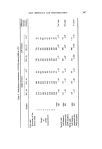
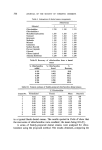
DETERMINATION OF CHLORHEXIDINE IN ORAL PRODUCTS 363 polythene tubing, and placed in a small plastic cup. The plaque was then dried at 105øC for approximately 16 h (overnight) prior to analyses. The collection procedure was repeated after 32 and 52 days, and all plaque collected was analysed for chlorhexidine content as soon as possible after collection. During the whole of the period after Day 4 the subjects brushed their teeth as normal with a non-chlorhexidine dental cream. Composition of chlorhexidine mouthrinses tested Mouthrinse ,4. This was a conventional alcohol/water mouthrinse incorporating 0.236•o of chlorhexidine gluconate (195/o solution). Mouthrinse B. This was a conventional alcohol/water mouthrinse incor- porating 0.236•o of chlorhexidine gluconate (195/o solution) together with 0.5•o of a reducing agent. The final pH of both rinses was 5-6. Determination of chlorhexidine in mouthrinses The procedure used for this analysis was essentially that described earlier for extractable chlorhexidine. However, since reducing agents tend to bleach the colour formed by reacting themselves with sodium hypo- bromite excess sodium hypobromite was added to overcome this problem. RESULTS AND DISCUSSION Determination of 'extractable' chlorhexidine In order to determine the extent of interference of dental cream com- ponents on this procedure, a constant amount of chlorhexidine standard solution was added to a series of these components in the same relative ratio as would be present in a formulated cream. The red coloration with alkaline sodium hypobromite solution was developed and the optical density at 472 nm measured. The results obtained are recorded in Table I and show that none of the components interfere to any great extent. The use of Cetrimide for the extraction of chlorhexidine was described by Holbrook (1) but used by him to prevent precipitation of the chlor- hexidine salt. In this procedure Cetrimide is used both to extract the chlor- hexidine and also to then keep it in solution. An experiment carried out proved that all of the chlorhexidine present (at the 0.5•o base level) was extracted with a single application of 10 ml of 10•o Cetrimide solution. The recovery of chlorhexidine from a typical dental cream was checked by adding known amounts of chlorhexidine diacetate in aqueous solution
Purchased for the exclusive use of nofirst nolast (unknown)
From: SCC Media Library & Resource Center (library.scconline.org)