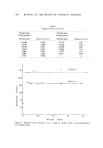
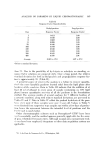
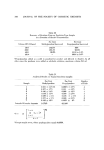
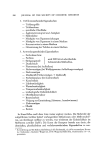
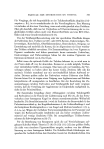
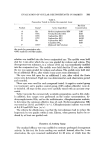
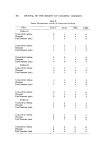
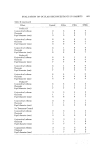
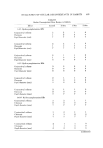
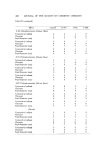
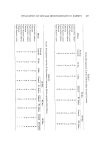
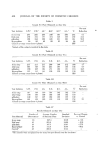
EVALUATION OF OCULAR DECONGESTANTS IN RABBITS 399 Table I. Preparation Tested in Ocular Decongestant Assay Per Cent Product Status a Active Ingredient Concentration A Bx Hydroxyamphetamine HBr 1.00 B OTC Tetrahydrozoline HC1 0.05 C OTC Naphazoline HC1 0.012 D OTC Naphazoline HC1 0.012 E Rx Naphazoline HC1 0.05 Antazoline PO• 0.05 F OTC b (Balanced Salt Solution) -- aRx stands for prescription only. bOTC stands for over-the-counter. solution was instilled into the lower conjunctival sac. The eyelids were held shut for i min after which the eye was graded for redness and edema. The decongestant test substance, in a volume of 0.1 ml, was immediately instilled into the conjunctival sac. The eyelids were held shut for 15 sec, after which the eye was again graded for redness and edema. The eyelids were held shut for an additional 30 sec, after which 1-min scores were determined. The eyes were left open for an additional i min, after which the 2-min scores were determined. Pupil size was determined at each observation period and recorded. Three eyes were used for each compound tested. A negative control group (no treatment) and a positive control group (0.9% sodium chloride) were al- so included. All steps in this assay were carefully timed with an accurate stop- watch. Table I presents the commercially available preparations used in this study. In addition, dose ranges were performed on the ocular vasoconstrictor, hy- droxyamphetamine HBr, and on the antihistamine, chlorpheniramine maleate, to determine the minimum effective dose of each. Hydroxyamphetamine HBr was tested at 1.0, 0.1 and 0.01% (w/v). Chlorpheniramine maleate was tested at 0.4, 0.3 and 0.2% base (w/v). The criteria for effectiveness was that the test substance had to reduce the hyperemia by two grades within 2 min. Edema, when present, had to be re- duced by at least one graded unit. Duration of Activity Assay The standard efficacy test was modified to estimate prolonged decongestant activity. In this test, the 2-min reading was omitted. Instead, after the i min observation, the eyes remained undisturbed for 30 mins, at which time the

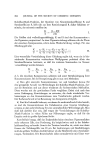
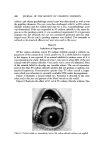
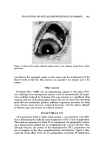
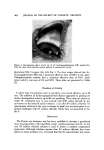
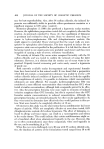
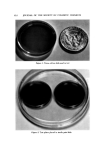
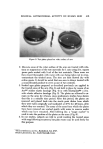
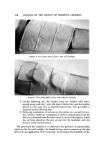
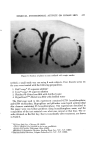
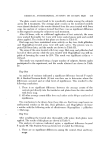
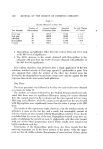
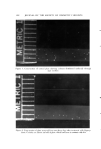
400 JOUBNAL OF THE SOCIETY OF COSMETIC CHEMISTS redness- and edema-prechallenge control score was determined as well as was the pupillary diameter. The eyes were then challenged with 0.1 ml 5% sodium chloride solution and the eyelids held shut for i min. A postchallenge score was determined. If the eye responded to 5% sodium chloride to the same de- gree as in the predrug control, it was considered unprotected. If a hyperemic response was not obtained, the eye was considered protected and was chal- lenged every 30 min until a preckug response was elicited. Test materials as outlined in the standard efficacy test were also used in this assay. •ESULTS Induction of Hyperemia Of the various solutions tested, 5% sodium chloride caused a uniform en- gorgement of the conjunctival vessels, grade two. If a rabbit failed to respond to this degree, it was rejected. If an animal exhibited a redness score of 3, it was retained in the study. Edema of score 1 was seen in about 20% of the test animals with 5% sodium chloride. Very rarely was a score of 2 obtained. Most of the animals failed to develop any scorable edema. The use of concentra- tions of less than 5% sodium chloride solution did not produce a uniform con- junctival hyperemia. Concentrations greater than 5% often caused a hyper- emia which was refractory to currently available OTC ocnlar decongestants. Figure i illustrates a normal rabbit eye. Attention is directed to the clear sclera and to the size and pattern of the blood vessels on the eyelid. Figure 2 illustrates fl•e effect of 0.1 ml of 5% sodium chloride solution. One Figure 1. Normal rabbit eye immediately before 5% sodium chloride solution xvas applied
Purchased for the exclusive use of nofirst nolast (unknown)
From: SCC Media Library & Resource Center (library.scconline.org)