EVALUATION OF OCULAR DECONGESTANTS IN RABBITS 407

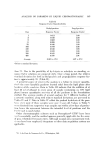
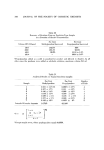
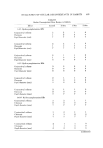
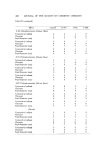
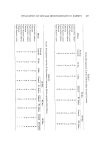
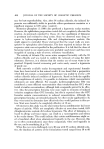
408 JOURNAL OF THE SOCIETY OF COSMETIC CHEMISTS sary for best reproducibility. Also, after 5% sodium chloride, the induced hy- peremia was sufficiently stable to preclude either spontaneous remission or a significant response to 0.9% saline (control). Histamine phosphate (1:1000) also produced a hyperemic ocular reaction. However, the ophthalmic preparations tested did not completely alleviate this reaction. As previously reported by Moses (3), the vasodilation of histamine is persistant and resistant to drug action. Since we observed some drug re- sponse to hydroxyamphetamine HBr and chlorpheniramine maleate, this might appear to contradict Moses' statement that the vessel walls are unre- sponsive to epinephrine after histamine. The dose required to induce the un- responsive state was not specified in the publication. It is felt that the doses of histamine tested in our experiments were probably much lower and thus were incapable of causing a state of severe, refractory vasodilation. The activity of Atlantic City ocean water compared favorably with the 5% sodium chloride and was tested to confirm the rationale of using the latter substance. However, it is obvious that the routine use of ocean water is im- practical. Properly treated swinnning pool water rarely caused a hyperemia of grade one. Both currently available ocular decongestants and experimental formula- tions have been tested in this animal model. It was found that a preparation which did not contain a vasoconstrictor substance was unable to reverse a 5% sodium chloride induced condition of hypcrcmia. Based on both the rapidity and completeness of activity, it is possible to determine which vasoconstrictor substances are most efficient. For example, hydroxyamphetamine HBr was considered a more efficient vasoconstrictor than tetrahydrozoline HC1 when tested at similar concentrations, although both compounds proved to be effec- tive. Also, the prescription formulas were more rapid in remission of induced irritation symptoms than OTC formulas, but this is expected since the OTC formulas contain vasoconstrictors in reduced concentrations. Although the prescription formulas are intended primarily for other ocular applications (4), they were tested to determine how effectively they would perform in this sys- tem. Most were found to be completely effective at 15 sec. Of interest in this study was the observation that an antihistamine had some degree of activity. While not completely effective at most doses tested, 0.4% chlorpheniramine maleate did reduce hyperemia. The effect of histamine, re- leased in allergy and tissue injury, can result in a vasocongestion and edema in the ocular tissues. This could indicate that certain antihistamines might ex- ert a beneficial effect when administered topically to the eye. However, this use is often contraindicated, since these compounds, when used topically in the eye, can be sensitizing (4, p. 74). When the eyes were challenged every 30 min with 5% sodium chloride solu- tion, the duration of activity of the formulations tested ranged from 30 to 80
Purchased for the exclusive use of nofirst nolast (unknown)
From: SCC Media Library & Resource Center (library.scconline.org)