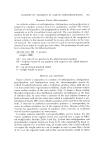
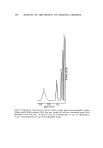
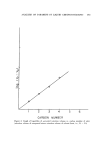
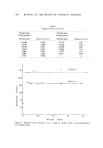
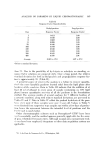
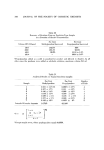
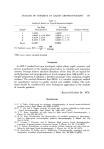
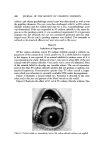
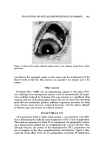
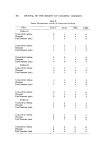
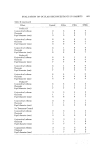
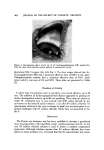
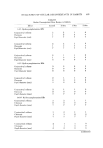
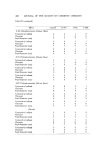
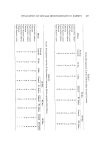
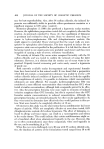
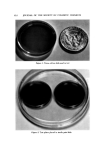
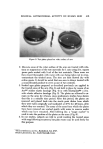
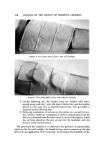
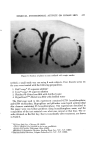
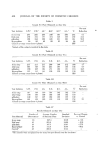
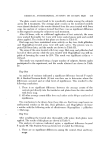
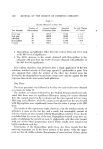
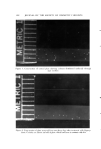
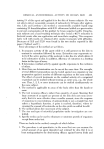
RESIDUAL ANTIMICROBIAL ACTIVITY ON HUMAN SKIN 415 Figure 3. Test plates placed on volar surface of arm 2. Discrete areas of the volar surface of the ann are treated with solu- tions or suspensions of the test materials for 1 rain using 2-in. square gauze pads soaked xvith 5 ml of the test materials. These areas are then rinsed thoroughly xvith xvater xvith care being taken not to cross- contaminate the treated areas. The sites are then blotted dry with cotton gauze. It should be noted that one area is always treated with a nonmedicated product to serve as one of two controls. 3. Seeded agar plates prepared as described previously are applied to the treated areas of the ann (Fig. 3) and held in place by means of an Ace©* rubber elastic bandage (Fig. 4) or with Elastoplast©t a 2-in. wide elastic adhesive bandage (Fig. 5). The plates are allowed to re- main on the arms for 4 hours, since preliminary studies have shown that this is a suitable time period. After this period, the plates are removed and placed back into the sterile petri dishes from which they were taken originally and incubated at 37øC for 48 hours, after which they are counted. The areas of the arms from which the plates have been removed are xvashed gently with xvater to remove media which may have remained. After blotting dry, a "magic marker" is used to note the position of the plates on the arms (Fig. 6). 4. In our studies, subjects are told to avoid washing the treated areas xvith soap folloxving treatment, but plain water may be used freely for this purpose. *Becton-Dickinson and Co., Rutherford, N.J. 0707. •Duke Laboratories, Inc., South Norwalk, Conn.

416 JOURNAL OF THE SOCIETY OF COSMETIC CHEMISTS Figure 4. Test plates held in place •vith ace bandage Figure 5, Test plates held in place with adhesive bandage 5. On the following day, the treated areas are washed with water- soaked gauze pads for 1 rain, the skin is blotted dry and fresh plates placed on the exact sites as described previously. This procedure is repeated on the following day. 6. Following incubation, all colonies on the plates are counted, but sur- face colonies which are recognized as obvious contaminants from the skin are subtracted from the total count. A set of seeded plates, which has not been placed on the arm are put into the incubator each day to serve as the second control. The procedure has enabled us to determine the presence of antimicrobial agents on the skin and, roughly, the length of time activity remains on the skin after only one application of test materials. To determine the feasibility of the
Purchased for the exclusive use of nofirst nolast (unknown)
From: SCC Media Library & Resource Center (library.scconline.org)