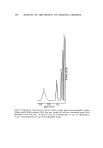
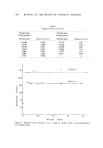
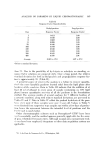
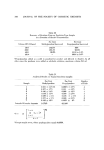
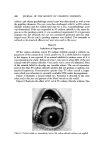
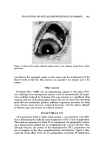
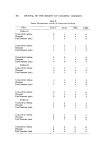
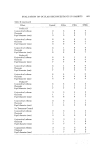
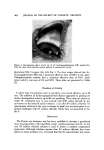
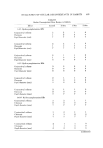
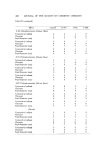
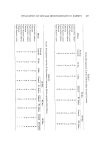
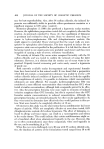
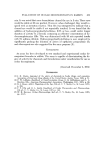
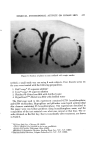
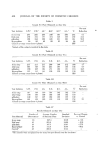
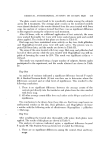
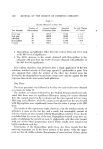
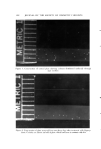
RESIDUAL ANTIMICROBIAL ACTIVITY ON HUMAN SKIN 421 Table V1 Besuts Obtained on Day Three Number of Average Number Standard Per cent Change Test Material Observations of Bacteria/Plate Deviation rs. Control Ivory soap 16 252.4 15.88 -- 0.2 Dial soap 16 252.4 15.88 -- 0.2 pHisohex 16 254.6 15.96 -- 0.6 HyperpHaze 16 224.0 14.97 --11.5 Control 15 253.0 15.91 -- have shown that growth occurred only in thc lower half portion of the dish (Fig. 7 and Fig. 8). This suggests that, from a practical point of view, the treated skin area still contained antimicrobial activity, since all organisms in the upper half of the plate were inhibited. SUMMARY AND DISCUSSION A method has been developed which demonstrates in vivo whether an antimicrobial agent is substantive to human skin while still retaining activity against a pure culture of a single strain of microorganism. The method, thus far, has been used to show the effectiveness of products containing hexachlo- rophene against a strain of S. epidermidis immediately after a single applica- tion to the arm and, to some extent, the length of time within which activity is retained. The method depends on the ability of the antimicrobial agent to penetrate into the microbiological culture medium, which implies that it must come off the skin. In the limited experiments carried out to date, it has been possible to demonstrate that both pHisohex and HyperpHaze are superior to Dial soap and Ivory soap as shown by this test. It has also been demonstrated that a single treatment with HyperpHaze inhibits the growth of more S. epi- dermidis over a longer period of time than a single application of pHisohex. Since the hexachlorophene content of the two products was the same, one must assume that the composition of the respective vehicles and their interac- tion with the skin accounted for the differences in activity as measured by this test. Thc results obtained using this method are in good agreement with values reported in the literature. Black et al. (9) applied solutions of a soap and a nonsoap detergent containing •4C-hexachlorophene to the backs of humans. Virtually all of the hexachlorophene disappeared from the skin 2 days after a single application or multiple treatments. Marples and Kligman (10), using an occlnsion test to evalnate the efficacy of antibacterial preparations, found hex- achlorophene to be ineffective 3 days after application of a 1% solution to human skin. Stoughton (11) added •4C-hexachlorophene to pHisohex con-

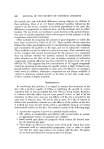
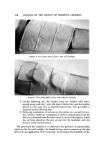
422 JOURNAL OF THE SOCIETY OF COSMETIC CHEMISTS Figure 7. Cross-section of control plate showing colonies distributed uniformly through agar medium ........ • :•'-: :•...:+!•?: ..:-,,. ,...•:..•!-: --.: .•::' •.?.":? ':•i ' (',:.':?.: .... "'.-•..'-"½i.-/: ' ....:::.'•.•-'.'.'..-½ .. :.. ..... : ::!.?:•?• ' i" ' ¾%-,: •:¾•:.• :• .,•:.•.?..•.• •', ' •':•:,•:• •4•-•:: ::::4,•.::'. ::. ":.' ß :.. ". ":': """ ß...'.i•".•...'? ":' '--,/-.::::!-':' !-' 'i.: '-.'.-' '•'.?. :: :' " : - .•.,:•: .. ...•.•::.:. :. • ... ................ :....... ......... ::•.•... ß :' :•':" 'i-•'.• •,' .',i• .•-•- : ......... : ½,•:•..... ., -.- .... •.: ....: ..: . ............. • ß ?•?-•?' .•.•.•.•.,,•.. ........ .:..•.•......:.• •.•... . ::.!!½•!::.•:::•'.? ...... ?:.:!i, ii.•i. i ..:,,,, " :-.-.--.:.:-.... :.........•... •'. ½.4ii%. :!'::•!•...::::.: ::,:........ .:."...!..: .•."::..".'.'.':.'. •' '.::'•: .= . .... •,• •-.'??:.. ß Figure 8. Cross-section of plate removed from area three days after treatment with Hyperp- Haze. Colonies are absent on half of plate which had been in contact with skin
Purchased for the exclusive use of nofirst nolast (unknown)
From: SCC Media Library & Resource Center (library.scconline.org)